Oregon’s long, wet season changes the way gutters age. The hardware that holds each section in place rarely gets a true drying period, and that constant exposure slowly weakens the brackets and fasteners that anchor the system to the home.
NOAA climate normals show more than 150 days of measurable precipitation in parts of western Oregon each year, which means brackets stay damp far longer than they were designed to. The wear is gradual at first, almost hidden, until a homeowner notices sagging lines, water slipping behind the gutter, or rust forming around the screws.
Why Year-Round Moisture is a Structural Threat to Gutter Systems
Moisture does not need to be intense to be damaging. Light showers, mist, and daily drizzle create the same long-term effect: metal that never fully dries.
Oregon’s climate produces more of these light, frequent rain events than dramatic storms, and that pattern is what breaks down bracket integrity over time. The issue is not only corrosion but the way water lingers inside the tiny gaps where brackets meet fascia boards. Once those spaces stay damp long enough, deterioration begins, even on newer systems installed through professional gutter installation services.
This constant wetting also affects the surrounding wood. Even a small amount of trapped moisture can start softening fascia boards, reducing their ability to hold fasteners under the weight of rainwater. That combination of tired metal and damp wood creates the perfect setup for bracket failure during the next strong storm.
How Moisture Physically Weakens Gutter Brackets and Fasteners
The weakening process often happens quietly. Metal brackets do not fail in one day. They thin and lose stiffness through repeated exposure.
Corrosion of Metal Brackets
Corrosion first forms in scratches and edges where protective coatings wear away. In constant moisture, rust spreads across the bracket surface, reducing its load-bearing strength.
Fastener Loosening and Fatigue
Corrosion and moisture changes can loosen screws that previously held with no trouble. A bracket may still look stable, but its hold weakens underneath. Once a fastener loses real grip, any tightening tends to fade quickly as movement returns.
Moisture-Driven Material Reactions
When moisture sits between metal components, tiny chemical reactions accelerate wear. Even systems installed by experienced teams during rain gutter installation can run into this problem because the climate keeps the hardware damp for so much of the year.
How Clogged Gutters and Wet Fascia Speed Up Bracket Failure
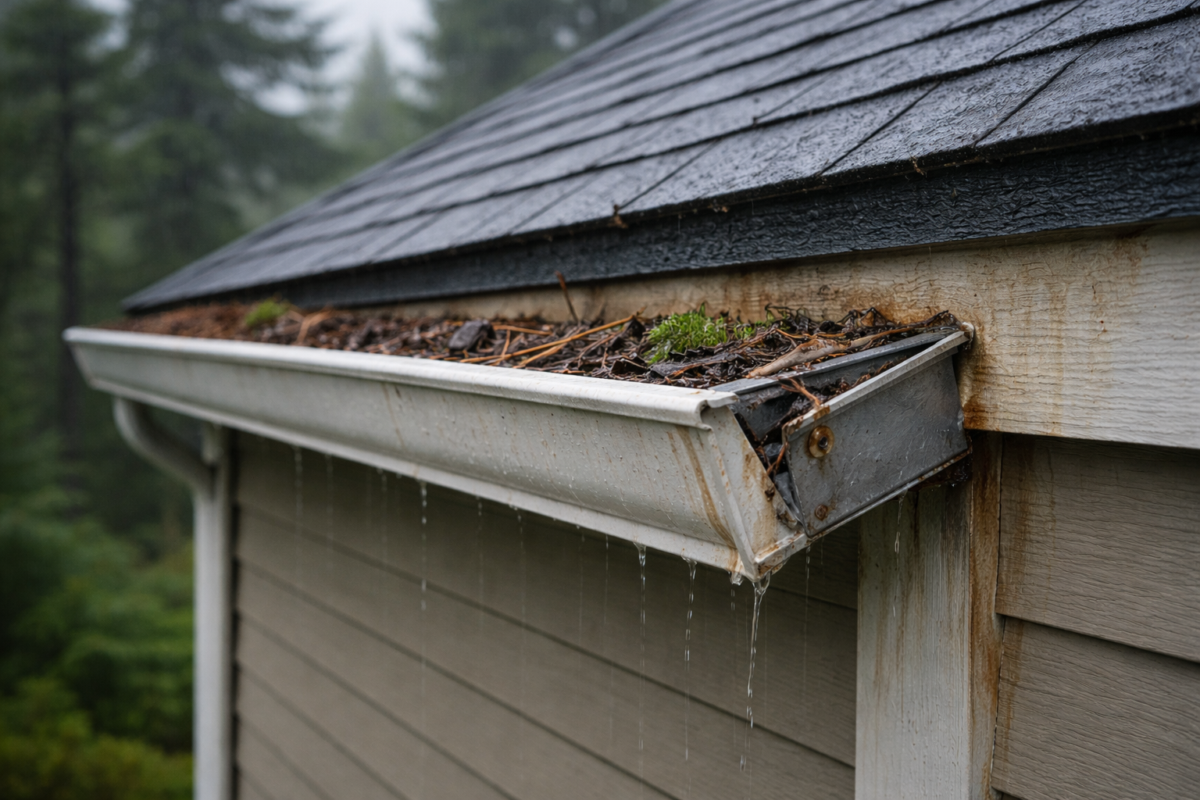
Climate exposure is only one part of the story. Every day debris, such as leaves, needles, and shingle grit, adds stress that gutters were not meant to carry for extended periods. When sections fill up, water stops flowing and begins to pool. That standing water keeps brackets submerged long after the rain stops.
A few things happen at once:
- Weight increases across the entire run
- Water seeps behind the gutter and soaks the fascia
- Metal stays wet far longer than in an unobstructed system
Research on moisture in building materials shows wood-rotting organisms thrive once moisture content rises above roughly 20%. A fascia board exposed to water trapped by clogged gutters can easily reach that threshold. Once the wood softens, screws loosen faster, and the bracket’s load-carrying capacity drops sharply.
This cycle is one of the most common reasons homeowners start searching for gutter cleaning and repair near them, usually after noticing overflow or staining.
Early Warning Signs That Gutter Brackets Are Failing
Bracket failure often reveals itself through small but consistent changes. A gutter that once sat straight might tilt slightly after a season of heavy rain. A joint that used to drain cleanly might now hold water. These subtle signs appear before more dramatic issues arrive.
Look for:
- Sagging or uneven gutter lines
- Gaps are forming between the gutter and the fascia board
- Overflow during moderate rainfall
- Rust trails or dark stains around the screws
- Slow drainage near the downspout, even when debris appears minimal
What Happens When Bracket Problems Are Ignored
When brackets keep slipping or corroding, the system loses the slope needed to carry water toward the downspouts. Even a slight shift causes overflow, and the water usually escapes in the least convenient direction, behind the gutter, down the siding, or across the foundation line. Insurance reports show that water intrusion remains one of the most common sources of home damage nationwide, and once moisture reaches the building envelope, repairs get complicated fast.
Overflow does more than stain siding. It disrupts the controlled drainage pattern that gutters were designed to create. Water behind the gutter can soak the fascia boards and creep toward the roof edge. EPA guidance on moisture in buildings repeatedly highlights this kind of persistent wetting as a key factor in mold-friendly conditions. That risk rises when gutters can no longer move water quickly enough during storms.
When Gutter Repair Is Enough, and When Replacement Is the Smarter Move
There is a point where tightening screws or swapping a bracket stops being effective. Repair works best when the gutters themselves remain structurally sound, and the fascia board still holds fasteners securely. In those cases, reinforcing hardware or adjusting the slope can restore proper flow.
Gutter replacement becomes the better decision when:
- Corrosion appears across several brackets
- Fasteners loosen again shortly after tightening
- The fascia has softened from repeated moisture exposure
- Slopes cannot be maintained because the system has warped over time
A fresh installation brings advantages that older systems lack. Modern brackets offer greater resistance to long-term moisture, and seamless configurations reduce the number of joints through which water can seep.
When experts perform gutter replacement, they evaluate not just the metal but the entire path that water takes along the roofline. That kind of assessment is difficult to do from the ground, which is why homeowners often benefit from a professional inspection before the wet season begins.
Strengthen Your Gutter System Before Oregon’s Next Wet Season
Oregon’s weather will always test the limits of gutter hardware, but bracket failure does not have to sneak up on you. A slight adjustment today can prevent the kind of overflow, staining, or roofline damage that shows up during heavy rain.
If you’re unsure whether your brackets are still doing their job, or if signs like sagging or overflow are already showing, we can help you figure out the next step. We diagnose bracket issues, reinforce systems when repair is enough, and provide complete gutter installation or gutter replacement when long-term protection requires a stronger solution. To schedule an inspection before the weather turns, contact us at (971) 777-9899 or click here for a free estimate.
Key Takeaways
- Oregon’s climate keeps gutter hardware damp for much of the year, accelerating corrosion and weakening gutter brackets over time
- Constant moisture affects both metal brackets and the wood fascia they attach to, reducing fastener grip and increasing the risk of sagging or overflow
- Clogged gutters worsen bracket failure by trapping standing water, increasing weight, and keeping metal and wood wet long after rainfall ends
- Early warning signs such as uneven gutter lines, rust around screws, slow drainage, and recurring overflow often indicate bracket fatigue before major damage occurs
- Ignoring weakened brackets can lead to water intrusion behind gutters, fascia rot, roof-edge damage, and costly repairs, which are among the most common sources of homeowner insurance claims
- Repair is effective when damage is localized, but widespread corrosion, recurring loosening, or softened fascia usually makes full gutter replacement the smarter long-term solution
Citations
- NOAA Climate Normals (1991–2020), Western Oregon Precipitation Data
- USDA Forest Products Laboratory — Moisture Effects on Wood & Fasteners
- Insurance Information Institute — Water Damage & Homeowners Claims