Oregon’s older homes have a way of pulling you in. The shingles may show their age, and the rooflines may dip in unexpected places, but the character is undeniable. The challenge is that many of these houses still rely on gutter systems designed decades before today’s storm patterns. According to the 2024 CW3E report, Oregon saw 59 atmospheric rivers in Water Year 2024, a level of activity that pushed rainfall intensity well beyond “typical.” The weaknesses in these older systems showed up fast.
That is why rain gutter installation, especially on vintage structures, feels less like a simple upgrade and more like a thoughtful rebuild. These homes need strategies shaped around aging wood, unusual architecture, and modern drainage expectations that did not exist when they were built.
Quick Answer
Older Oregon homes need customized gutter installation because their original systems were built for lower rainfall intensity and often rely on aging fascia boards and smaller gutter profiles. Modern storms, including frequent atmospheric rivers, produce higher runoff that older 4-inch gutters cannot handle. Upgrading to seamless gutters, reinforcing fascia, increasing capacity, and redirecting downspouts helps protect historic structures while preserving their appearance.
Aging Fascia Boards
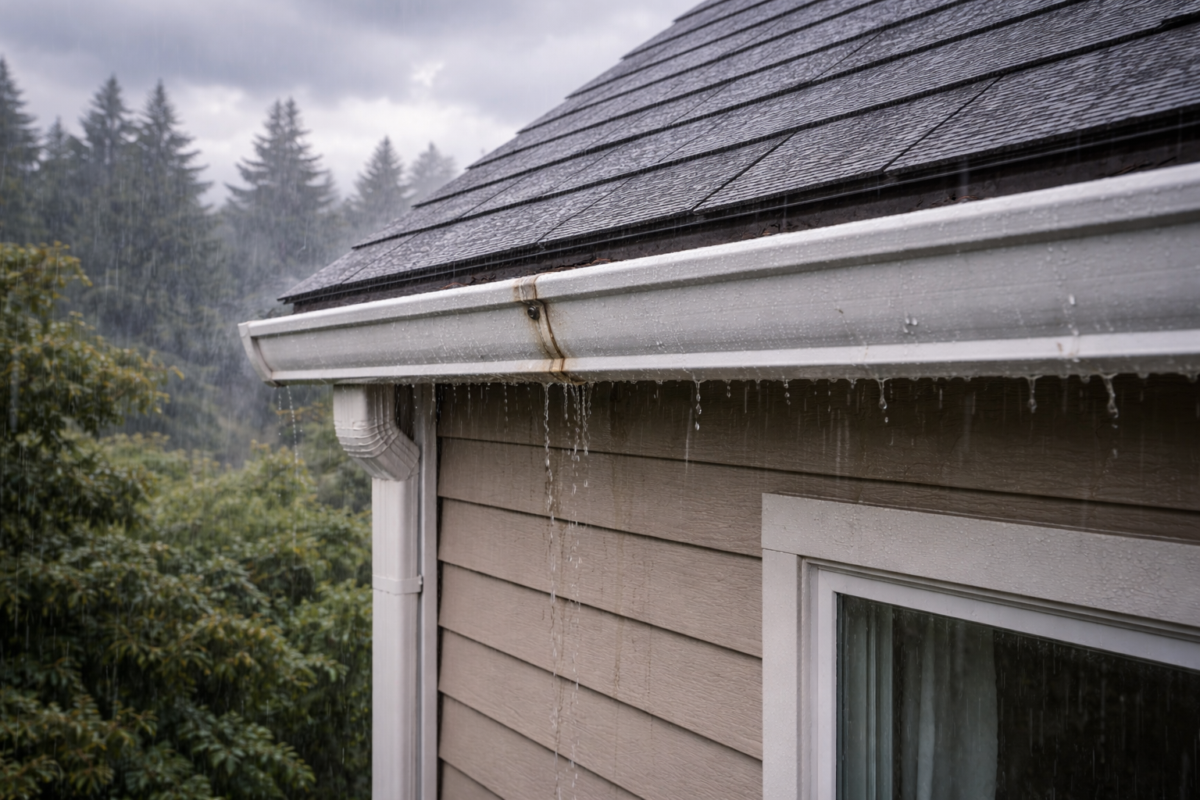
Older Oregon houses endure long, wet seasons, and the wood along the roof edge bears the marks. Decades of storms, clogged gutters, and occasional overflow leave fascia boards that may look fine from the street but feel soft when you press them.
Wood begins to decay when it stays above roughly 20% moisture content, with structural decay becoming a real issue closer to 30%. That threshold is easy to hit here, especially on houses where water repeatedly spills over small gutters or gets trapped behind failing sections.
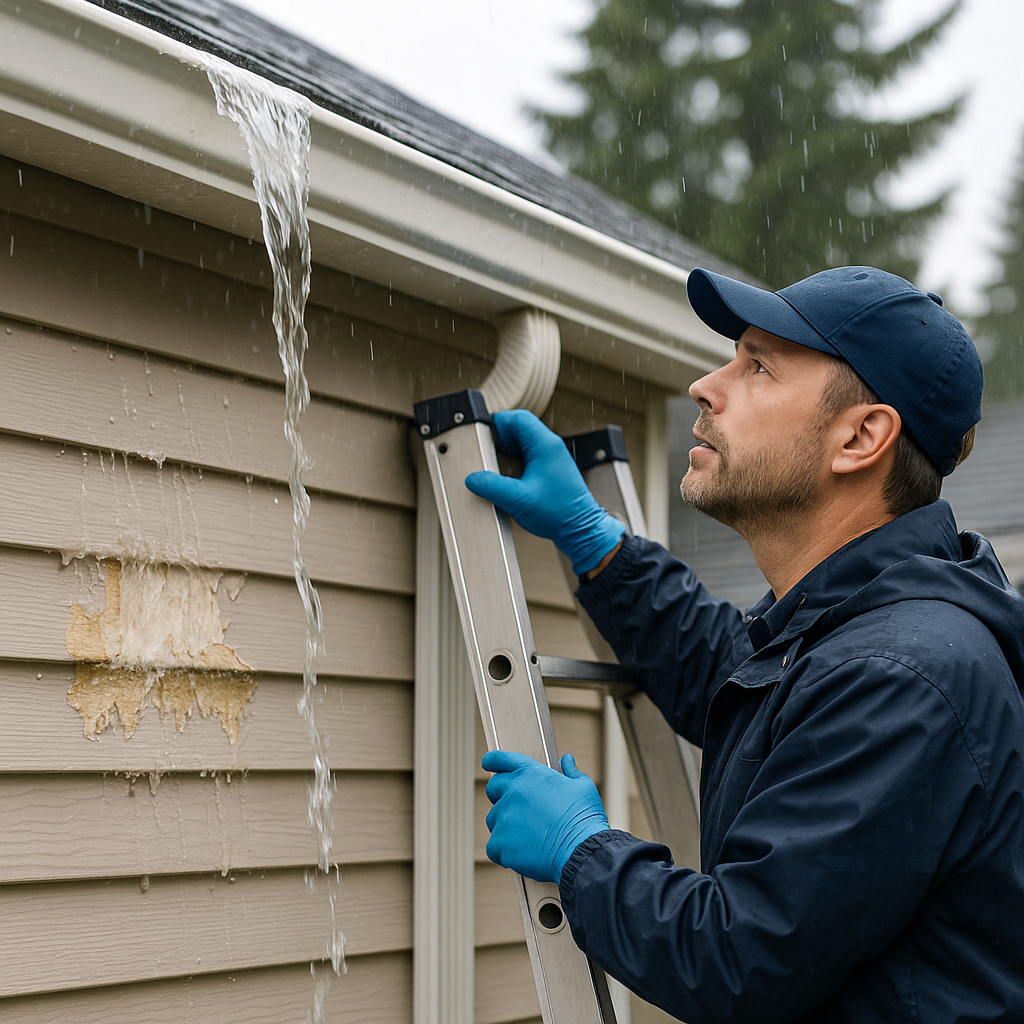
When new gutters attach to weakened fascia, the problems compound. Fasteners pull loose, long runs begin to sag, and water starts slipping behind the system. Sometimes homeowners think they need gutter replacement, when the real trouble starts with the wood the gutters rely on.
A proper inspection helps clarify what is still sound and what needs reinforcement or replacement. Addressing fascia first makes the new system last, whether the final choice is aluminum gutter installation or a different material.
The Charm and Challenge of Vintage Architecture
Old Oregon homes rarely follow simple geometry. Additions from the 1960s sit under roof planes from the 1920s. Dormers pop up in odd places. Valleys funnel water toward one corner. None of this works well with factory-cut gutter sections meant for predictable rooflines.
These quirks become more obvious during high-intensity storms. The 2024 CW3E report highlighted how frequent moderate-to-strong atmospheric rivers hit the state, and those events concentrate runoff fast. A single valley can dump more water in a minute than the original gutter layout expected in an hour. When things are mismatched, water overshoots, pools, or pushes against seams.
Custom fabrication addresses much of this. Seamless gutter installation allows each run to match the home’s exact pitch and angle, even when the roofline wanders. Installers can shape continuous sections on-site to follow curves, wrap unusual eaves, or drop into downspouts right where the water lands.
The finished system looks cleaner, but more importantly, it handles Oregon’s heavy rain without fighting the architecture.
When Original Systems Fail Modern Needs
Some drainage issues date back to the time the home was built. Many older houses originally used smaller gutters because storms were less intense and the building code placed lighter demands on runoff. That changed as climate patterns shifted.
With storm intensity climbing again, those 59 atmospheric rivers in WY 2024 underline the scale; older 4-inch gutters simply cannot move water fast enough. Upgrading capacity becomes a practical fix, and certain sections benefit from 6-inch profiles or additional downspouts.
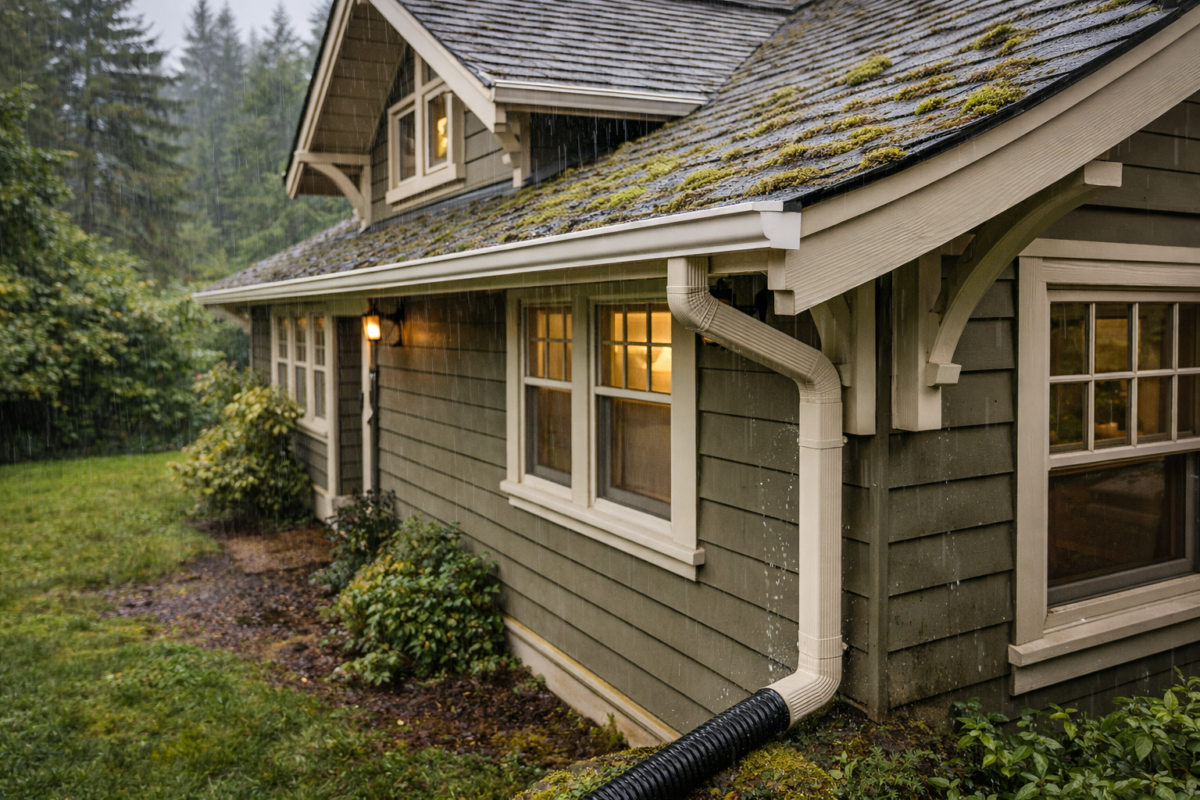
Downspout placement also matters more than it used to. Cities now expect homeowners to discharge water away from foundations to limit flooding and erosion. Portland recommends keeping downspout outlets 6 feet from basements and 2 feet from crawlspace foundations. Many vintage homes do the opposite: They drop water right next to the wall.
That mismatch becomes a problem after heavy storms, especially for homes with older basements or damp crawlspaces. Strategic design during rain gutter installation, by redirecting downspouts, adding extensions, or tying into underground drainage, helps the home adapt to current conditions without changing its footprint.
When an old system fails, gutter replacement, paired with updated routing, often resolves issues homeowners thought were unavoidable.
The Integration Challenge
There is always a balancing act when updating older homes. Homeowners want better drainage, but they do not want the gutters to announce themselves.
Oregon’s 2025 amendment to the Residential Specialty Code introduced new expectations for debris prevention, especially in leaf-heavy areas, which makes the design conversation even more important. Solutions like low-profile guards or color-matched systems blend better with vintage trim.
Material choices also help. Some homes look right with half-round profiles, others with K-style lines that tuck under old shingles. Modern finishes can mimic historic metal while offering smoother water flow.
When installers understand both the structure and the era it came from, aluminum gutter installations or seamless profiles can enhance the look rather than distract from it.
The Opportunity: Upgrading While Preserving
Older homes often respond best to a complete plan rather than a quick swap. Many Oregon houses built before 1940, or even mid-century, share the same vulnerabilities: aging wood, smaller gutters, and outdated downspout paths. A thoughtful upgrade strengthens those weak points and helps the house stand up to the weather patterns Oregon now sees regularly.
The long-term value shows up in quieter ways:
- Foundation stays dry
- Siding avoids repeated splashback
- Landscaping survives big storms instead of washing out
- Seamless, well-pitched sections keep water moving no matter how hard it falls
Combining solid prep work with seamless gutter installation or targeted gutter replacement gives older structures the resilience they never had.
The result is a home that feels both historic and prepared, still rooted in its old charm but supported by systems designed for the climate we live with now.
Honor Your Home’s History With Modern Protection
An older Oregon home carries the stories of every season it has endured. It deserves updated protection that respects that history while keeping up with the weather patterns outside. When the fascia is solid, the gutter runs match the roofline, and the drainage directs water where it belongs, the house moves into its next chapter with far fewer worries.
We can help you get there. At Gutter Empire, we provide the careful planning and specialized work older homes need, from full assessments to rain gutter installation and long-lasting upgrades. Contact us at (971) 777-9899, click here for a free estimate, or through our contact form to schedule your custom consultation.
Key Takeaways
- Oregon experienced 59 atmospheric rivers in Water Year 2024, significantly increasing roof runoff and exposing weaknesses in older gutter systems.¹
- Wood fascia begins to decay when moisture content stays above ~20%, with structural damage becoming likely near 30%, making inspection critical before new installation.²
- Many vintage homes still use smaller 4-inch gutters, which are often undersized for today’s higher rainfall intensity.¹
- Upgrading to 6-inch gutters and adding downspouts improves drainage capacity during heavy storms.
- Modern codes and local guidance require directing water away from foundations to reduce erosion and basement moisture risk.³
- Seamless gutters can be fabricated on-site to match irregular rooflines, dormers, and valleys common in older homes.
- Reinforcing or replacing deteriorated fascia ensures fasteners hold and prevents sagging or water intrusion behind the system.²
- Low-profile guards and historically compatible profiles allow drainage upgrades without compromising architectural character.³
Citations
- CW3E – Water Year 2024 atmospheric river activity in Oregon
https://cw3e.ucsd.edu/wp-content/uploads/2024/10/WY2024_Final_Summary/WY2024_Final_Summary.pdf - U.S. Forest Products Laboratory – Wood moisture content and decay thresholds
https://www.fpl.fs.usda.gov/documnts/fplgtr/fplgtr282/chapter_14_fpl_gtr282.pdf - Oregon Residential Specialty Code (2025 amendment) – Drainage and debris prevention considerations
https://www.oregon.gov/bcd/codes-stand/Documents/23orsc-r327-amend.pdf