Gutter Installation, Repair & Cleaning Services in Oregon | Gutter Empire

Categories
Blog Gutter Installation Gutter Repair

How Improper Gutter Installation Causes Paint Peeling on Oregon Homes

Oregon homes deal with a kind of rain that does not really give you a break. It comes in long stretches, sometimes gentle and sometimes heavy, but almost always steady.

When a home’s gutters are installed incorrectly or not maintained properly, that constant moisture runs down the siding instead of being carried away. Over time, that water leads to bubbling, cracking, and eventually peeling paint. It is one of those problems people notice too late, usually when the damage is already spreading.

This is where a closer look at gutter installation, slope, alignment, and long-term protection becomes important. You cannot fight a climate like Oregon’s with guesswork. You need gutters that move water the right way every single time it rains.

The Installation Mistakes That Send Water Down Your Siding

When people hear “bad gutters,” they usually imagine leaves or clogs. But the real trouble often starts on day one, when the gutters are installed without the right slope, placement, or support. A few small mistakes might not seem like much, but they can change the way water flows off the roof.

Common Installation Errors

  • Incorrect pitch: Gutters look level to the eye, but they are supposed to drop about a quarter inch every 10 feet. Without that pitch, water just sits there or spills over.
  • Loose or widely spaced hangers: This causes sagging, which slowly pulls the gutter away from the fascia.
  • Too few downspouts: Gutters fill faster than they can drain, forcing water to pour over the edges.
  • Runs that tilt toward the house: This is one of the worst scenarios because the overflow goes straight onto the siding.

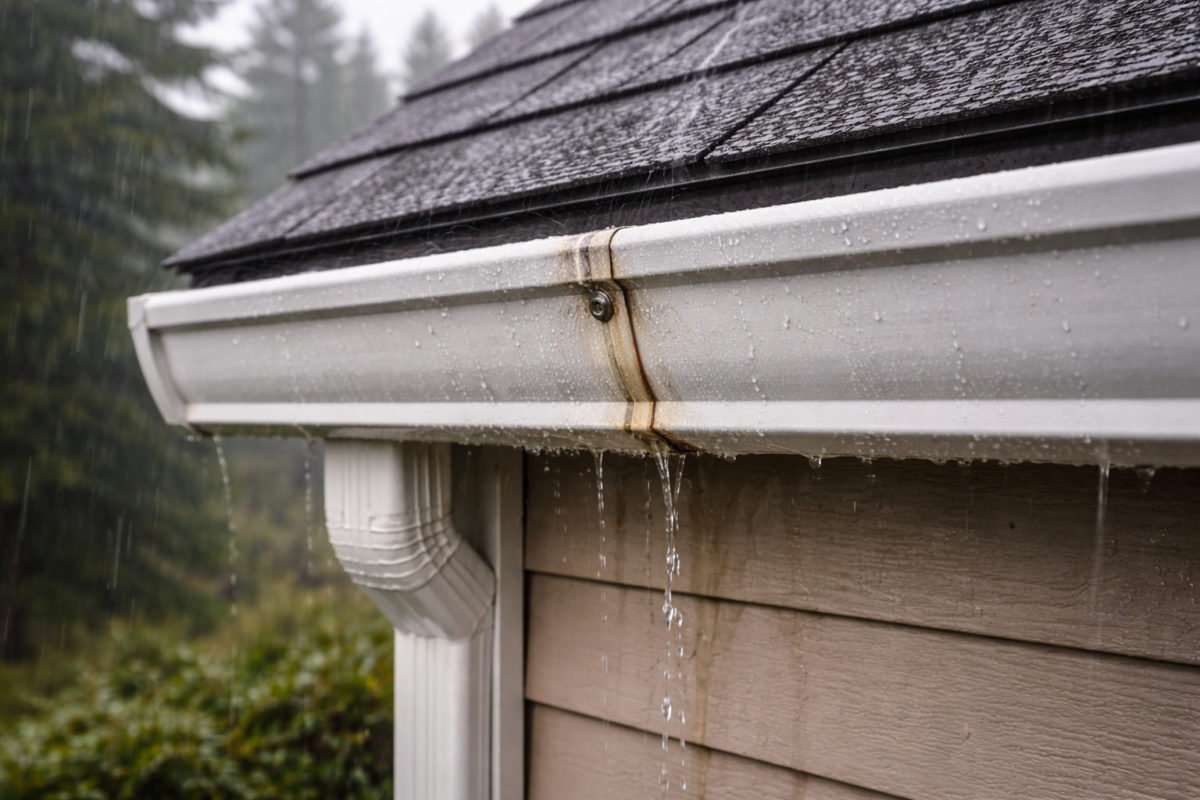
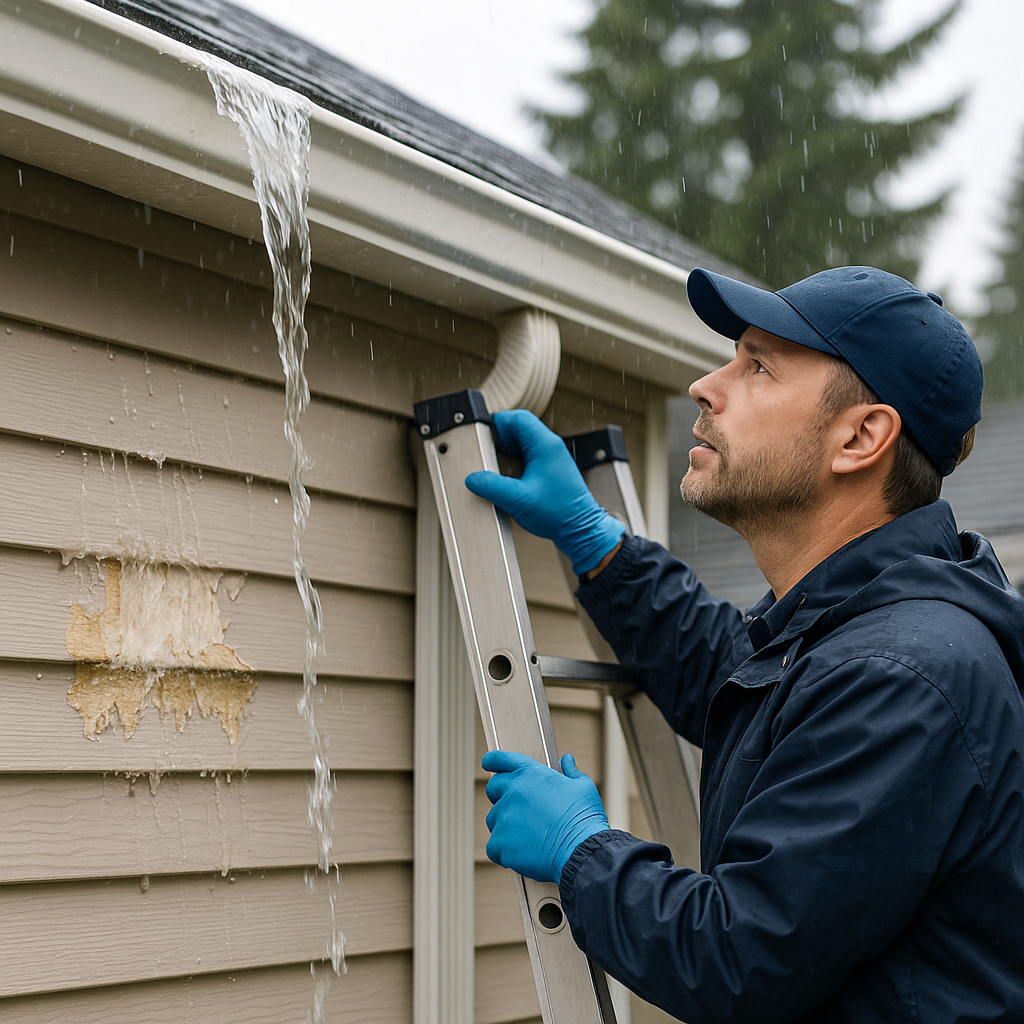
These issues turn a home into a waterfall during storms. Instead of collecting water and directing it safely away, the system forces it down the face of the house. That is exactly how paint damage begins, and it is why proper gutter installation matters so much in wet climates like ours.

If these problems are already showing, it may be time for gutter repair or even full gutter replacement, depending on how severe the warping or misalignment is.

How Overflowing Gutters Lead to Bubbling, Cracking, and Peeling Paint

Overflowing gutters push water down the siding, and the paint reacts pretty quickly. Small bubbles show up first, almost like the surface is struggling to release trapped moisture. As the wood stays damp, the paint’s grip weakens. It starts cracking in thin lines, then peeling in bigger pieces as the wall keeps absorbing more water after every storm.

You can repaint the area as many times as you want, but if the underlying moisture problem persists, the new paint will eventually fail, too. Water always finds the same path down the wall. Oregon’s long wet spells make it even harder because the wood never fully dries between storms.

Sometimes the damage spreads underneath window trim or near doors, especially if gutters overflow from the upper roofline. These areas take longer to dry and can become soft or discolored over time.

Continuous Moisture, Mold Growth, and Structural Deterioration

Paint failure is not the only thing happening. Behind those peeling layers, the wood starts to absorb more moisture. Once the siding or trim swells, mold usually follows. Mold only needs one thing to start growing: moisture, and overflowing gutters create the perfect environment.

The danger is not only the mold itself but what it means: the wood stays wet for days at a time. That leads to rot, softness, and eventually full deterioration of the fascia or sheathing. Wet walls and trim also attract insects, which see softened wood as an easy entry point.

Water damage does not stay small for long. That is why homeowners who notice early paint problems should also check their gutters. Fixing the moisture source matters more than touching up the surface.

Why Seamless Aluminum Gutters Offer Better Protection in Oregon

Once you understand how gutter failures cause paint and siding problems, the next question becomes obvious: What kind of gutter system holds up in this environment? Many Oregon homes now use seamless gutters, and for good reason.

These gutters are made from a single continuous piece of metal, usually aluminum, and shaped on-site to match the exact length of each roofline. Fewer seams mean fewer places for water, rust, or leaks to get in. Aluminum doesn’t rust, which is important because gutters are exposed to rain for months at a time every year.

Another big advantage is the ability to maintain a consistent pitch. Since seamless gutters fit the home precisely, installers can control the slope from end to end without awkward joints or adjustments. When done correctly, water flows smoothly toward the downspouts rather than pooling or spilling out of the gutter.

If a system is too damaged to fix, upgrading to these stronger, custom-fitted options through gutter replacement is often a better long-term choice.

When Installation Isn’t Enough: The Role of Maintenance and Repair

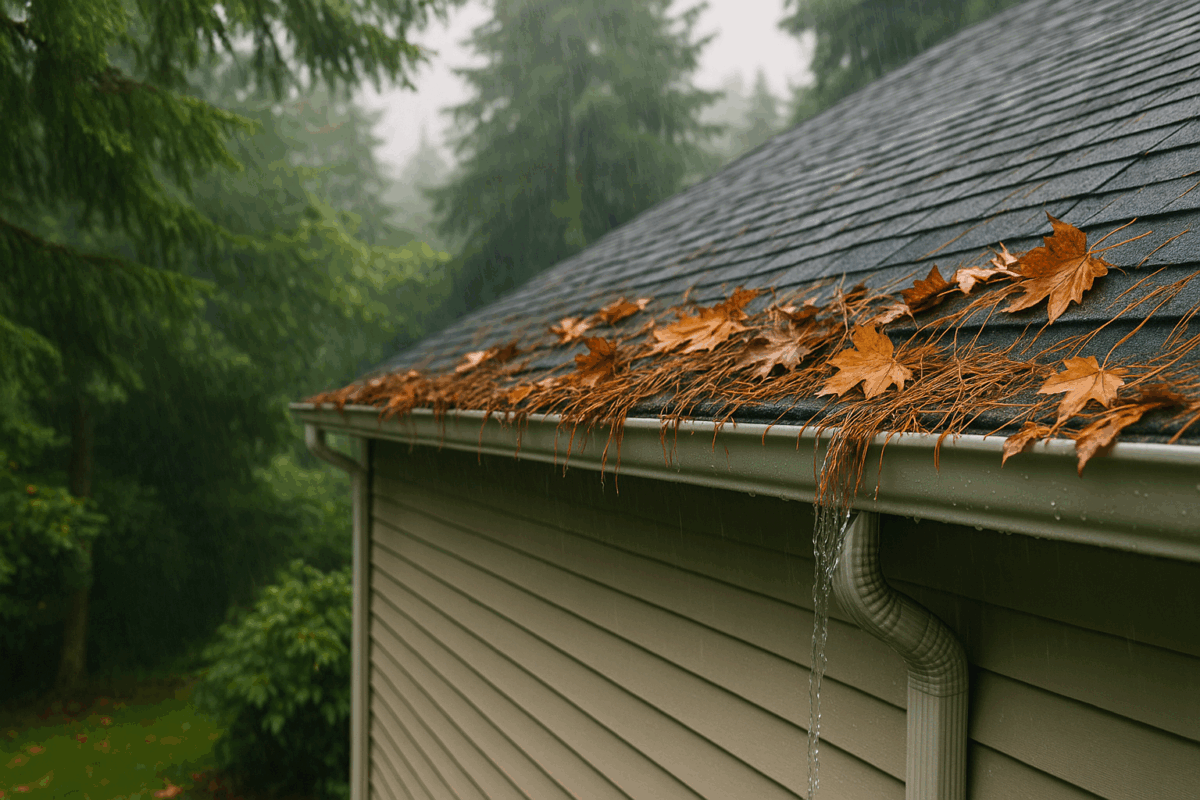
Even the best gutter system needs basic care. Oregon trees shed needles, leaves, and debris year-round. When that buildup clogs a downspout, the gutter behaves as if it were misaligned, even if the installation was perfect.

Sometimes, homeowners think the siding is failing when the real problem is a section of gutter that has sagged under debris or ice. Regular rain gutter repair and cleaning prevent those issues from turning into bigger problems. It keeps the water flowing in the direction it is supposed to go, instead of spilling down the walls.

This is where professional installers make a difference. A trained team can see whether the overflow is caused by pitch issues, hanger spacing, clogged outlets, or older materials that simply cannot hold up anymore. Fixing the right problem saves time, paint, and repairs down the line.

Protect Your Home From Moisture Damage With a Professional Gutter System

Peeling paint might look like a simple cosmetic issue, but it almost always leads back to water. In Oregon’s climate, that water usually comes from gutters that are overflowing, sagging, or installed without the right slope. When moisture repeatedly hits the same parts of your siding or trim, the damage builds faster than people expect.

If you want help protecting your home from long-term water damage, we can inspect your current system and install durable, seamless aluminum gutters. We also handle gutter repair and replacement when needed.

Contact us at (971) 777-9899 to schedule your evaluation, or get a free estimate here with Gutter Empire LLC.


Key Takeaways (with citation)

  • Improper gutter installation—especially incorrect slope, poor placement, and loose hangers—is one of the main reasons Oregon homes develop peeling paint and moisture damage along exterior walls. Properly installed gutters should be pitched slightly toward downspouts so water never sits or spills over the edge.[1]
  • Overflowing gutters send a steady stream of water down siding, which leads to bubbling, cracking, and peeling paint as moisture gets trapped in the wood beneath. Once the substrate is saturated, even fresh coats of paint will eventually fail again if the drainage issue isn’t fixed at the source.
  • Chronic overflow doesn’t just ruin paint—it also encourages mold growth, wood rot, and insect activity in fascia boards, trim, and sheathing. Over time, this can turn a simple cosmetic issue into structural deterioration that requires carpentry and extensive repainting.
  • Seamless aluminum gutters offer stronger long-term protection in Oregon’s wet climate because they are custom-formed on site, have fewer leak-prone seams, and won’t rust under months of rain exposure. Keeping a consistent pitch along each run helps ensure water flows toward downspouts instead of pooling.[1]
  • Even a well-installed gutter system needs regular cleaning and occasional rain gutter repair to keep debris from causing sagging, clogs, and overflow that can damage siding and paint. Professional inspection helps pinpoint whether problems stem from installation errors, worn materials, or simple maintenance issues.

Citation

[1] The Home Depot. How to Install and Replace Rain Gutters. https://www.homedepot.com/c/ah/how-to-install-and-replace-rain-gutters/9ba683603be9fa5395fab9019cce4fcd

Categories
Blog Gutter Cleaning Gutter Repair

The Cost of Neglect: What Happens When You Skip a Year of Gutter Cleaning

Gutter cleaning isn’t anyone’s favorite chore due to many reasons. Life gets busy, and it’s easy to push it to the bottom of the list. However, in Oregon, where rain arrives like clockwork, skipping just one year of maintenance can trigger a series of costly problems.

What seems like a harmless delay can turn into stained siding, rotting fascia, interior leaks, and even foundation damage. In this blog, we’ll walk through exactly what can happen when you let your gutters sit clogged through just one storm season, and why the average gutter cleaning cost is nothing compared to a full-blown home repair.

The Immediate Aftermath: Clogs and Overflow

Fall hits, and the first big rainstorm rolls through. If your gutters are full of pine needles and soggy maple leaves, you’ll know it fast.

When gutters clog, water has nowhere to go. Instead of flowing through the downspouts, it spills over the sides and drenches everything below. This isn’t just messy; it’s the first domino in a chain reaction of damage.

Clogged gutters are the #1 reason homeowners start searching for gutter cleaning services near them every November, usually after the first big rain exposes a problem. Overflow, sagging sections, and pooling water are all signs it’s time. Don’t wait until you see water pouring over the edge to take action.

The Silent Damage: Rotting Fascia and Soffits

Overflowing gutters do more than dump water on your yard. They soak the very boards that hold your gutters in place.

The fascia is the horizontal wooden board behind the gutter. The soffit is the underside of your roof overhang. When water spills behind clogged gutters, it sits against these boards. Oregon’s wet climate exacerbates the issue, as constant moisture leads to rot.

Rotting fascia means your gutter system starts to sag or separate. You’ll soon be looking for both gutter repair services near you and new woodwork. And because this damage is behind the gutter, most people don’t see it until it’s already done its worst.

The Exterior Assault: Stained Siding and Landscaping Erosion

You might think a little overflow just runs down the wall and disappears. Not quite.

Here’s what happens:

  • Dirty runoff stains your siding, leaving dark streaks that don’t wash off easily.
  • Your flower beds take a beating. Excess water destroys mulch, flattens plants, and leaves pits in the soil.
  • Over time, water scours the area around your home’s foundation, eroding stability and setting the stage for more significant problems.

If you’ve noticed overflowing gutters, water-streaked siding, or soft spots near your foundation, it might be time to search for gutter cleaning and repair near you. Catching these early signs and acting fast can help you avoid major structural damage and preserve your home’s exterior before the next storm.

The Major Leaks: Roof Damage and Interior Water Intrusion

When gutters back up, the water overflows and can seep under your roofline.

Water that seeps beneath shingles can cause your roof deck to rot. Once that happens, water can enter your attic, insulation, and even your drywall. Suddenly, you’re looking at water stains on your ceiling or black mold creeping into corners.

According to the Oregon Health Authority, clogged gutters and downspouts are a common source of indoor mold and structural decay. That little chore you skipped last fall just became a multi-thousand-dollar rain gutter repair and home restoration project.

The Foundation Threat: The Costliest Consequence

Here’s where things get serious. When rainwater is allowed to pool at the base of your home, it slowly breaks down the soil.

That moisture creates pressure against your foundation walls, causing cracks, shifts, or settling. In the worst cases, it leads to basement flooding. And it doesn’t take much. FEMA reports that just one inch of water in your basement can cause over $25,000 in damage.

When you compare that number to the cost of a gutter cleaning service, it’s easy to see which option makes more sense. One protects your investment. The other puts it at risk.

The Financial Bottom Line: Cleaning Cost vs. Repair Bills

Most gutter cleaning services in Oregon cost between $120 and $230, depending on your home’s layout, roof height, and how packed the gutters are. Even if you need a little more work, such as minor repairs or a high-ladder setup, it rarely breaks the bank.

Now let’s look at what happens when you skip it:

  • Replacing water-damaged fascia boards can run $600–$1,500.
  • Siding repairs or repainting can push past $2,000.
  • A simple roof leak could cost between $1,500 and $8,000.
  • If overflow compromises your foundation, basement repairs could cost anywhere from $5,000 to over $25,000.

Therefore, when you weigh the price of a once- or twice-a-year cleaning against the risk of structural damage, the decision becomes pretty simple. A small, proactive investment with a local gutter cleaning and repair company near you will always cost less than waiting for something to go wrong.

The Gutter Empire Solution: Protect Your Oregon Home

One skipped cleaning might not seem like a big deal. However, that streak on the siding, sag in the metal, or water pooling near the downspout are early signs that something’s off. Once the damage sets in, it moves fast.

That’s where we come in. At Gutter Empire Oregon, our goal is to identify issues before they escalate into major problems. Our full-service gutter cleaning services in Oregon go well beyond a quick leaf removal. We flush every run, check each downspout, and look closely for anything that could come loose, rust through, or rot out.

Sometimes, we recommend small upgrades, such as gutter guards or longer downspout extensions. Nothing flashy, just what works.

The goal is to keep water where it’s supposed to go and keep repair crews off your calendar.

Protect your home before the next big storm. Call (971) 777-9899 or get a free estimate for your professional gutter cleaning with Gutter Empire today.


Key takeaways:

  • Clogged gutters quickly turn into overflow, staining, rot, and interior leaks—moisture problems can promote mold growth and structural decay.
  • Water near the foundation is the costliest risk; even small amounts indoors can create big bills—about 1″ of water can cause >$25,000 in damage.
  • Compared with repair costs (fascia, siding, roofing, or foundation), routine professional gutter cleaning is a low-cost prevention step.
  • Pair clean gutters with sound downspout discharge and (optionally) guards to reduce debris buildup and keep water moving away from the home.
Categories
Blog Gutter Repair

The Hidden Costs of DIY Gutter Repair in Oregon

Living in Oregon means getting used to a lot of rain. That’s why your gutters protect your roof, siding, and foundation from damage that builds up slowly but costs a ton to fix.

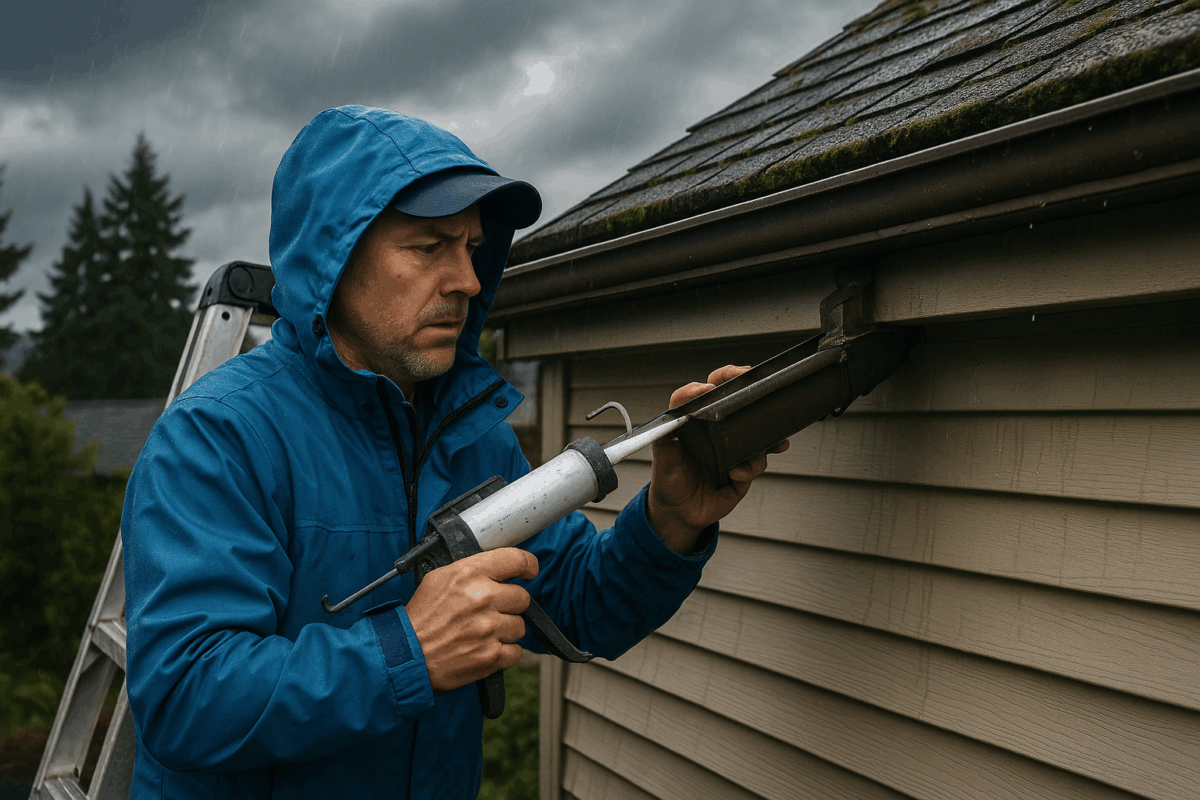
Therefore, when you spot a leak or a sagging section, it’s easy to think, “No big deal, I can handle that.” At first glance, a little caulk and a ladder might seem like enough. However, what many homeowners don’t realize is that those quick fixes often lead to bigger problems and bills down the line.

In this blog, we’ll walk through the hidden costs that come with DIY rain gutter repair. From safety risks to long-term water damage, here’s what you should know before climbing that ladder.

Safety Risks That Aren’t Worth the Savings

Climbing on a ladder while juggling tools and sections of metal might not sound like a big deal until you slip.

Falls from ladders cause tens of thousands of injuries every year, according to the CDC and OSHA. Wet roofs, loose soil, and uneven surfaces make it even more dangerous in Oregon. One missed step could land you in the ER, with medical bills that quickly exceed any gutter repair cost you hoped to save.

What could go wrong:

  • You lose your balance on a mossy roof and twist an ankle.
  • You drop a gutter section, damaging your siding or windows.
  • You use a cheap or improperly placed ladder, and it gives way, causing you to fall.

Meanwhile, professional gutter repairs involve trained teams equipped with harnesses, spotters, and the necessary safety gear. They’ve done this hundreds of times, so you don’t have to risk it once.

Water Damage From Slopes and Seals Gone Wrong

Here’s something most YouTube tutorials overlook: gutter slope matters a great deal. A gutter that doesn’t tilt slightly toward the downspout won’t drain. It fills, overflows, and dumps water where it shouldn’t.

The recommended pitch is ¼ inch per 10 feet, but in Oregon’s heavier rainfall zones, you may need up to ½ inch. Eyeballing it with a regular level is probably not going to be accurate enough.

And even if you seal the leak, did you:

  • Realign the entire run to maintain proper slope?
  • Check if water is pooling in the middle of the section.
  • Inspect if your fascia is soft or rotting beneath.

The problem:

Poorly sealed joints and misaligned slopes don’t just look like a problem; they also pose significant risks. They act like one. Rain creeps behind siding, into your attic, or down to your foundation. With Oregon’s high moisture levels, leaks can develop into full-blown mold or wood rot in just 24–48 hours. With Oregon’s high moisture levels, leaks can develop.

Moss, Mold, and Fascia Rot

In Western Oregon, especially, moss is everywhere. It thrives in our shady, damp conditions. That same moss grows under your shingles and along the edge of your gutter, trapping moisture and lifting materials.

DIYers often wipe it off or scrape it back, but don’t realize the damage already underneath.

Real risks from moss and moisture:

  • Fascia boards that appear fine but are soft and crumbling on the inside.
  • Dripping edges that invite ants, termites, or mold colonies.
  • Roof shingles that curl or separate, pushing water under the roofing deck.

If your idea of how to repair gutters involves some caulk and a Saturday afternoon, it probably won’t stop these deeper issues. Professional crews reseal joints and inspect your fascia, flashing, and roofline to ensure nothing’s hiding behind the drip.

Insurance Doesn’t Cover DIY Damage

Do you think your homeowners’ insurance will cover the costs if a leak gets out of hand? Maybe. But probably not.

Water damage is only covered when it’s “sudden and accidental.” Leaks caused by lack of maintenance or by a failed DIY repair are usually excluded. That means moldy insulation, stained drywall, or warped flooring are all on you if the damage can be traced back to a sloppy seal.

Average cost of uninsured water damage: $12,500+

Compare that to the $240–$480 average cost of professional gutter repairs in Oregon, and it’s clear: Spending a little now can save you from a massive bill later.

The DIY Price Tag Is Higher Than It Looks

When most people think about DIY, they focus on avoiding the labor cost. However, they often overlook other important details.

Hidden DIY costs:

  • Ladder (rent/purchase): $75–$200
  • Sealants, hangers, splash guards, connectors: $50–$100
  • Replacement sections of gutter: $5–$20 / ft.
  • Lost weekend + return trips to the hardware store: Priceless
  • Risk of doing it wrong and having to pay for a full gutter replacement later? Very real.

In total, your DIY job might cost $200–$400, and you still need to have it redone professionally next season. That’s assuming nothing breaks, nobody gets hurt, and no leaks go unnoticed.

Short-Term Fixes Don’t Survive Long-Term Rain

There’s a reason professionals use specific sealants, brackets, and aluminum gauge sizes. Oregon’s weather doesn’t play nice with shortcuts

Common DIY fixes that don’t last:

  • Silicone sealant that cracks or peels in cold months
  • Poorly fastened hangers that sag under the weight of pine needles
  • Misaligned downspouts that splash water at your foundation

If your fix only lasts until the next storm, is it really saving you anything?

Meanwhile, professional teams like Gutter Empire utilize seamless gutter sealing, correct slope alignment tools, and long-lasting materials specifically designed for the Pacific Northwest weather. Our work lasts through winter and is backed by warranties.

Rethink DIY: Protect Your Home the Right Way

In a place like Oregon, where it rains for months at a time and moss grows on just about everything, gutter problems don’t stay small for long. That tiny drip or loose joint you noticed last week could already be letting water into your walls or rotting the fascia behind your gutters.

DIY repairs might save you a little upfront, but they rarely solve the full problem. And if a fix fails mid-storm, you’re back where you started, sometimes with even more damage than before. When you factor in the risk of injury, the cost of tools, and the likelihood of getting it wrong, hiring a professional makes more sense.

At Gutter Empire Oregon, we take the stress out of gutter repairs. We get the slope right, seal it properly, and check for the hidden issues most people miss. Let’s get your system working the way it’s supposed to. Contact us at (971) 777-9899 for a free quote or click here for a free estimate.

Resources
A Brief Guide to Mold and Moisture
Center for Diseases Control
How Much Slope Does a Gutter Need on Your Home?
Occupational Safety and Health Administration
Water Damage Insurance Claim Statistics

Categories
Blog Gutter Repair Gutter Replacement

Why Oregon Insurance Claims Often Trace Back to Bad Gutters

In Oregon, water damage is one of the most common reasons homeowners file insurance claims. Roof leaks, soggy basements, and even mold infestations often get blamed on storms or poor construction. Yet, the starting point is frequently something far less dramatic: gutters that haven’t been maintained.

When gutters clog or sag, water doesn’t drain safely away. Instead, it seeps under shingles, soaks fascia boards, and pools at the base of the foundation. That extra moisture sets the stage for rot, cracked concrete, and insurance disputes no homeowner wants to face.

At Gutter Empire Oregon, we’ve seen this pattern time and again. By the time a call for gutter repair comes in, the damage has already spread.

The Oregon Climate Is a Perfect Storm for Gutter Problems

Oregon’s rainy season is no joke. In places like Portland, it rains for months on end, leaving gutters to carry thousands of gallons of water off the roof.

Add in heavy tree cover, including pine needles, moss, and leaves, and you’ve got a recipe for constant clogs. When water and debris combine, even a high-quality system can back up. That’s why gutter repair and cleaning in Oregon isn’t just maintenance. It’s protection against a climate that never gives gutters a break.

How Bad Gutters Cause Major Damage

When gutters fail, water finds new paths. Unfortunately, those paths usually lead straight into parts of the home you want to keep dry.

Clogged Gutters

Clogged gutters are the starting point for nearly every major problem. Leaves and debris stop water from flowing, forcing it over the edges. Once that happens, siding, roofing, landscaping, and even foundations are exposed to constant water runoff.

Water Intrusion & Roof Damage

When gutters overflow, water can creep under shingles and pool at the roof edges. Over time, that causes rot, warped decking, and even destructive ice dams in colder weather. This type of water damage is one of the most common insurance claims in the state.

By the time homeowners start searching for roof and gutter repair near them, the ceiling stains and mold patches are already proof of the damage.

Fascia and Siding Rot

The fascia boards behind your gutters are only designed to hold hardware and provide a finished look. When they’re constantly wet, they rot quickly. Once the attachment point weakens, gutters sag and eventually pull away from the house. At that stage, gutter replacement often becomes the only option.

Foundation Cracking and Basement Flooding

When water overflows close to the foundation, some will soak into the ground and eventually accumulate hydrostatic pressure. Eventually, that pressure can crack foundations and cause flooding of basements. This is one of the biggest drivers of flooded basements in Oregon’s rainy climate because it happens more often and is very expensive.

Landscape and Exterior Damage

It’s not just what’s inside the house that suffers. Overflowing water can drown shrubs, wash away soil, and leave unsightly stains on siding. While insurance doesn’t typically cover ruined landscaping, homeowners still pay the price for the neglect.

The Insurance Nightmare: What Your Policy Might Not Cover

Most homeowners assume insurance will step in to cover water damage. The truth is that coverage is not guaranteed. Insurance companies are very clear: Policies cover “sudden and accidental” damage, not damage caused by poor maintenance.

That means if an adjuster can prove the water damage came from neglected gutters, your claim may be denied. Instead of the insurance company paying out, you’re stuck footing the bill. And when you compare that to the relatively small gutter repair cost, the numbers speak for themselves. Paying a few hundred dollars now is far better than paying thousands later.

The Most Common “Gutter-Related” Insurance Claims

Across Oregon, many of the same claims pop up repeatedly, and they often trace back to neglected gutters. The most common of them include:

  • Interior water damage from roof leaks and ceiling stains
  • Mold remediation after water seeps into drywall and insulation
  • Basement flooding caused by foundation overflow and pressure
  • Structural repairs to fascia, soffits, and even cracked foundations

Each of these repairs runs into the thousands. And if insurance denies coverage, homeowners pay out-of-pocket.

Your First Line of Defense: Proactive Gutter Care

The simplest way to avoid costly water damage is to keep gutters in working order before problems begin. Preventive care doesn’t take much time, but it pays back in peace of mind.

Regular Cleaning & Inspection

Oregon’s rainy climate and tree cover mean debris builds up quickly. Clearing out leaves and checking for clogs at least twice a year keeps water flowing and prevents sudden overflow. Small adjustments to alignment or slope during these cleanings can also help.

Timely Gutter Leak Repair

The seams, corners, and fasteners are usually the first to break down. While a small drip at the edge of a seam may not seem like an emergency, water has a way of spreading once it is in. Timely gutter leak repairs can save you thousands in damage to the roof or drywall.

Gutter Repair vs. Gutter Replacement

Not every system can be saved with a patch. If gutters are rusted through, sagging off the fascia, or tied to rotted wood, it’s smarter to choose full gutter replacement. It’s a bigger investment up front, but it eliminates the cycle of recurring leaks.

Consider these steps to be a form of controllable insurance. It will rain eventually. When rain comes, you have set routines to determine whether the rain stays outside or comes inside your home.

Gutter Empire: Your Partner in Prevention

At Gutter Empire Oregon, we approach every project with prevention in mind. Our inspections go beyond cleaning to look for loose brackets, clogged downspouts, and early signs of rot. If we find trouble, we explain whether a simple repair will solve it or whether gutter replacement is the better long-term fix.

We also believe in transparency. Homeowners always get a clear breakdown of the gutter repair cost before work begins. That honesty, combined with professional workmanship, helps keep insurance claims and premium hikes off your plate.

Don’t wait until water damage forces your hand. Call us today at (971) 777-9899 or book a free estimate for inspection and maintenance, and let’s keep Oregon rain where it belongs: outside.


Key Takeaways

  1. Neglected gutters are a leading cause of water damage in Oregon homes. Overflow and leaks often result in roof damage, fascia rot, basement flooding, and even foundation cracks—many of which lead to expensive repairs.
  2. Oregon’s rainy climate creates the perfect storm for gutter problems. With heavy rainfall, moss, pine needles, and constant debris buildup, clogged gutters are one of the most common starting points for insurance claims.
  3. Insurance policies don’t always cover gutter-related water damage. Claims tied to poor maintenance—such as clogged or sagging gutters—are often denied, leaving homeowners to pay out-of-pocket . Source: https://olis.oregonlegislature.gov/liz/2017R1/Downloads/CommitteeMeetingDocument/114088
  4. Proactive gutter care is far cheaper than repairs. Routine cleaning, timely leak repair, and replacing old systems when necessary can prevent thousands of dollars in water damage and insurance headaches.
  5. Aluminum seamless gutters and professional inspections offer long-term protection. Gutter Empire Oregon provides expert repair, replacement, and preventive care designed for the state’s unique climate.
Categories
Blog Gutter Cleaning Gutter Repair Gutter Replacement

Top Gutter Repair Questions We Get from Oregon Homeowners

Gutters in Oregon move rainwater and defend homes against wildfire risks, protect foundations from our steady rain, and keep moss and needles from turning roofs into gardens. With so many different climates across the state, wet coastal towns, snowy mountain passes, and the high desert, homeowners often face unique challenges. Still, the questions we hear most often are surprisingly similar.
Here are the top questions Oregon homeowners ask about gutter repair in Oregon, answered with the detail and local know-how you need.

Are My Gutters a Fire Risk in Oregon?

This question frequently arises in communities near forests or grasslands. Gutters can become a hazard during wildfire season if they’re not maintained. Dry leaves and fir needles act like tinder when embers blow in the wind.

The material matters, too. Vinyl gutters, common because they’re cheap, don’t hold up well in fire-prone areas. They melt under high heat and can crack during Central Oregon cold snaps. Metal gutters, such as aluminum, galvanized steel, or copper, are noncombustible, meaning they won’t catch fire or burn like vinyl can, making them a safer choice in areas prone to wildfires.

Adding metal gutter guards can further enhance safety. A fine micromesh cover keeps debris out while removing another ignition source from your roofline.

How Do I Prevent Water from Damaging My Foundation?

Foundation damage is one of the most costly consequences of gutter failure. In Oregon’s rainy climate, water pooling around the base of a home can cause cracks, leaks, and soggy landscaping. The state’s residential building code even requires soil to slope away from foundations for the first ten feet.

Here’s what works in practice:

  • Downspout extensions move water well away from the home’s perimeter.
  • Grading ensures soil slopes downhill, which is critical during winter rains.
  • Rain gardens or barrels utilize the water instead of wasting it. In Portland and Eugene, for instance, homeowners can disconnect downspouts and route them into rain gardens to cut stormwater runoff.

Should I Repair or Replace My Gutters?

Nobody wants to replace a gutter system if a repair will do, but sometimes gutter replacement is the smarter choice. Here’s the difference.

Repairs make sense when:

  • You have a small leak at a seam or end cap.
  • Hangers or brackets are loose, but the gutters are intact.
  • A short section has the wrong slope.
  • One fascia board needs replacement.

Replacement is best when:

  • Gutters sag in multiple places.
  • Rust or corrosion spreads through the system.
  • Cracks or splits keep reappearing.
  • Water is staining the siding or rotting the fascia.

How Do I Deal With Moss, Needles, and Green Gutters?

If you’ve lived in western Oregon, you know the sight: gutters filled with fir needles and even moss growing inside.

Gutters should be cleaned at least once a year, although most homes require two cleanings: after the fall leaf drop and again in the spring. In tree-heavy areas like Portland’s West Hills or Eugene’s South Hills, gutter cleaning may be needed more often. A single winter storm can fill a system with needles.

For moss, chemical-heavy treatments aren’t necessary. Brushing out growth and keeping gutters dry is the most effective approach. Low-toxicity moss controls are available for those who want extra protection without harming streams or gardens.

Do Gutter Guards Really Work Here?

We often hear mixed opinions about gutter guards. The truth is, some work better than others, especially in Oregon.

Micromesh metal guards are the best fit for homes under firs and pines. They block even small needles better than slotted plastic covers. Plus, because they’re noncombustible, they add a wildfire safety benefit.

However, no guard eliminates maintenance. Debris still collects on top and needs to be rinsed off. Guards make cleaning easier and less frequent, but homeowners should still plan for occasional checkups.

Can Repairs Be More Sustainable?

Many homeowners today want their repairs to also support sustainability. In Oregon, that’s not only possible, but it’s also encouraged.

Rainwater harvesting is legal statewide, and non-potable uses, such as garden watering, are common. When we repair or replace gutters, it’s easy to add a downspout diverter for a rain barrel. In places like Eugene and Portland, downspout disconnection programs even encourage routing water into rain gardens, where it filters naturally into the soil.

We also recycle old materials whenever possible. Aluminum, steel, and copper can all be reused, reducing waste. A repair or replacement job doesn’t have to send your old gutters straight to the landfill.

What About Snow, Ice, and Wind?

Homeowners east of the Cascades or up in the mountains know how snow and ice stress gutters. When snow melts and refreezes, ice dams can form. Water backs up, seeps under shingles, and spills behind gutters.

Gutter repair in Oregon often focuses on reinforcement. Stronger hangers spaced closer together hold the weight. A correct slope helps water drain before it freezes. Sealants rated for freeze-thaw cycles keep seams watertight.

On the coast, wind is the bigger problem. Loose fasteners or corroded brackets can cause a section of gutter to collapse during a storm. That’s why stainless steel or coated fasteners are a must in those areas.

What Repairs Can I Do Myself?

Some small repairs are safe for homeowners to handle. Resealing a tiny leak with gutter caulk, replacing a splash block, or clearing out debris are all simple DIY jobs.

However, larger problems call for professional help. Sagging runs, repeated overflows, or fascia damage indicate that the system requires more than a quick fix. Multi-story homes also present a safety risk, as working on ladders with tools isn’t worth it if you’re not trained.

DIY is fine for maintenance and minor fixes. For structural issues, a pro ensures the repair lasts and the system is safe.

Let’s Get Your Gutters Back on Track

Moss in the valley. Ice in the mountains. Salt on the coast. Oregon throws a lot at your gutters. Small changes, such as stronger hangers, corrected slope, micromesh guards, and simple downspout extensions, add up fast. You’ll notice fewer overflows and cleaner lines after storms.

We offer gutter services in Oregon that match local weather conditions, not a one-size-fits-all template. If embers worry you, we’ll spec metal runs and guards. If drainage is the issue, we’ll route water where it belongs.

Contact us at Gutter Empire Oregon, and let’s fix what’s failing and set your system up to last.


Key Takeaways

  • Fire Safety: Vinyl gutters can melt in wildfires; metal gutters with micromesh guards are safer in Oregon’s fire-prone areas.
  • Foundation Protection: Downspout extensions, grading, and rain gardens prevent costly water damage around your home’s base.
  • Repair vs. Replacement: Small leaks and slope fixes can be repaired, but sagging, corrosion, or widespread cracks call for full replacement.
  • Moss & Needles: Oregon’s climate demands at least two cleanings per year; micromesh guards help keep fir needles and moss under control.
  • Sustainability Options: Rain barrels, rain gardens, and recycling old metal gutters make repairs more eco-friendly.
  • Climate-Specific Stressors: Ice dams in mountain areas and coastal winds require stronger hangers, proper slope, and rust-resistant fasteners.
  • DIY vs. Pro Repairs: Homeowners can reseal small leaks or clear debris, but structural problems and multi-story homes need professional repair.

Last updated: September 2025

Categories
Blog Gutter Cleaning Gutter Repair

Leaves, Needles, and Moss: Oregon’s Biggest Gutter Problems in Fall

Fall in Oregon is gorgeous. The trees light up with color, the air smells like rain, and every breeze sends more leaves spinning to the ground. But while all that looks great from your window, your gutters are quietly dealing with the mess. In places like Portland, Estacada, and Oregon City, fall weather hits hard: rain almost every week, gusty winds, and an endless supply of debris.

Leaves, pine needles, and moss are the big three troublemakers this time of year. If you let them sit, you’re setting yourself up for leaks, water damage, and some hefty repair bills. The good news is that a little preparation now can save you a lot of headaches and money later.

Why Fall in Oregon Wrecks Gutters So Fast

Oregon’s weather isn’t gentle. The rain starts early, and it doesn’t just “drizzle” for a day and stop. It soaks everything, and when your gutters are stuffed with debris, that water has nowhere to go.

The climate here also encourages moss to grow rapidly. Add in pine needles from the evergreens, plus leaves from maples and oaks, and you’ve got a recipe for blockages, heavy gutters, and overflow. Once water starts spilling over the side, your gutters, siding, foundation, and even your basement are at risk.

Leaves: The Classic Clog

Even if you don’t have a big tree in your yard, leaves will find your gutters. Wind carries them from all over the neighborhood, and once they land, they pile up, soak through, and clump together into a dense mat.

That leaf mat:

  • Blocks water completely, forcing it to spill over the side.
  • Holds in moisture that rots wooden trim.
  • It can cause seams to leak, leading to gutter repair sooner than you’d like.

Many homeowners think they can wait until winter to deal with it, but by then, you’re paying a higher gutter cleaning cost. Frozen leaves are heavier, harder to remove, and way worse for your gutters.

Pine Needles: The Sneaky Clog

In Estacada and Oregon City, especially, pine needles are constant. They drop all year, but fall storms make it rain needles. Unlike leaves, these pine needles are slim enough to slip through small gaps and weave together like a net.

Why are pine needles extra annoying?

  • They slide past cheap mesh guards, so a proper gutter guard installation in Oregon is worth considering.
  • They trap dirt and moisture, which helps moss grow faster.
  • They’re harder to scoop out. You have to loosen them up first.

If you live under tall firs, you might need to clean more than twice a year. Otherwise, you’re looking at higher cleaning bills and maybe even emergency calls.

Moss: The Green Menace

Once moss takes root in your gutters, it grows fast. Fall’s constant dampness keeps it alive and thriving. It doesn’t always block water completely at first, but it makes the inside of your gutters a swamp.

Why moss is so destructive:

  • It holds water against the metal, which speeds up rust and corrosion.
  • It gets heavy when soaked, adding strain to the whole system.
  • It can break loose and completely block downspouts.

Skipping moss removal now almost guarantees you’ll need gutter repair in Oregon later. A professional cleaning often includes treatment to prevent moss from returning, which is a smart move before winter.

Why Waiting Costs More

Putting off gutter maintenance in the fall can be expensive. The longer debris sits, the more damage it can cause. Overflowing gutters don’t just stain siding; they can undermine soil, cause foundation cracks, and even lead to basement flooding. Repairing these issues costs far more than preventive care.

In Portland, water pooling around the foundation is a significant contributor to structural issues, and clogged gutters are among the top culprits. Addressing the problem before the rainy season ramps up can save thousands.

Gutter Guards: Your Best Fall Upgrade

Gutter guards don’t make your gutters “set and forget,” but they cut your work in half. The right kind will block most leaves and needles, so you’re not climbing a ladder every few weeks.

Why pros are worth it for guards:

  • They pick the right style for our mix of leaves, needles, and moss.
  • The installation is secure enough to withstand Oregon windstorms.
  • You save on future cleanings, lowering your long-term gutter cleaning cost.

When considering the cost of gutter guard installation, factor in fewer cleanings, reduced risk of damage, and increased peace of mind during those heavy rain weeks.

DIY vs. Pro Cleaning

If you’re young, steady on a ladder, and have a one-story home, you might be fine doing it yourself. However, Oregon fall cleanings mean slippery roofs, heavy wet debris, and some real safety risks.

The pros bring:

  • Harnesses and stable ladders.
  • Tools that make needle removal faster.
  • The ability to identify problems before they escalate.

In many cases, hiring someone ends up saving you money by preventing the kind of damage that can later increase your gutter cleaning costs.

Your Fall Gutter Game Plan

Don’t wait for the first big storm to think about your gutters. The earlier you book, the easier it is to secure a spot and the less likely you are to incur extra costs for emergency work.

Quick checklist for fall:

  1. Inspect for sagging or obvious debris buildup.
  2. Clear leaves and needles before steady rains start.
  3. Flush downspouts to ensure water flows quickly.
  4. Add or install guards as needed.
  5. Look for signs of water damage around fascia or siding.

Keep Your Gutters Ready for Anything

Leaves, needles, and moss might seem like just another part of Oregon living, but they’re also your gutters’ worst nightmare in the fall. Stay ahead of them, and you’ll avoid most of the damage and cost that come with neglect.

At Gutter Empire, we understand the impact of our local weather on a gutter system. We handle cleanings, gutter guard installation in Oregon, and all kinds of gutter repair, so your home stays safe through the wet season. If you want to keep your gutters clear, your siding dry, and your foundation solid, we’re ready to help.

Call us at (971) 777-9899 to secure a spot on our fall schedule before the rain sets in.

Last updated: September 2025

Categories
Blog Gutter Repair Gutter Replacement

Gutter Repair or Full Replacement? Here’s How to Decide (Oregon)

Gutters aren’t exactly the flashiest part of your home, but they do a critical job of moving water away before it damages your roof, siding, or foundation. When they start to sag, leak, or overflow, you have a decision to make: patch them up, or start fresh?

This guide is built for Oregon homeowners facing that choice. We’ll break down when a basic repair is enough and when a full replacement makes more sense long-term.

Signs Your Gutters Are in Trouble

Most gutter problems don’t appear overnight. They start small, like a loose screw or a drip at the corner, but they build fast. In Oregon’s rainy climate, it doesn’t take long for those issues to snowball.

Below are some of the most common gutter red flags:

  • Leaks at the seams or end caps
  • Water marks under the gutters
  • Pools forming near the foundation
  • Sagging or sections pulling away from the roofline
  • Peeling paint, mildew, or rust
  • Frequent clogs, even with regular cleaning
  • Fasteners or downspouts that won’t stay in place

These symptoms all indicate a system that isn’t draining water properly. Some are easy to fix, while others indicate more significant structural issues.

When a Repair Is All You Need

A professional repair can often extend the life of your current gutter system if the damage is localized and the structure is still sound. It’s the most cost-effective option in the short term, and in many cases, it’s all that’s required.

Repairs are worth considering when:

  • The system is under 15 years old
  • Water is still flowing correctly through most of the run
  • The fascia board behind the gutter is intact
  • Issues are limited to one or two problem spots

Here are some of the repair fixes that work:

  • Sealing small holes or cracks with gutter-grade sealant
  • Replacing loose or missing hangers
  • Realigning sagging areas to improve slope
  • Reattaching downspouts or corners
  • Cleaning out clogs and installing simple guards to prevent them

As for gutter repair cost, homeowners in Oregon typically spend between $150 and $560, depending on materials and the extent of the work. If your gutters are structurally healthy, that investment can buy you several more years of reliable performance.

It’s worth noting that small repairs should be addressed quickly. Leaving a leak or sagging section untouched allows water damage to spread, and that’s when repairs become more complex and expensive.

When It’s Time to Replace the Whole System

Repairs can only go so far. If your gutters are deteriorating in multiple areas or if you’re calling for repairs more than once a year, it’s time to think bigger.

Full gutter replacement is often the better option when:

  • The gutters are 20+ years old
  • You’ve already repaired the same issue more than once
  • Rust, cracks, or splits are showing up in multiple places
  • Water reaches your soffits, siding, or basement
  • Sections are sagging or detaching from the fascia altogether
  • The system isn’t draining efficiently, even after cleaning

Trying to repair old, brittle gutters is like taping a cracked pipe. It might hold, but not for long. If you continue to shell out for patchwork, the total gutter repair cost may ultimately exceed what a new system would have cost in the first place.

Additionally, newer systems often incorporate improved design elements, such as slope optimization, seamless joints, or integrated guards. These features can reduce maintenance and extend lifespan.

Understanding the Costs and Trade-Offs

In 2025, a full gutter replacement in Portland, OR, typically costs between $2,834 and $5,170, or approximately $14 to $26 per linear foot for a standard 2,500-square-foot home. It’s a bigger upfront cost than a repair, sure, but in many cases, it’s the smarter investment. New gutters mean better drainage, fewer service calls, and stronger protection for your roof, siding, and foundation over the long haul.

Repairs win in the short term. However, if you’re dealing with chronic leaks or sagging, replacement provides peace of mind, fewer service calls, and improved drainage during Oregon’s wettest months.

Materials and Options That Last in Oregon

If you do opt for a replacement, it’s worth understanding what’s out there. The right gutter system depends on your home’s layout, climate, and the level of maintenance you’re willing to handle.

Most Common Materials:

  • Aluminum: Affordable, rust-resistant, and lasts around 25 years
  • Vinyl: Low cost, but more prone to cracking in cold weather
  • Copper: Expensive but nearly maintenance-free and lasts 50+ years
  • Steel: Durable and handles snow well, but can rust over time

Seamless Gutters Are Now Standard

Most gutter installers in Portland, OR, offer seamless options. These are custom-fit to your home with fewer joints (and fewer places to leak). They also tend to hold up better against Oregon’s heavy rains.

Oversized gutters are also available for homes with large roof surfaces or slow-draining slopes. These options reduce the risk of overflow during downpours.

The Seasonal Advantage: Why Fall Is the Right Time

If you’re on the fence, now’s a smart time to act. Fall rains haven’t hit full force yet, but they will. Waiting until water starts pooling at your foundation or rot shows up in the fascia usually means higher repair bills.

What you can do this season:

  • Schedule a professional inspection
  • Clear out any fall debris
  • Watch how your gutters handle rainstorms
  • Budget now for a spring upgrade if needed

Late summer to mid-fall is an ideal time for gutter repairs or replacements, before winter’s heavy moisture freezes or exacerbates existing damage.

Let’s Help You Make the Right Call

If you’ve been looking for gutter repair services near you, comparing quotes, or wondering if this is your last season with your old system, we understand. Choosing between repair and replacement isn’t always straightforward.

That’s where we come in.

At Gutter Empire, we thoroughly inspect your gutters and walk you through the available options. If a minor gutter repair will suffice, we’ll show you where and how. If gutter replacement is the smarter move, we’ll walk you through the reasons and help you plan it around your budget and schedule.

Let’s protect your home before the next heavy rain hits. Reach out today for a free quote and expert advice tailored to your property.

Last updated: September 2025

Categories
Blog Gutter Cleaning Gutter Repair

Clogged Gutters: Here’s What Happens If You Ignore the Problem

Most homeowners don’t think much about their gutters until something goes wrong. A small clog might not seem like a big deal at first, but that debris can quietly set the stage for major damage. Left unchecked, a clogged gutter can threaten everything from your foundation to your roof to the health of your indoor air.

This blog walks you through what happens when gutters get ignored. If you’ve ever considered typing “gutter cleaning and gutter repair near me” into Google and shrugged it off, read this first. The consequences are more serious and more expensive than most people realize.

The Silent Damage a Clogged Gutter Can Cause

Most damage caused by clogged gutters builds slowly behind walls and under shingles. By the time you notice the following signs, the real problem may already be serious.

Foundation Trouble

Water should never pool near your foundation, but a blocked gutter sends runoff straight down the walls of your home. This water seeps into the ground, weakening the soil and creating hydrostatic pressure on your foundation. Over time, this pressure forces water into tiny cracks, expanding them and leading to leaks or even structural shifts.

Worse, this saturation can make basements damp and unlivable. You might not notice the damage right away, but by the time it’s visible through peeling paint, soft walls, and musty smells, it’s already progressed.

Roof and Attic Leaks

When water backs up because of a clogged gutter, it can spill over the edge and also pool on the roof. This puts pressure on shingles and increases the risk of water slipping underneath. In colder months, that trapped water often turns to ice, forming damaging ice dams that push under roof tiles and melt into your attic.

What starts as a slow leak can lead to rotted rafters, soggy insulation, and eventual ceiling stains inside the home.

Rotten Fascia, Siding, and Soffits

Gutters are attached to your roof via fascia boards. If water pours over due to clogs, these boards absorb the overflow and begin to rot. This weakens your gutter support system and can cause full sections to pull away from your home.

Moisture also spreads to the siding and soffits. If those areas are made of wood or wood composite, rot and mold follow fast, bringing pests with them.

What You Don’t See (But Should Worry About)

Some of the worst damage happens in places you never think to look, such as behind walls, under eaves, or inside your attic. Clogged gutters make your home vulnerable in more ways than one.

Pest Infestations

Still water trapped in a clogged gutter becomes a breeding ground for mosquitoes. But that’s not all. Termites and carpenter ants are drawn to the soft, rotting wood behind fascia boards. Squirrels, birds, and even rats have been known to nest inside gutter debris.

Once pests find an opening, they often move inside, chewing through insulation, wires, and drywall.

Interior Water Damage

The effects of clogged gutters often become apparent inside your home long after the damage has begun. Water can seep into wall cavities or leak through the attic, causing:

  • Brown ceiling stains
  • Bubbling or peeling paint
  • Mold growth behind drywall

These interior symptoms indicate that water is bypassing the roof and entering your living space, which is something no homeowner wants to deal with.

Landscape and Hardscape Destruction

When gutters overflow, all that stormwater lands right below your roofline. The result?

  • Erosion of soil and mulch
  • Overwatering of flower beds
  • Drowned shrubs and fragile plants

Additionally, water runoff that pools near driveways or walkways can slowly crack or lift the concrete over time, especially in freeze-thaw conditions.

The Importance of Seasonal Cleaning

Cleaning your gutters once a year isn’t enough for most homes. Experts recommend a minimum of twice per year: in spring and fall. However, if your home is surrounded by trees or you’ve experienced several consecutive storms, more frequent cleanings are advisable.

Signs you need to act now:

  • Water spills over the sides of your gutters when it rains
  • Streaks or staining on your siding beneath the gutters
  • Sagging, tilting, or separated gutter sections
  • Visible debris poking up from the top

The longer a clogged gutter goes unchecked, the greater the risk you carry to your home and budget. Many homeowners don’t call for help until damage appears inside. But by then, it’s already a costly situation.

What Local Homeowners Can Do Today

The good news is that clogged gutters are easy to deal with when caught early. Whether you’re facing a current issue or looking to prevent one, these are the steps that work.

Call for Professional Help

Not every gutter issue is DIY-friendly. If your home has a two-story roofline, high peaks, or visible signs of damage, a professional inspection is safer and more effective. Gutter pros can:

  • Safely remove clogs and debris
  • Repair sagging or detached gutter sections
  • Redirect water away from your home’s base

If you’re looking for gutter cleaning and gutter repair services near you, now’s the time to follow through before fall storms or heavy snow make things worse.

Invest in Prevention

A few small upgrades can go a long way:

  • Gutter guards reduce buildup and extend the time between cleanings.
  • Downspout extensions carry water farther away from your foundation.
  • Gravel or stone splash zones protect soil and landscaping along the drip line.

Proactive maintenance always beats reactive repair.

Don’t Wait for the Leak to Find You

A clogged gutter is a nuisance and a threat to your roof, foundation, landscaping, and health. Water damage is one of the most expensive problems a homeowner can face, and it often begins at the edge of the roofline.

At Gutter Empire, we understand how fast small problems can turn into major repairs. That’s why we offer professional gutter cleaning, gutter repair, and gutter guard installation services across Oregon. We understand the local weather patterns and design systems to accommodate them.

If your gutters are clogged, leaking, or just haven’t been checked in a while, don’t wait. We invite you to call us at (971) 777-9899 for a free estimate.

Last updated: September 2025

Categories
Blog Gutter Repair

Why Portland Homes Need Professional Gutter Repair Before Fall

In Portland, the rainy season can be a test of your home’s readiness. One of the biggest weaknesses homeowners overlook is gutters. Those seemingly simple channels lining your roof can become a source of thousands in damage if you ignore small issues for too long. When fall storms hit, they hit fast.

This post explains why leaking gutters and neglected drainage systems are more than minor annoyances. We’ll walk through warning signs, risks, and the benefits of hiring professionals for gutter repair in Portland before fall rains flood your property.

Fall in the Pacific Northwest Is No Joke

When it comes to seasonal urgency, few places demand action like the Pacific Northwest. Based on historical data from the HYDRA Rainfall Network, the region averages between 36 and 46 inches of annual rainfall, with most of it concentrated between October and March. It doesn’t take long for saturated soil and overwhelmed storm drains to translate into flooded basements and cracked foundations.

What makes this worse is a recent shift in how that rain shows up. Climate trends show more sudden downpours instead of steady rainfall, and Portland’s older infrastructure isn’t built to absorb those bursts.
This means your gutters are doing more than ever before, and they need to be up to the task. One gutter leak repair in September can save you a foundation repair bill in November.

Signs Your Gutters Need Immediate Attention

Even if everything looks fine from the ground, problems could already be brewing. Below is what to watch for as summer wraps up:

1. Cracks or Peeling Paint

Tiny cracks can expand fast under heavy rainfall. If you notice peeling paint or rust spots, it’s likely that water is sitting inside your gutters instead of draining away.

2. Water Stains on Siding or Soffit

Look for water marks under your gutter line. That usually means leaking gutters are letting water escape, not flow, and it’s soaking your fascia boards and exterior.

3. Sagging Gutters or Pulling Away From the Roof

This often means the system is full of water and debris, making it too heavy to hold. If they’re pulling away, water may be pooling too close to your foundation.

4. Loose Nails and Separated Seams

If you keep finding metal fasteners on the ground, your gutters aren’t secure. Additionally, if seams are pulling apart, they’ll leak even when barely full.

What Happens If You Delay Repairs?

Putting off gutter leak repair might save a few bucks today, but the long-term cost can be serious.

Foundation Damage

Gutters are designed to direct water away from your foundation. Clogs or leaks cause water to seep in, slowly breaking down concrete and creating dangerous cracks.

Rotting Wood and Fascia

Overflow from leaking gutters can soak the wooden fascia boards that support your gutter system. Rot sets in, fasteners loosen, and eventually the whole system may collapse.

Landscaping Erosion

Water spilling over the sides of your gutters usually ends up drowning flower beds or eroding soil around the house.

Pest Infestation

Clogged or broken gutters often collect standing water, a mosquito’s favorite habitat. Termites and ants also love the damp wood that results from poor drainage.

Interior Water Damage

Overflow can lead to ceiling stains, peeling paint, and mold. Once water seeps into your attic or walls, you’re looking at thousands in repair costs.

Why Professional Repairs Are Worth It

Some homeowners are tempted to handle gutter issues themselves. While DIY might work for a quick clean-out, professional gutter repair in

Portland offers long-term value.

  • Expertise in Diagnosing Real Issues: Pros know how to spot slope misalignments, seam separations, and drainage inefficiencies that casual inspections miss.
  • Proper Slope and Pitch Adjustments: A gutter should slope about ¼” every 10 feet. Too flat and water pools. Too steep, and it shoots out. A professional makes sure it’s just right.
  • Safe, Efficient Cleaning and Repair: Climbing ladders, sealing cracks, and resecuring brackets can be dangerous and difficult. Pros bring the tools and the insurance to handle it safely.
  • Long-Term Cost Savings: Professionally repaired systems last longer, handle more water, and reduce the risk of emergency repairs later.

Fall Preparation Isn’t Optional in Portland

If you’re waiting until the first storm to think about your gutters, it’s already too late. Repairs in late summer or early fall give your system the best shot at handling Portland’s brutal rainy season.

Here’s how to prepare:

Do This Before October:

  • Inspect for visible sagging, rust, or debris
  • Check for water stains near the fascia and siding
  • Walk around your home during light rain while looking for overflow or drips
  • Schedule gutter repair if anything seems off

Why Now Is the Ideal Time

September is often the driest month between summer and winter. That makes it the best time for repairs. Sealant sticks better, brackets hold stronger, and professionals are more available than in peak emergency season.

Preventative Maintenance = Fewer Emergencies

Beyond repairs, regular upkeep makes a big difference. Twice-yearly cleanings, minor repairs, and leaf guard installations can significantly extend the life of your system.

As a pro tip, install mesh or surface-tension guards to prevent future clogs and reduce the frequency of gutter cleaning. For homes surrounded by trees, like many in Portland, this is a smart investment before fall.

We’re Here to Keep Portland Rain-Ready

Portland’s fall weather doesn’t wait for you to fix your gutters. Small cracks can turn into structural threats quickly when 40 inches or more of rain starts to fall. Therefore, it’s smart to inspect your system and book gutter repair near you before storm season kicks in.

At Gutter Empire, we specialize in gutter leak repair and full restoration services tailored to Oregon’s unpredictable climate. Our team understands how water moves in and around Portland homes and how to stop it from doing damage.

We encourage you to contact us today to schedule an inspection or a quote for gutter repair in Portland. Whether it’s a simple resealing or a full system overhaul, we’ll make sure your gutters are ready before the rain begins. Don’t let leaking gutters catch you off guard this fall. Let’s get ahead of it.

Last updated: September 2025

Categories
Blog Downspouts Gutter Repair

Downspouts 101: Why They Matter More Than You Think

You probably don’t give your downspouts much thought. Those skinny pipes stuck to the corners of your house don’t exactly stand out until they fail. Suddenly, you’ve got water pooling around your foundation, a basement that smells like a pond, and muddy flower beds that look like they’ve been through a small flood.

In Oregon, where heavy rain is a certainty, your downspouts quietly do some of the hardest work in protecting your home. And yet, they’re often overlooked until there’s a problem.

This blog looks at why these pipes matter so much, what can go wrong, and how you can tell when it’s time to call for downspout repair.

What Exactly Does a Downspout Do?

Your roof collects rain. Gutters catch that water and move it sideways along the roofline. The downspouts take it all the way down and push it out and away from your home.

Without properly working downspouts, all that rainwater would fall straight down, soaking the ground around your foundation. Over time, this can lead to cracks, leaks, and even significant structural damage. A slow drip today might mean a massive foundation repair bill tomorrow.

One of the primary reasons homes develop foundation problems is improper water management. Downspouts quietly steer water far enough away so your basement stays dry and your foundation stays strong.

The Quiet Signs That Something’s Wrong

You won’t always notice downspout problems at first glance. Unlike a roof leak that drips inside your living room, downspout issues hide in plain sight. But if you look closely, they leave clues.

1. Cracks, Dents, or Rust

A small crack or dent might seem harmless. However, these weak spots turn into leaks, especially when rain hits hard. Rust, meanwhile, is a sign that the metal is breaking down and may not hold up much longer. If your downspouts are over 20 years old, keep a close eye on them because they could be on borrowed time.

2. Leaky Joints and Loose Connections

If you have seen water leaking from seams or dripping before it reaches the end of the pipe, it usually means the joints are no longer sealed properly. Over time, fasteners can rust and joints can wiggle loose. Every drip adds up, slowly eroding soil or seeping into your basement walls. If you spot this, it’s time to consider a downspout repair company near you.

3. Overflowing Gutters and Pooling Water

When gutters overflow, we tend to blame clogs at the top. But sometimes, the real culprit is a clogged or undersized downspout. If you notice water spilling over during a storm or puddles forming near your foundation after the rain stops, it’s worth investigating.

4. Frequent Clogging

Oregon trees drop a lot of leaves and debris. If your downspouts clog repeatedly, that’s a sign they might be too narrow or not designed for the volume of water coming off your roof. Bigger profiles or protective covers can help. If you keep grabbing the ladder every few weeks, it might be time for a better solution.

5. Damage to Your Foundation or Landscaping

Cracks in your foundation, sinking or shifting soil near the house, or struggling flower beds can all be traced back to poor water drainage.

Downspouts that dump water too close to the house can create a mini moat around your foundation, weakening it over time.

Downspouts Size and Placement

Many homeowners are unaware that downspouts come in various sizes and require careful placement. The basic rule is one downspout for every 40 feet of gutter, although this isn’t set in stone.

Here’s a quick breakdown:

  • A 2×3-inch downspout can handle approximately 600 square feet of roof area.
  • A 3×4-inch downspout can handle up to 1,200 square feet.

If your roof is big or your gutters are small, adding more downspouts or using larger ones can prevent overflow disasters.

Placement matters, too. A downspout that ends right at the foundation is inviting trouble. You want that water moving at least four to six feet away. Extensions, splash blocks, or even underground drainage systems can help direct water safely away from your yard or garden.

Why Extensions and Diversions Are Lifesavers

Sometimes, you need to go beyond the basic pipe. If your property slopes oddly or if you notice stubborn wet spots in your yard, extensions might be the answer.

  • Splash blocks help spread water out so it doesn’t dig a trench.
  • Accordion-style extenders can guide water around flower beds or walkways.
  • Fold-down diverters give you flexibility; out when it’s wet, tucked away when you mow.
  • Underground drain pipes keep everything out of sight and move water even farther away.

These extras stop water from creeping back toward your foundation or pooling near patios and driveways. If you own a business, these solutions become even more important. Oregon’s rain can create puddles in parking lots or near entryways, making them hazardous to slip on. Investing in commercial downspouts with proper extensions protects your property and your customers.

Maintenance as Your Best Defense Against Surprises

No one loves gutter and downspout maintenance. But skipping it can cost you. Experts recommend cleaning them at least twice a year: once after the leaves have dropped in the fall and again after winter to clear out any remaining debris. In Oregon, where moss and needles can sneak in, you might need more frequent checks.

What should you look for?

  • Blockages you can’t flush with a hose
  • Rust spots or peeling paint
  • Missing screws or loose brackets
  • Water trickling behind the downspout instead of flowing through

Need Gutter Repair Too?

If your downspouts are acting up, there’s a good chance your gutters could use some attention, too. Sagging sections, rust, or leaks can all impact the effectiveness of your drainage system. At Gutter Empire, we don’t just install gutters—we also offer professional gutter repair in Oregon to keep everything flowing properly. Whether it’s a small fix or a full system checkup, we’ve got you covered.

Why We Care About Your Downspouts

Downspouts aren’t the most glamorous part of your home or building, but they’re quietly protecting you every time it rains. Whether you’ve got a cozy bungalow in Portland or a busy storefront in Salem, strong, well-maintained downspouts keep your foundation dry and your landscaping intact.

If you’ve noticed any leaks, rust, or suspicious puddles, don’t wait for a big storm to push things over the edge. We’re here to help. If you’re searching for commercial downspouts near you, Gutter Empire has you covered with fast, reliable service that keeps your home dry and protected. We believe every Oregon property deserves to be rain-ready without surprise repairs lurking around the corner.

We’d be happy to take a look, answer your questions, and help you protect your most valuable asset. Call us at (971) 777-9899 for a free estimate.

Last updated: September 2025