Gutter Installation, Repair & Cleaning Services in Oregon | Gutter Empire

Categories
Blog Gutter Installation Gutter Replacement

The Role Gutters Play in Preventing Crawlspace Moisture in Oregon Homes

Oregon rain has a way of turning “small” exterior issues into indoor problems. Not overnight, but slowly and repeatedly. When water keeps landing in the wrong place, the ground around your foundation stays wet, and your crawlspace starts acting like a sponge that never fully dries.

That is why rain gutter installation matters more here than many homeowners expect. A roof can shed a surprising amount of water. One common rule of thumb puts it at about 623 gallons from just one inch of rain on a 1,000-square-foot roof. If that water keeps getting dumped next to the house, you can almost predict what happens next.

How Roof Runoff Ends Up Under Your Floors

A roof is basically a water collector during rainy months. That is why seamless gutter systems often make sense in wet climates, because fewer seams can mean fewer leak points in the long run. Still, even the best gutters can only help if the water leaves the system correctly.

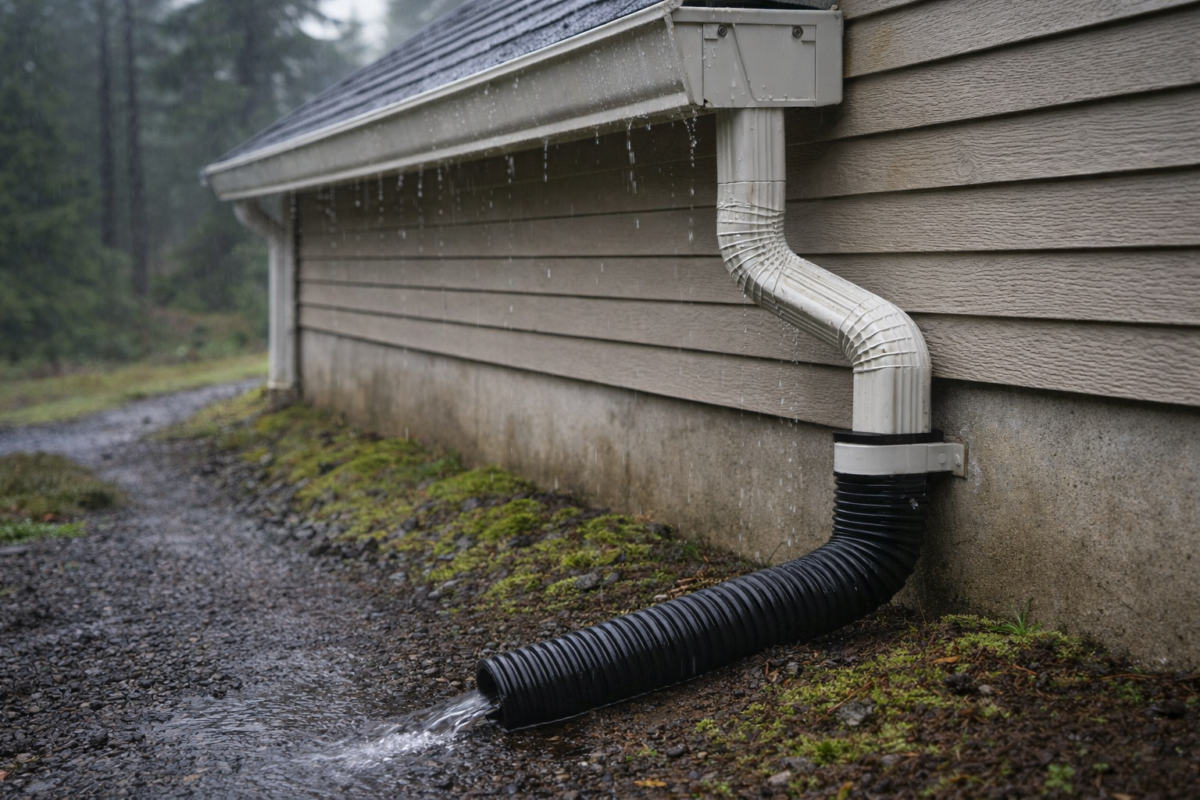
Gutters can only “hand off” water. Downspouts do the actual relocating. Downspouts work best when they send water well away from the foundation. One recommended approach routes downspouts into piping that extends at least 10 feet away from the home.

If your discharge point sits too close to the house, the soil stays saturated. Saturated soil holds water against the foundation longer, which increases the chance that moisture creeps into the crawlspace through gaps, porous materials, and humid air movement.

Crawlspaces sit low, stay cooler, and often have limited airflow. When the ground around the foundation stays wet, the crawlspace usually becomes the place where dampness shows up first.

The Three Failure Points That Drive Crawlspace Dampness in Wet Months

Most crawlspace moisture stories trace back to the same three gutter failures. You can think of them as “overflow,” “short dumping,” and “wrong direction.”

Overflowing Gutters

Overflow means the roof water does not stay inside the channel. It spills over the edge and hits the ground right next to the foundation. That same rule of thumb, 623 gallons per inch on a 1,000-square-foot roof, helps explain why overflow is never a minor issue.

  • Clogs push water over the front edge
  • A bad slope makes water pool and spill during heavy flow
  • Leaks at corners or seams drip constantly during long rains

Short Downspouts

A downspout can work perfectly and still create problems if it dumps right at the base of the wall. The water does not disappear. It soaks the soil where your foundation meets the ground.

  • Corners take repeated hits and stay wetter than the rest of the perimeter
  • Splashing can kick water back onto siding and trim
  • Water can run along the footing line instead of away from it

Poor Water Direction

Even when water exits the downspout, it needs a path. If the grade slopes toward the house or hard surfaces send water back, moisture collects where you do not want it.

  • Puddles form near the foundation after rain
  • Erosion marks show where water keeps cutting the same channel
  • Water flows toward vents or low crawlspace entry points

When homeowners ask why this happens “more in winter,” the answer is usually simple: the rain keeps coming. In Portland, November 2025 logged 4.53 inches of precipitation, with 18 days seeing measurable rain. That kind of steady, repeated exposure is precisely what turns minor drainage flaws into ongoing runoff around a foundation.

What Crawlspace Moisture Turns Into

Crawlspace moisture rarely stays as “just damp dirt.” It changes the air, the materials, and the way the home feels. Sometimes the first sign is a smell. Sometimes it is a strange chill that does not match the thermostat.

Humidity matters here. EPA guidance states that indoor humidity should stay below 60% relative humidity, and ideally in the 30–50% range. Once humidity remains high, surfaces in cool areas start holding moisture longer.

Mold and mildew can get started when the relative humidity near a surface rises above 70%, and it grows fastest at temperatures above 40°F. That matters because many crawlspaces sit right in that “cool but not cold” zone for months.

Early signs people often notice:

  • Musty odors after rain
  • Damp insulation under the floor
  • Condensation on vents or pipes
  • Wood that feels consistently cool and slightly wet to the touch

Fix the Water Outside First

Homeowners often start with the crawlspace because that is where they see the problem. But the fix usually begins outside. You want the roof water to leave the perimeter, not circle it.

Distance is the first lever. Building guidance recommends routing downspouts into piping that extends at least 10 feet from the foundation. Another option uses a branch tee as an overflow path, but that branch still needs to extend at least 5 feet and drain to daylight. Either way, “right next to the wall” is not the goal.

Slope is the second lever. Sloping surfaces should be away from the house; for permeable surfaces, that can look like about a half-inch per foot for the first 10 feet. For impervious surfaces close to the foundation, code guidance often targets a 2% slope away from the home.

A practical prevention checklist can be something like:

  • Confirm discharge sends water away from the foundation
  • Watch for pooling near corners during steady rain
  • Check that gutter runs do not sag or hold standing water
  • Make sure downspouts are not blocked at the bottom
  • Look for soil erosion that suggests repeated dumping

Knowing When Replacement Makes More Sense (and What Drives Cost)

Sometimes, cleaning and minor fixes are enough. Sometimes they are not. If you keep seeing overflow after you remove debris, or you keep re-sealing the same leak points, the system may be telling you something.

That is where gutter replacement becomes a practical decision. Keep gutters free of debris, keep them in good repair, make sure downspouts carry water away, and avoid pooling near the foundation. If the system cannot meet those basics, the crawlspace keeps paying the price.

Repair or Replace?

  • Repairs make sense when the slope is mostly correct, and damage is localized
  • Replacement makes sense when sagging, chronic leaks, or undersizing keep returning
  • A redesign matters when discharge points or downspout placement never worked well

This is also where gutter replacement services can add value beyond swapping materials. A professional contractor will look at capacity, slope, corners, and discharge routing as one system. Many homes benefit from heavy-duty gutters and downspouts simply because steady rainfall demands consistent flow control.

What Affects Cost?

Homeowners often ask about gutter replacement cost, and several factors usually drive it:

  • Linear footage and roofline complexity
  • Material choice
  • Number of downspouts and where they need to discharge
  • Fascia condition and whether repairs are needed
  • Add-ons like guards or routing water into drain lines

Keep Rainwater Off Your Foundation This Season

In Oregon, crawlspace moisture often starts with a simple outdoor reality: Water keeps landing too close to the home. Overflowing gutters, short downspouts, and bad direction create the same outcome over time. The ground stays wet, and the crawlspace stays damp.

If you want help protecting your home with smarter drainage design, we can help. At Gutter Empire, we build systems that move water away from the foundation and reduce the conditions that feed crawlspace moisture. Call us at (971) 777-9899 to talk through your layout, your runoff points, and the right next step for your home. You can also get a free estimate here.


Key Takeaways

  • Roof runoff sends hundreds of gallons of water toward the foundation during Oregon rainstorms, and when gutters overflow or dump water too close to the home, that moisture often ends up in the crawlspace instead of draining away.
  • Most crawlspace moisture issues trace back to three drainage failures — overflowing gutters, downspouts that discharge too close to the wall, and grading that directs water toward the home instead of away from it. Proper gutter design and drainage routing are essential to prevent chronic soil saturation around the foundation.
  • Oregon’s rainy season creates repeated moisture exposure rather than single-event flooding, with Portland recording frequent measurable rain days across fall and winter — conditions that amplify small gutter or drainage flaws over time.
  • Moist crawlspaces increase humidity and mold risk inside the home, as EPA guidance notes that mold thrives when materials remain damp or relative humidity stays elevated — especially in cooler, enclosed spaces like crawlspaces.
  • Downspouts should discharge well away from the foundation — ideally 5–10 feet — and exterior grading should slope away from the structure to keep water from pooling near footing lines and seeping into crawlspace areas.

Citations

  1. https://www3.uwsp.edu/cnr-ap/UWEXLakes/Documents/ecology/shoreland/raingarden/rain_barrel_fact%20sheet%20and%20instructions.pdf
  2. https://basc.pnnl.gov/resource-guides/gutters-and-downspouts
  3. https://forecast.weather.gov/product.php?issuedby=PDX&product=CLM&site=BRO
  4. https://www.epa.gov/mold/brief-guide-mold-moisture-and-your-home
  5. https://basc.pnnl.gov/resource-guides/final-grade-slopes-away-foundation.
Categories
Blog Gutter Installation

The Top Gutter Materials That Withstand Oregon’s Wet Seasons Best

Oregon’s long rainy seasons ask a lot from the edges of a home. Gutters deal with constant moisture, shifting temperatures, and the slow pressure of moss that hides in shaded spots.

Portland alone sees about 36 inches of rain each year, and NOAA’s recent climate data shows heavier storms happening more often across the country. That rise in intense rainfall makes the small details, like choosing the right gutter material, matter much more than people expect.

Moss is also basically unavoidable in the Pacific Northwest, and it holds moisture against gutters, accelerating deterioration. When all those factors line up, homeowners who want fewer emergency calls for rain gutter repair usually decide to upgrade to a material that fits this climate instead of fighting it.

Why Oregon’s Climate Pushes Gutters to Their Limits

Oregon’s mix of wet months, shade, tall trees, and the slow creep of moss puts steady pressure on gutter systems. Even well-installed lines age faster when water sits in the trough or debris traps moisture against metal.

Heavy Rain & Standing Water

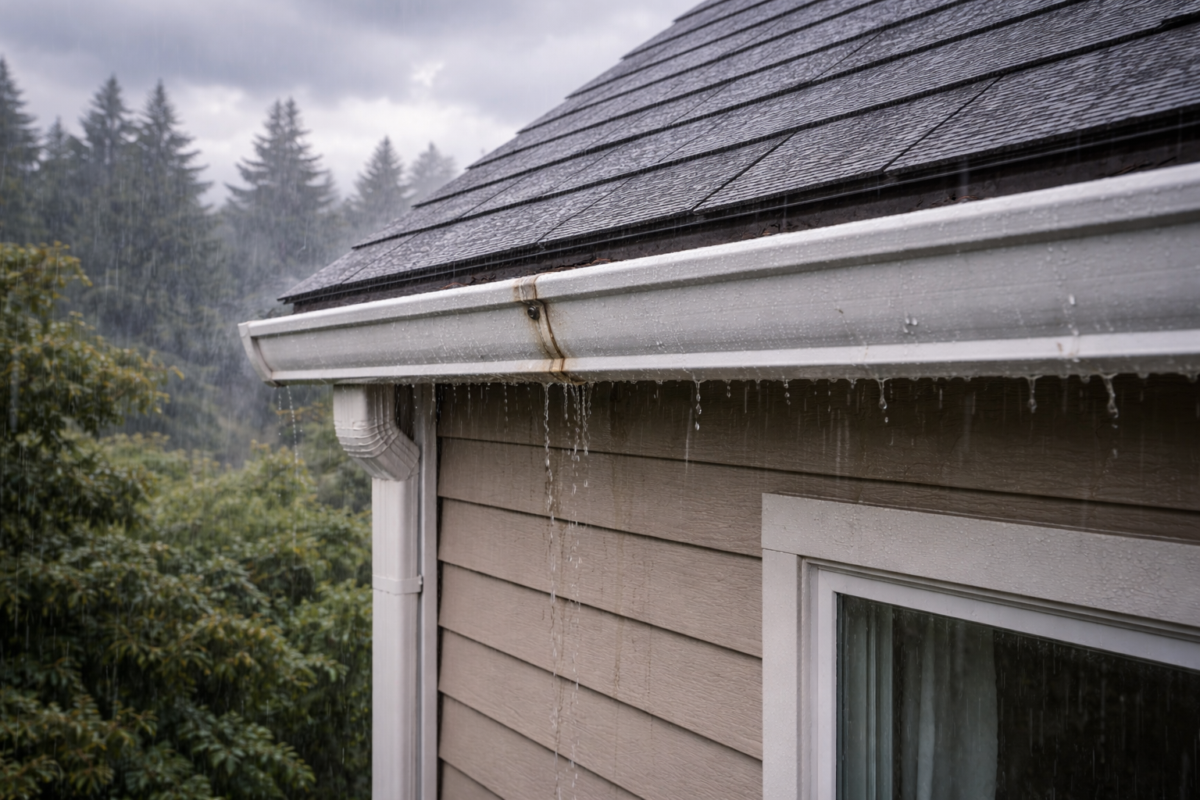
Storms drop a lot of water in a short time. Gutters that struggle to move water fast enough start pooling, and that extra weight makes weak spots sag. Once a section bends even slightly, leaks tend to follow. Sagging usually becomes a cycle that leads to gutter repair year after year.

Moss and Debris Traps

Moss grows almost anywhere in the PNW, especially where roofs stay damp or shaded. It slides into gutters and clings to the sides, holding water like a sponge. If the gutter material cannot withstand constant dampness, rust or cracking will appear sooner than expected.

Temperature Swings & Material Stress

Winter nights can dip low enough to make cheaper plastics brittle. That shift from cold mornings to mild afternoons creates tension along the seams. Vinyl tends to lose flexibility faster under these conditions, which is why it cracks or warps in climates like Oregon’s.

How Different Gutter Materials Perform in Wet, Moss-Heavy Conditions

Gutter materials behave differently over time as they endure repeated storms, and the differences become apparent over a few seasons. Some options handle Oregon’s moisture well, while others tend to age unevenly.

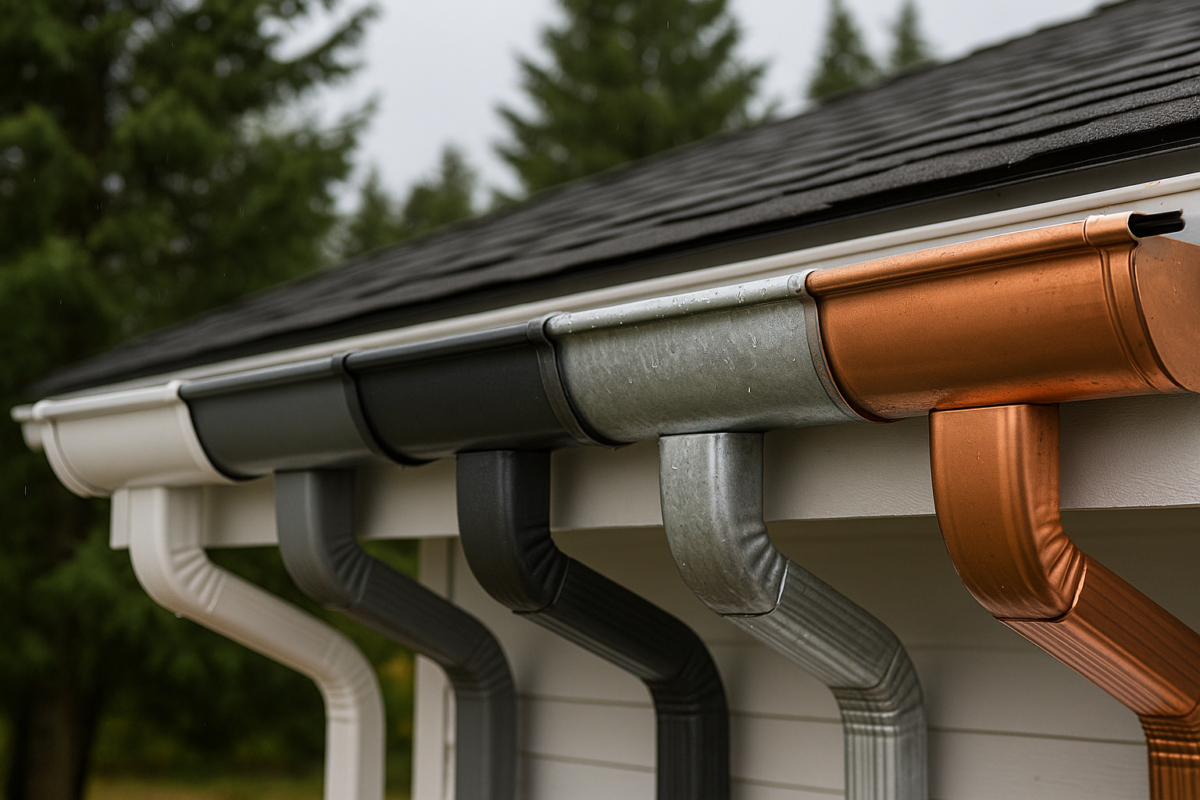
Aluminum

Aluminum is one of the most popular choices in the country. It does not rust, which already gives it an advantage in Oregon. Aluminum gutters typically last about 2 decades, and well-maintained systems can often last 30 years or more. That long lifespan is one reason many homeowners choose to install aluminum gutters when older systems begin failing.

Galvanized Steel

Steel is strong, and many people like that it resists dents. The zinc coating keeps rust at bay for a while, but once it wears down or gets scratched, wet environments accelerate corrosion.

In Oregon’s rainy climate, steel can look great for years and then suddenly show rust blooms after a wet winter. That inconsistency leads to more frequent gutter repair if the coating is not maintained.

Vinyl

Vinyl is the most budget-friendly option, but price is not the whole story. Vinyl lasts up to 20 years in mild climates but often only 10 years in cold, wet regions. Oregon fits that second category.

Vinyl tends to warp or crack as temperatures shift, and moss traps moisture that the plastic does not handle well in the long term. Homeowners who choose vinyl usually deal with earlier gutter replacement than they expected.

Copper

Copper stands at the premium end of the spectrum. It develops a natural patina that protects the metal, which is why it has a lifespan of 50 years or more.

For homeowners who want a material that can withstand decades of storms with minimal maintenance, copper offers long-term value. It’s an investment, though, so it fits best in projects where longevity and aesthetics matter more than upfront cost.

Why Aluminum and Seamless Systems Are Better Than Sectional Gutters in Oregon

Once you see how each material reacts to months of rain, aluminum paired with seamless gutters usually rises to the top for Oregon homes. The combination works well in a climate where moisture hangs around long after a storm passes. The metal does not rust, and the single-piece design maintains its shape without the weak spots that occur in sectional systems.

  • Fewer seams mean fewer places for leaks to form, which matters during heavy storms.
  • Joints remain tighter for a long time because there are no midline breaks through which water can slip.
  • Aluminum’s rust resistance helps prevent moss and damp debris from causing rapid wear like steel or vinyl.
  • The cost of maintenance stays lower, saving homeowners time and preventing emergency calls for rain gutter repair during the worst months.

This setup keeps things simple: fewer problems to track, fewer surprises, and a gutter run that stays dependable through the wet season.

When Fixing Isn’t Enough: How to Spot Early Signs of Failure

Even the toughest materials need attention over time. It helps to recognize when a system can be fixed with simple gutter repair and when the damage signals a deeper issue.

  • Rust spots on steel or worn areas on the zinc coating
  • Cracks or warping in vinyl after cold snaps
  • Leaks along seams in older sectional gutters
  • Overflowing during storms despite cleaning
  • Moss mats sitting inside the trough and holding moisture
  • Peeling paint or fascia rot where water has spilled over the edges

These signs usually mean the gutter material is losing its ability to withstand Oregon’s moisture. A quick patch might solve a problem for a season, but if issues return after every storm cycle, gutter replacement often makes more sense.

Protect Your Home With Gutters Built for Oregon Weather

Picking the right gutter material gives your home a real advantage during long stretches of rain. Aluminum holds up well in wet climates because it does not rust, and it keeps its shape even when storms push heavy water through each run. When that material is formed into seamless gutters, the system has fewer weak points, so leaks are less likely to appear after a rough season.

A system built for Oregon weather also protects the spaces people forget about, like fascia boards and the soil around the home. Those areas take the hit when gutters overflow. Our team at Gutter Empire LLC focuses on solutions that match local conditions and long-term goals. If you need gutter installation, we can guide you toward options that last. For support, call (971) 777-9899, or fill out the form here for a free estimate.


Key Takeaways

  • Oregon’s wet climate accelerates gutter wear, especially when moss and debris trap moisture against the material.
  • Aluminum gutters outperform vinyl and steel because they resist rust, hold their shape, and last decades even in damp environments.
  • Vinyl gutters struggle in Oregon, often warping or cracking due to temperature swings and consistent moisture.
  • Steel gutters resist dents but eventually rust, especially once the zinc coating wears away in constant rain.
  • Copper gutters offer unmatched longevity, sometimes lasting 50+ years, but come with a premium price.
  • Seamless aluminum systems provide the best long-term value, thanks to fewer weak points, smoother water flow, and reduced leak risk.
  • Early signs of gutter failure, like seams leaking or fascia rot, indicate it may be time for replacement rather than temporary repairs.
Categories
Blog Gutter Guards

Why Gutter Guards Are a Smart Choice for Oregon’s Pine and Maple Trees

Oregon’s forests are stunning. But if you own a home here, you know those beautiful trees are also a pain, especially for your gutters.

Pine needles, maple leaves, and heavy rainfall come together to clog gutters faster here than in most places. Once your gutters back up, it’s not just a messy inconvenience. It’s water damage waiting to happen.

That’s where gutter guard installation becomes a game-changer. Think of them as your gutter’s personal bodyguards, shielding against clogs, cutting down cleaning, and helping your system last longer through Oregon’s toughest weather.

A Closer Look at the Oregon Gutter Challenge

Gutters in Oregon face a triple threat. And it’s not just about falling leaves. It’s about the timing, shape, and volume of debris that hits all at once.

Pine Needles

Don’t let their size fool you. Pine needles are one of the worst offenders when it comes to gutter clogs.

Their slender, flexible shape lets them lie flat and slip past basic screens. When it rains, they mat together like thatch, forming dense blockages. A single pine needle impacts water flow at the downspout. If you multiply that by hundreds, you’ve got a serious clog.

Douglas-firs are common here, and they shed constantly. Wind can carry their needles from across the street into your gutters. Once inside, they hold moisture, promoting moss and rot even before winter hits.

Maple Leaves

Bigleaf maples are native to Oregon and known for their broad, dramatic fall leaves. However, those leaves are not gutter-friendly.

They plaster themselves over gutter openings, especially after the first heavy rain. Wet leaves stick to everything, blocking screens and stopping water from draining properly. The City of Portland even runs a Leaf Day program from November through mid-January just to keep storm drains clear. Your gutters deal with the same flood of foliage.

Heavy Rain

Oregon’s wettest months, November, December, and January, drop more than 5 inches of rain per month. That means all that debris gets pushed down fast. When leaves and needles are already blocking the flow, water has nowhere to go. It spills over the sides, soaks into your siding, or even backs up under shingles.

How Gutter Guards Work as Your First Line of Defense

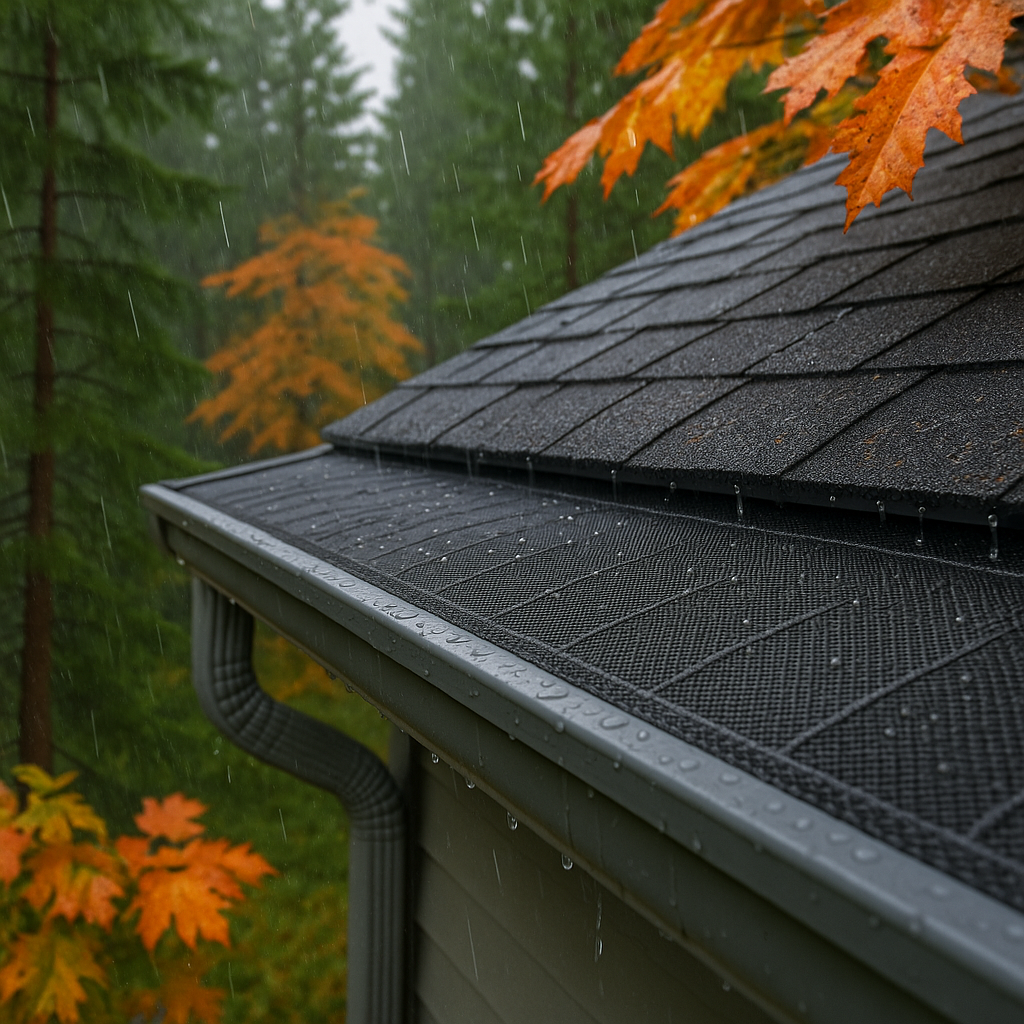
Gutter guards aren’t complicated. They let water in and keep most debris out.

Gutter guards work, especially in Oregon. But only if you choose the right type for your trees and roof. When matched properly:

  • They block leaves, needles, and even shingle grit.
  • Water flows through the screen, reducing overflow during storms.
  • You get less standing water, which means less rot, less mold, and fewer pests.

A well-fitted guard turns your gutter system from reactive to proactive. Instead of dealing with problems, you’re preventing them.

Why Oregon Homes Win With Guards

Beyond blocking debris, guards give you real, long-term benefits that matter, especially when you live in a place like this.

Fewer Cleanings

No one enjoys scooping mushy leaves out of gutters. Without guards, most Oregon homeowners need cleaning twice each fall. With guards, that drops to once a year, maybe even less. That’s time saved, ladder risk avoided, and fewer calls for gutter cleaning services.

Extended Gutter Lifespan

Clogged gutters get heavy. The weight from soggy leaves and pooled water bends brackets and stresses the system.

Guards keep debris out, so gutters stay lighter and last longer. You also avoid corrosion from trapped water sitting inside for weeks.

Superior Water Management

Gutter guards help your system stay open and moving, even during back-to-back downpours. Instead of overflowing, water follows the right path to your downspouts, keeping your siding, foundation, and landscaping safe. That control matters most if you’ve got a sloped yard or clay-heavy soil, where drainage problems can quickly turn into serious erosion or moisture damage around your home.

Choosing the Right Gutter Guard for Oregon Debris

There’s no one-size-fits-all solution. The type of guard that works best for your home depends on what’s falling from your trees and how your roof handles rain.

Mesh Screens

  • Great for maple-heavy areas where the debris is larger.
  • Easy to install, good balance between price and performance.
  • Best for homes needing basic gutter screen installation.

Micro-Mesh Guards

  • Top pick for pine needles and fine debris.
  • Stainless steel versions resist rust and sagging.
  • Ideal for installing gutter guards on homes surrounded by fir, cedar, or spruce.

Reverse Curve / Surface Tension Guards

  • These are engineered for maximum water intake.
  • Debris rolls off the curved edge while water clings and drops in.
  • Best for roofs with steep pitches or heavy rainfall zones.

No matter the type, professional installation makes a big difference. That includes checking your existing gutters for slope issues, leaks, or incorrect pitch.

The Power of a Complete System: Guards + Seamless Gutters

For real protection, pairing gutter guards with seamless gutters in Oregon makes a noticeable difference. Seamless systems are cut specifically for your home, so there are no joints where water can leak or debris can catch. The interior stays smooth, which helps water move efficiently, even during heavy rain.

When combined with properly installed guards, this setup cuts down on maintenance, reduces blockages, and helps you avoid bigger issues like wood rot or foundation damage over time.

We Can Help You Withstand Oregon’s Leaves and Pine Needles

Oregon’s forests aren’t going anywhere. And that’s a good thing. However, you shouldn’t have to climb a ladder every other weekend to deal with the fallout.

Gutter guards give you breathing room. They stop pine needles from weaving into clogs, keep maple leaves from plastering your gutters shut, and help your home weather the storm.

At Gutter Empire, we install seamless gutters built for Oregon’s heavy rain and tree debris. If your home needs a serious upgrade, we’re here to help. If you are looking for gutter guard installation services near you, our team offers expert help. We can help you protect your gutters and your home season after season.

If you would like a better setup, you can contact us at (971) 777-9899 to set up a consultation or get a free estimate here. We’ll design a system that withstands Oregon’s elements and lasts all year.


Key Takeaways (with footnotes/citations)

  • Oregon’s tree cover creates constant gutter blockages. Pine needles and maple leaves combine with the region’s heavy rainfall to clog systems fast, especially from November through January when rainfall exceeds 5 inches per month on average.【National Weather Service Portland Climate Data†https://www.weather.gov/media/pqr/climate/ClimateBookPortland/pg75.pdf】
  • Blocked gutters cause serious water damage. When rainwater can’t drain, it spills over and seeps into siding, fascia, and foundations, increasing the risk of wood rot and soil erosion.
  • The City of Portland dedicates an entire program—Leaf Day—to managing leaf debris. Home gutters experience similar overload during late fall, making guards a practical preventive measure.【City of Portland Leaf Day Program†https://www.portland.gov/transportation/maintenance/leaf-day】
  • Gutter guards reduce cleanings and extend gutter lifespan. By keeping pine needles and wet leaves out, guards minimize stress on brackets, lower corrosion risk, and cut annual maintenance in half.
  • Seamless gutters + guards offer the best long-term protection. Seamless systems remove weak joints, ensuring consistent water flow even in Oregon’s heaviest storms, while gutter guards prevent clogging at the source.
Categories
Blog Gutter Installation

Box Gutters vs. Seamless Gutters: Which Is Better for Oregon’s Climate?

If you’ve ever watched rain pour off a roof in Oregon, you know gutters are essential. In a state where downpours can last for hours and pine needles fall like confetti all autumn, gutter performance is a safeguard.

But not all rain gutters are created equal. For Oregon homes and businesses, two types stand out: box gutters and seamless gutters. Each has its place. One is a high-capacity workhorse with a historic pedigree. The other is a sleek, modern system built to avoid the maintenance traps of traditional gutters.

Which system is right for your roof, location, and long-term needs? Let’s examine both gutter systems offered and how they perform in Oregon’s unique high-demand environment.

What Are Box Gutters?

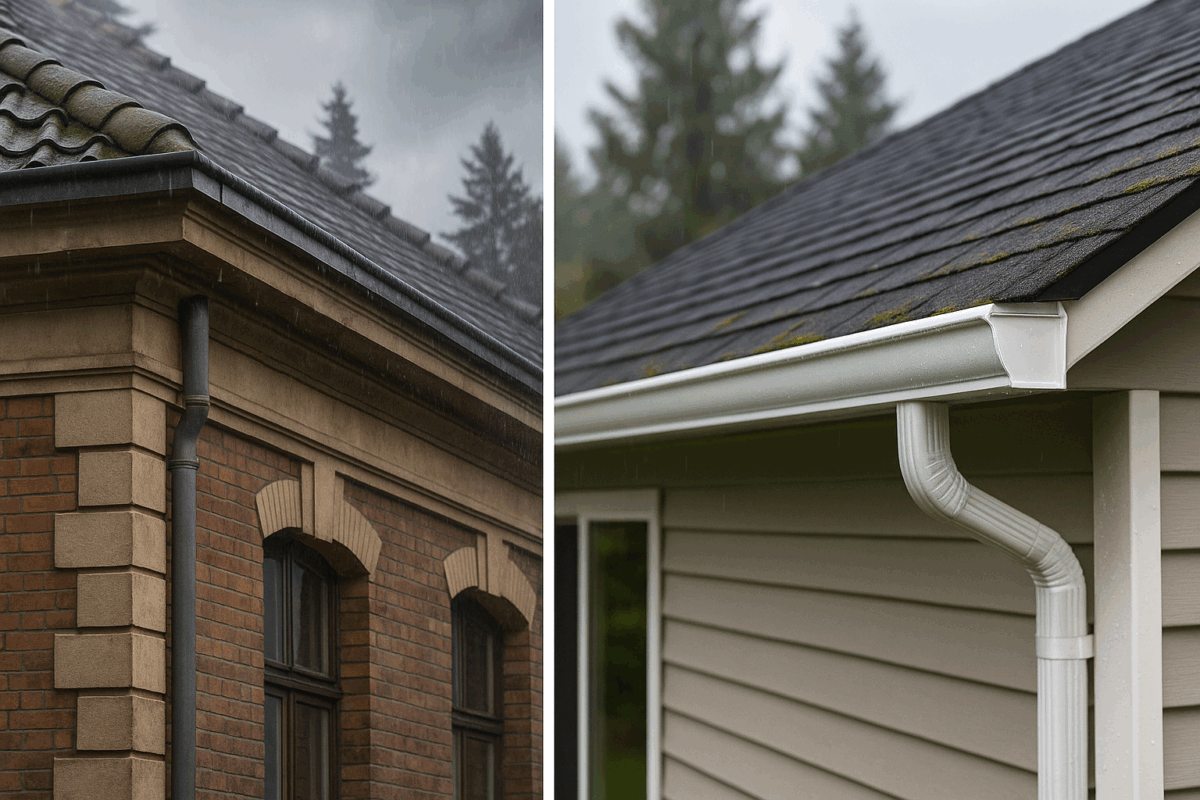
You might not see them at first glance, but box gutters are integrated directly into the roof edge or parapet wall. Instead of hanging externally, they’re built into the architecture itself, usually as part of the cornice or soffit.

These systems date back more than a century and are often found on historic homes or large commercial buildings. And when properly maintained, they do a fantastic job of moving water off wide, low-slope roofs.

Why They Still Matter

  • More volume: Because of their square shape and size (sometimes 7” or more), box systems can carry more water at once.
  • Architectural cohesion: They preserve clean roof lines and are almost invisible from the street.
  • Custom-fit construction: Ideal for older buildings that require a specific style or fascia line match.

Where They Fall Short

Because they’re built into the roofline, it’s harder to spot leaks early. Cleaning them takes more time, and clogs are common in Oregon’s leaf-heavy fall. They also cost more to install or repair due to the custom work involved, and when water backs up, it often goes straight into walls or framing.

What Are Seamless Gutters?

Seamless gutters are manufactured on-site using a portable machine that forms the gutter from a single roll of aluminum. There are no joints along the run, just at the corners and downspouts.

Why Oregon Homeowners Love Them

  • Cleaner flow: Without seams breaking up the run, water flows smoothly, and debris has fewer places to get stuck.
  • Custom length: Installers cut each section to fit your home perfectly, minimizing waste and potential leak points.
  • Sleek appearance: They come in many colors and feature a low-profile design that blends seamlessly with modern siding and trim.

A Few Considerations

  • Still need right sizing: A seamless run that’s too narrow for your roof won’t perform well in Oregon’s high-volume storms.
  • Installation quality matters: Seamless gutters installation needs precision, including proper pitch, correct hanger spacing, and secure outlets.

These systems really shine in neighborhoods filled with trees. If you’ve ever had to scoop out handfuls of wet leaves mid-November, you’ll understand the appeal of a system that stays cleaner longer.

How Do They Perform in Oregon Conditions?

Oregon’s climate doesn’t give you much margin for error, especially when it comes to drainage and debris handling.

Heavy Rain? It Depends on Your Roof Type

  • Box gutters can move a significant amount of water quickly. That makes them ideal for flat or low-slope roofs with broad surface areas, which are common in larger commercial buildings or older Portland bungalows.
  • Seamless systems, when properly sized and sloped, easily manage steeply pitched residential roofs. K-style and fascia-style gutters are most common here.

Clog Risk: What Happens in Fall

  • Box systems have wider interiors but fewer options for cleanout. In tree-heavy areas like Lake Oswego or Corvallis, fallen leaves build up fast, and since the gutters are enclosed, it’s hard to spot until overflow happens.
  • Seamless gutters paired with gutter guards or leaf screens reduce that buildup. Their continuous design means fewer edges and seams for needles to cling to.

Coastal Corrosion and Material Fatigue

  • Near the coast, salt exposure is a real concern. Box gutters made from copper or zinc are durable but expensive. Any system with standing water or seams is at a higher risk of rust or staining.
  • Seamless aluminum gutters don’t rust and are powder-coated for extra resistance. If you’re in places like Astoria or Cannon Beach, that matters.

For most homeowners here in the Northwest, seamless gutters are the more logical fit. They’re cost-effective, easy to maintain, and designed to keep working even when the fir needles start flying.

What About Commercial Properties?

This is where box gutters still dominate.

They’re ideal for:

  • Office buildings with wide, flat roofs
  • Schools and civic buildings that need high-capacity drainage
  • Historic downtown commercial storefronts

But that doesn’t mean seamless systems don’t have a place in the commercial world. Many small businesses, such as strip malls, medical clinics, and even apartment complexes, go with seamless because they want:

  • Lower installation costs
  • Quicker gutter replacement when tenants change
  • Simpler seasonal upkeep

If you manage properties across the Willamette Valley, chances are you’ll use both systems at different sites depending on roof design.

Sizing, Guards, and Good Decisions

Neither gutter system works if it’s sized wrong or ignored for too long.

That’s why we always recommend:

  • Sizing based on real storm data: NOAA’s Atlas 14 provides 24-hour rainfall projections tailored to your specific zip code.
  • Matching guards to tree type: Pine needles require fine mesh, while oak leaves require wider spacing.
  • Doing fall cleanouts before the first frost: That’s when gutters clog, overflow, and refreeze at night, causing soffit and siding damage.

Whether you opt for box gutters or seamless gutters, keeping them clean and correctly pitched is more than half the battle.

Take Control Before the Rain Does

Oregon isn’t gentle on buildings. The weather here tests everything, from the shingles to the drainage. Gutters are your first line of defense against water intrusion, wood rot, and mold.

Therefore, don’t settle for a system just because it’s familiar. Think about how your roof sheds water, how much debris your property collects, and how often you want to be up on a ladder fixing the same leak.

At Gutter Empire, we install and service both box and seamless systems. From historic homes to new builds and commercial gutters, we help Oregon property owners make smart, storm-ready decisions. Reach out to us today at (971) 777-9899, and we’ll design a gutter solution built to withstand the weather. Alternatively, book online for a free estimate.


Key Takeaways

  1. Box gutters are integrated into the roofline for a clean, classic look.
    Ideal for historic and commercial buildings, they can handle high water volumes but are harder to inspect and clean due to their enclosed design.
  2. Seamless gutters offer modern efficiency and low maintenance.
    Built from continuous aluminum runs, they minimize leaks and debris buildup — crucial for Oregon’s months-long rainy season.
  3. In Oregon’s climate, seamless gutters perform best for most homes.
    They resist corrosion, manage heavy rainfall efficiently, and pair well with gutter guards in pine- and leaf-heavy areas.
  4. Box gutters still dominate in commercial and architectural restorations.
    Their large capacity is perfect for flat or low-slope roofs on historic or municipal properties.
  5. Proper sizing and maintenance are the real keys to performance.
    Oregon homeowners can reference NOAA’s Precipitation Frequency Data Server (PFDS) for rainfall data by location when designing or upgrading gutter systems.
  6. Gutter Empire Oregon offers both box and seamless systems.
    Their team helps homeowners and property managers choose the most durable, storm-ready design for long-term protection.
Categories
Blog Gutter Installation

Eco-Friendly Gutter Options for Oregon Homeowners

Living in Oregon, you can’t escape the rain. It’s part of the charm, but it also makes homeowners think twice about how their houses handle water. People here already recycle, compost, and look for smart green home improvements. However, one upgrade that often gets overlooked is right above your head: your gutters.

Your gutters are one of the first lines of defense against erosion, flooding, and wasted water. Therefore, if you pick the wrong system, you will be stuck replacing it sooner than you would like. However, if you choose carefully, you have a chance to protect your home and live out your eco-friendly values.

Why Your Gutters Are an Eco-Friendly Decision Point

If you’ve ever seen water pour straight off a roof during a winter storm, you already know what can happen without proper drainage. Foundations start to crack, soil washes away, and yards become muddy messes. In Oregon, with our constant drizzle and occasional downpours, that’s a long-term risk.

And it’s not just about your property. Runoff carries everything on the ground, including oil from the driveway, lawn chemicals, and even loose soil, right into local streams. For a state that prides itself on protecting salmon runs and clean rivers, that’s a problem worth paying attention to.

Another angle people don’t think about is waste. Cheap gutters don’t last. They rust, clog, or pull away from the roof and then end up in a landfill. Durable, sustainable gutter materials cut down on replacements and keep waste piles smaller.

Top Sustainable Gutter Material Choices

The best way to build a greener gutter system is to start with the right material. Some break down fast, while others are tough, recyclable, and designed for Oregon weather.

Aluminum: The Eco-Champion

Aluminum gutter installation has become the standard for homeowners who want both strength and sustainability.

  • It’s tough against rust: That’s a huge advantage in a damp climate like the Willamette Valley, where moisture lingers almost year-round.
  • It’s endlessly recyclable: About three-quarters of all aluminum ever made is still in use. Your old gutters could become something new instead of sitting in a dump.
  • It’s lightweight: This property makes aluminum easier to install and transport with less energy.
  • Many products include recycled content: You’re not pulling as much from new resources.

When you combine the long lifespan with full recyclability, aluminum really does earn its title as one of the most eco-friendly gutters out there.

Other Materials

  • Steel: Strong and recyclable, but it tends to rust quickly in our climate.
  • Copper: Gorgeous and long-lasting, but copper mining leaves a much bigger environmental footprint.

Aluminum ends up being the sweet spot because it’s affordable, tough, and green.

The Green Benefits of Seamless Gutter Systems

Even the best material can be wasted if the design isn’t right. That’s why so many homeowners now lean toward seamless gutters in Oregon.

Unlike sectional systems that come in pieces, seamless gutters are measured and cut on-site to fit your house perfectly.

  • Fewer leaks: No seams means fewer weak spots. That saves your siding and landscaping from surprise water damage.
  • Less waste during installation: Because they’re cut to length, there’s almost no leftover scrap. That’s less material headed for the trash pile.
  • Lower maintenance: With fewer joints to clog, you don’t have to worry about constant patching or cleaning.

When you combine seamless and aluminum, you get a system that lasts, looks clean, and lines up with eco-friendly living.

Maximizing Your Environmental Impact

Once you have the right material and design, you can push sustainability even further with the following smart add-ons.

Rainwater Harvesting

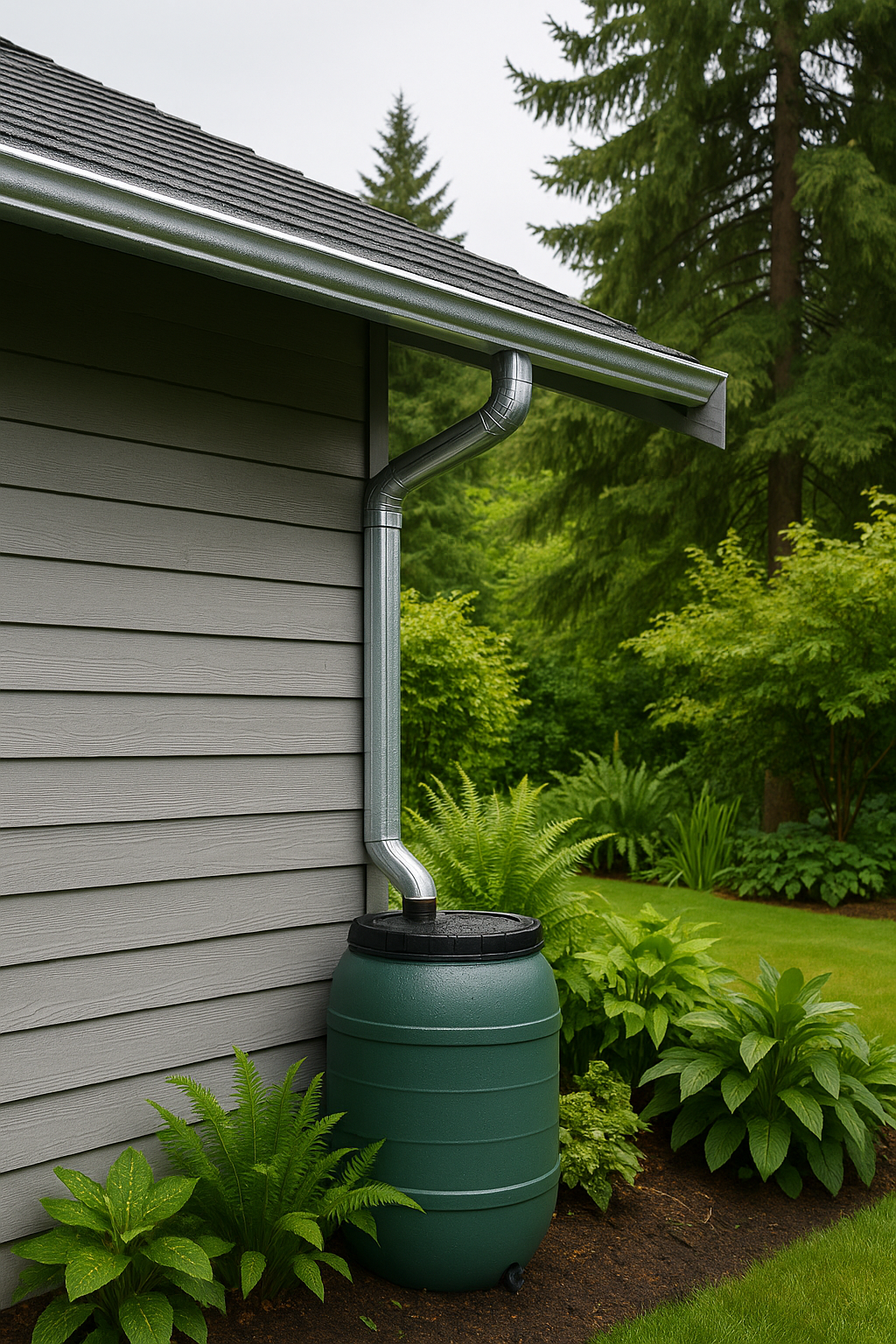
A good gutter system is the first step in rainwater collection. Attach a barrel or even a bigger cistern, and suddenly that endless Oregon drizzle becomes free water for your plants.

  • It cuts down your water bill.
  • It eases pressure on storm drains during heavy rain.
  • It gives you a small but meaningful way to live more sustainably.

If you’ve ever thought about starting a rain garden or just cutting costs in the summer, this is an easy step.

Gutter Guards

Nobody loves climbing up a ladder to clean out soggy leaves. Gutter guards help stop debris from building up in the first place.

Less cleaning means you use less water and fewer harsh cleaners.
Clean gutters channel water properly, which stops wasteful overflow.
Guards extend the life of your gutters by keeping them clear and working as intended.

Although it is a small add-on, it saves time, money, and resources over the years.

Choosing an Eco-Conscious Gutter Company

Many companies in Oregon can hang gutters, but not all of them think about what happens beyond the job itself. Some crews focus on speed, install whatever’s cheapest, and move on. If you’re trying to keep your home in step with eco-friendly living, it helps to find a partner who sees the bigger picture.

Ask yourself: Will they suggest sustainable gutter materials like aluminum, which can be recycled for decades to come, or push quick fixes that won’t last through our rainy winters? Do they bother recycling the old metal they tear down? Finally, do they understand how to set up gutters that can feed a rain barrel or direct water into a garden instead of down a storm drain?

At Gutter Empire Oregon, we do. Whether it’s aluminum gutter installation or custom seamless gutters in Oregon, our work is built to last and respect your values.

Ready to Protect Your Home and Your Planet?

Gutters don’t get much attention, but they should. They shape how your home handles rain and how much waste you create over time. Choosing aluminum gutter installation and seamless gutters in Oregon is about protecting your house and making one of those quiet but powerful green home improvements that align with Oregon’s eco-friendly lifestyle.

At Gutter Empire Oregon, we believe in doing both: protecting homes and protecting the environment. We install eco-friendly gutters that last, recycle cleanly, and support rainwater collection or other green upgrades.

If you would like to see what sustainable options look like for your house, reach out to us for a consultation. We’ll walk you through the choices and find a suitable option for you. You can also get a free estimate directly here.


Key Takeaways

  1. Gutter choice is an eco-friendly decision point — poorly designed systems waste materials, clog easily, and contribute to runoff pollution in Oregon streams.
  2. Aluminum gutters are the most sustainable option — they’re lightweight, rust-resistant, long-lasting, and 100% recyclable (about 75% of aluminum ever produced is still in use today) .
  3. Seamless gutters minimize waste and leaks — cut on-site for exact fit, they reduce leftover scraps and have fewer weak points that lead to water damage.
  4. Rainwater harvesting turns Oregon’s rainfall into a resource — reducing water bills, easing storm drain pressure, and supporting gardens and landscaping.
  5. Gutter guards extend lifespan and reduce maintenance — preventing clogs, cutting down on cleaning supplies, and ensuring efficient water flow.
  6. Choosing an eco-conscious installer matters — the right company recycles old metal, recommends sustainable materials, and supports rainwater systems.
Categories
Blog Gutter Installation

How Long Do Aluminum Gutters Last in Oregon’s Climate?

From the coast to the high deserts, Oregon is a natural beauty paradise. However, for homeowners, this beauty often comes at a price: a relentless climate that tests every part of your home, especially the gutters. With about 40+ inches of annual rain in the Willamette Valley, winter storms, and constant moss growth, your gutter system works overtime.

If you are in the market for new gutters, you have likely heard that aluminum gutters are a top choice. But how do they perform under the unique pressures of the Pacific Northwest weather? Let’s explore the lifespan of aluminum gutters in Oregon, the tell-tale signs that yours need attention, and why aluminum gutters are the gold standard for those who seek value and durability.

The Lifespan of Aluminum Gutters: What to Expect

When professionally installed and maintained, high-quality aluminum gutters last for about 20 to 30 years in the Oregon climate. Some well-maintained systems surpass the 30-year mark, and some even last indefinitely. This impressive longevity is why aluminum gutters are the most popular choice for both homeowners and professional gutter installers near you.

This durability can be attributed to aluminum’s innate chemical properties that make it naturally corrosion-resistant compared to steel, which is prone to rust and corrosion. Aluminum is also superior to other materials, such as vinyl, which can become brittle and develop cracks under extreme temperature changes in the harsh Oregon winters.

How Oregon’s Climate Tests Your Gutter System

To appreciate why quality matters, you must understand the weather and environmental conditions that your gutters are exposed to in Oregon.

  • Heavy Rainfall: Oregon rain is not always a gentle drizzle and can comprise torrential downpours that demand high-capacity gutters with strong seams.
  • Debris: The fir and pine needles found in Oregon are notorious for slipping through cheap guards and creating dense clogs in gutter systems. This debris then forms soggy mats that hold moisture against gutters.
  • Temperature Changes: Winter temperature fluctuations can cause the icy water trapped in clogged gutters to routinely expand and contract, straining seams and brackets and leading to eventual breakage and leaks.
  • Moss: The dampness and vegetation experienced in some areas of Oregon create the perfect conditions for moss to grow and thrive. This green menace not only clogs gutters but also holds water against gutter surfaces. The wetness leads to corrosion and adds significant weight to the entire system.

Consequently, a gutter system that is not designed with the above challenges in mind will fail prematurely.

Signs Your Aluminum Gutters Need Repair or Replacement

Nothing lasts forever, and even the best gutters do eventually wear out with time. As such, keep an eye out for these red flags that indicate you might need a gutter repair in Oregon or even a gutter replacement.

  • Visible Leaks or Cracks: Water dripping from seams or visible cracks when it rains is a clear sign of failure and demands attention.
  • Peeling Paint or Rust Streaks: While aluminum does not rust, the steel hangers and screws used in some installations do, and thus rust streaks on your gutters or siding should be a cause for concern.
  • Frequent Clogs: If you constantly clean your gutters and yet they still overflow, your system may be improperly sloped or undersized for the amount of water collected by your roof.
  • Sagging Gutters: This usually indicates failing fasteners or fascia boards, and is often caused by the weight of water and debris clogging the gutters.
  • Water Damage or Soil Erosion: When water is overflowing instead of following the downspouts, you will often see stains on the siding and exterior walls, as well as erosion on the landscaping below.

If you notice any of these issues, it’s time to seek a professional gutter inspection to determine whether you need gutter repair to extend the life of your system. In some cases, a full gutter replacement is the more cost-effective long-term solution, especially after multiple repairs without good long-term results.

Why Seamless Gutters Are Oregon’s Best Defense

For ultimate durability and performance, aluminum seamless gutters are the way to go. Unlike traditional sectional gutters pieced together with seams every 10 feet or so, seamless gutters are rolled on-site from continuous coils of aluminum sheet metal to custom sizes that suit the house dimensions. The seamless design offers several advantages:

  • Fewer leaks: The absence of in-line joints and seams means there are far fewer weak points for cracks (and leaks) to develop.
  • Stronger structure: A continuous piece of metal is stronger and less prone to bending and sagging since there are no joints/seams.
  • Better aesthetic: The sleek and continuous lines of a seamless installation give a cleaner and more streamlined look that improves your home’s curb appeal.

Therefore, for a climate that is as demanding as ours, it is a no-brainer that investing in a seamless aluminum gutter installation is one of the smartest home upgrades you can make in Oregon.

Maximizing the Lifespan of Your Investment

You can ensure that your aluminum gutters reach their full potential by following two simple steps:

  • Professional installation: How long your aluminum gutters last is directly tied to the quality of the installation. This means avoiding DIY guesswork and hiring professionals to ensure proper slope, secure and well-spaced hangers, and correctly sized downspouts.
  • Regular cleaning and maintenance: Clean your gutters at least twice a year, preferably after fall leaf drop and in spring. Homes surrounded by tree cover may need cleaning every three months.

This is where choosing the right contractor is important. You need experienced gutter installers near you who understand local building codes, weather patterns, and the importance of routine inspections.

Is It Time for You to Upgrade?

Your gutters are a critical component of your home’s well-being, given that they protect your roofing, walls, foundation, and landscaping against water damage. If your current system is failing or you are simply tired of constantly repairing your old gutter system without success, it may be time to invest in a new aluminum gutter system.

Do not wait for that leak to appear in your ceiling. Home repairs and renovations are expensive.

As the local experts in aluminum gutter installation, gutter replacement, and gutter repair in Oregon, we at Gutter Empire specialize in seamless, high-capacity gutter systems designed to take on the unique Pacific Northwest climate. Reach out to us for a free, no-obligation estimate and let us help you choose a gutter system that protects your home for decades to come.


Key Takeaways

  1. Aluminum gutters last 20–30 years in Oregon when properly installed and maintained, making them the most durable and cost-effective choice.
  2. Oregon’s climate accelerates wear — heavy rainfall, moss growth, pine needles, and temperature swings all strain gutter systems.
  3. Warning signs of gutter failure include visible leaks, sagging sections, frequent clogs, rust streaks, and water damage to siding or landscaping.
  4. Seamless aluminum gutters outperform sectional systems by reducing leaks, increasing strength, and improving curb appeal.
  5. Professional installation and routine maintenance are critical to maximizing the lifespan of aluminum gutters and protecting your home investment.

Last updated: September 2025