Oregon’s winter rain finally eases up, and the yard starts to look normal again. But that long stretch of steady moisture often leaves behind quiet damage. Gutters take the hit first. They sit out there through months of rain, wet debris, and constant runoff, and small weaknesses start to show once everything stays soaked for long enough.
That is why early spring becomes such an important moment for gutter repair. Winter does not always cause one dramatic break. More often, it exposes slow problems that went unnoticed during drier months.
In this article, we will outline the clearest post-winter warning signs, why they worsen after prolonged rainfall, and when professional rain gutter repair is the smarter next step.
Quick Answer:
After an Oregon winter, gutters often develop hidden problems due to months of constant moisture, wet debris weight, and occasional freeze-thaw stress. Common signs you need gutter repair include sagging sections, persistent seam leaks, rust or corrosion near joints, fascia board damage, and overflow during steady rain. Addressing these issues early with professional gutter repair helps prevent water damage to siding, roof edges, and foundations.
Why Winter Is the Ultimate Stress Test for Gutters
Prolonged Moisture Exposure
Oregon winters rarely give gutters much of a break. When rain falls week after week, the system stays wet almost all the time. That constant dampness wears down joints, weakens sealant, and keeps roof edges from drying properly. Even small seam issues become problematic when moisture does not fully dissipate from the surface.
This is one reason homeowners begin searching for gutter repair services near them as spring arrives. The wet season brings hidden issues to the surface.
The Weight of Wet Debris
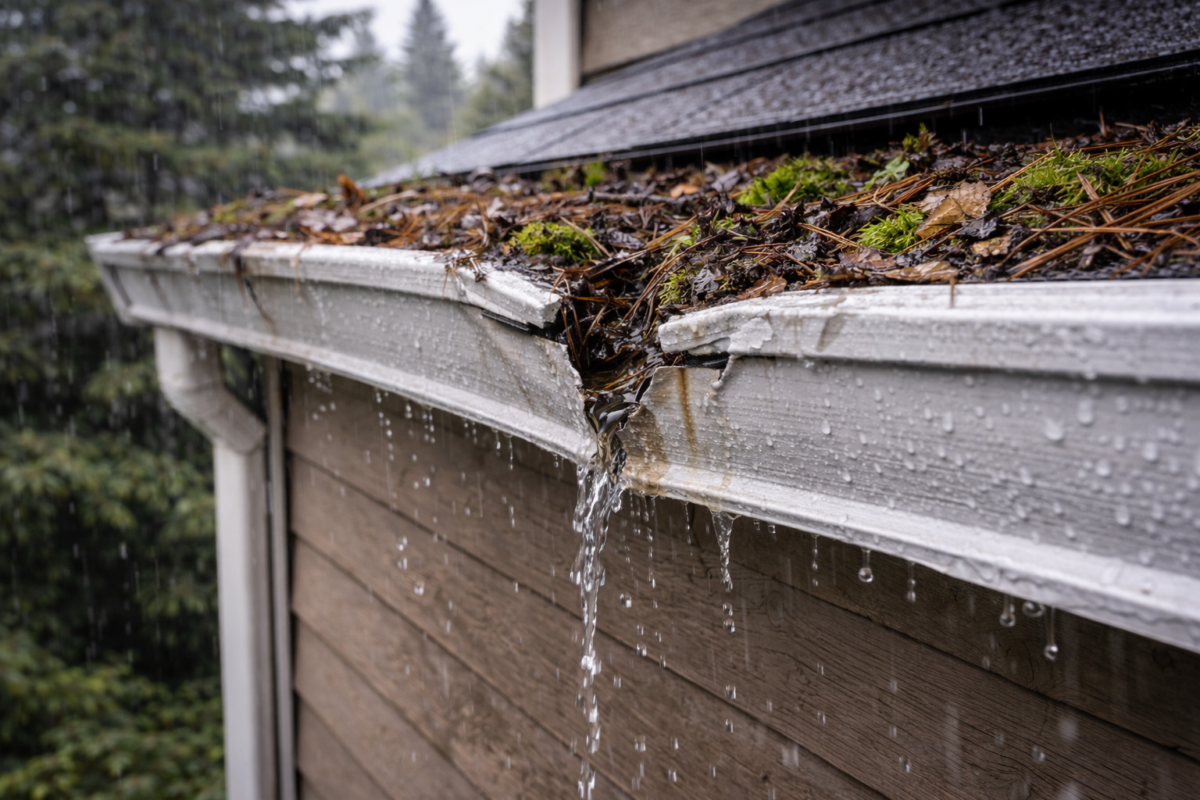
Wet debris feels different than dry debris. Leaves and needles soak up water, and moss can act like a sponge sitting inside the gutter channel. Over time, that weight strains hangers and fasteners. It can pull sections out of alignment, with homeowners not noticing until the sag becomes obvious.
Water damage from drainage failures is common. Industry data from the Insurance Information Institute shows that average water damage and freezing claim severity reached $13,954 across 2018–2022. That number is not about gutters alone, but gutters often play a role in how water ends up where it shouldn’t.
Heavy debris is one reason roof gutter repair becomes more than a cosmetic fix after winter.
Freeze-Thaw Cycles
Even in Oregon, temperatures can dip enough for trapped water to freeze in clogged areas. When that happens, ice expands inside seams and corners. It pushes outward, stressing joints and pulling edges away from the fascia line.
Gutters and downspouts must remain clear to ensure roof water flows freely away from the home. That is especially true after winter, when freeze-thaw stress may have already widened small cracks.
If winter leaves behind these kinds of seam weaknesses, basic cleaning alone may not solve them. That is when homeowners start considering gutter repair services near them before spring rains return.
Post-Winter Warning Signs Your Gutters Need Repair
Spring is when the system tells the truth. These signs are usually the clearest indicators that maintenance is no longer enough.
Sagging or Pulling Away
You might notice gutters bowing downward, or you may see a visible gap between the gutter and the fascia board. Sometimes one section looks slightly detached while the rest appears fine. That unevenness matters.
Winter debris and constant water weight loosen spikes and hangers over time. Fascia wood can also soften when left damp for months, reducing the security of attachments.
Sagging changes the pitch, which prevents water from draining properly. Water begins spilling toward the siding or pooling near the foundation. The Insurance Information Institute also reports that water damage and freezing claims occur at 1.61 per 100 house-years, underscoring how common moisture-related damage is.
Persistent Leaks and Stains
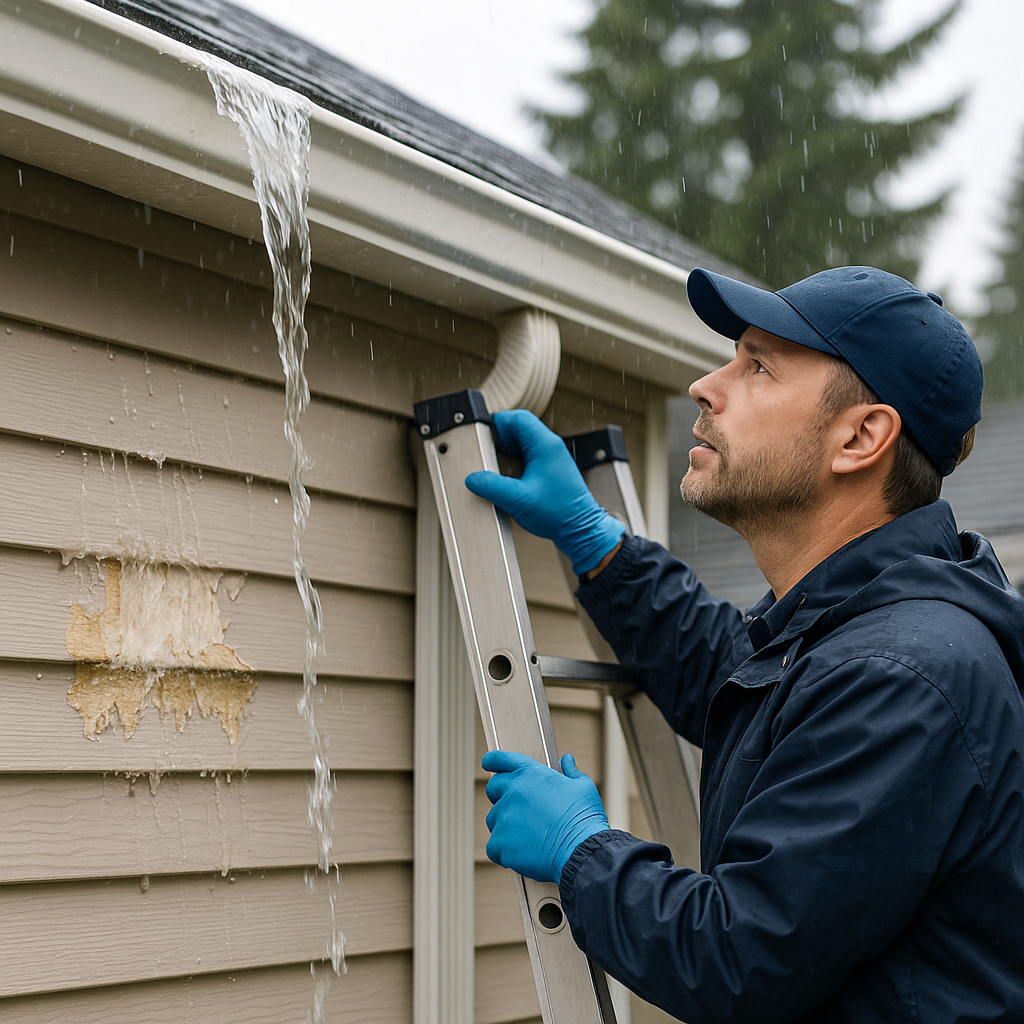
Leaks often show up at seams, corners, or end caps. You may notice dripping even after the rain stops, or new rust streaks running down the gutter face. Dark staining beneath the system is another clue.
These issues often come from failed joint sealant, small corrosion pinholes, or compromised corner miters. They rarely improve on their own, especially after a winter of nonstop moisture.
The risk is that the same drip point continues to soak fascia, soffits, and siding. Once water repeatedly lands in one spot, soil erosion near the foundation becomes more likely.
This is a common moment when homeowners shift from cleaning to rain gutter repair.
Fascia Board Damage
Sometimes the gutter itself is not the only problem. Peeling paint, soft wood, or visible water stains behind the gutter line often point to fascia damage.
Winter leaks keep fascia wood constantly soaked. Over time, that moisture softens the material, invites mold growth, and slowly breaks it down, even if the damage does not yet appear serious.
The risk here is serious because the fascia is the mounting point. Once it softens, gutters cannot stay securely attached. Repairs may require both gutter rework and fascia replacement.
Poor Drainage & Overflow
Overflow is one of the most visible signs of post-winter conditions. Water spills over the gutter edge during rain, or downspouts discharge weakly, even when the opening looks clear.
Hidden blockages often sit deeper in downspouts. Pitch can shift when gutters sag. Downspout sections can also disconnect at elbows after months of stress.
Overflow drives erosion, basement moisture, and foundation problems. Downspouts should discharge at least 6 feet from the foundation to reduce moisture near the structure.
When drainage fails after winter, roof gutter repair often becomes necessary to restore proper flow.
Why Timely Professional Repair is Non-Negotiable
Spring fixes are usually simpler than summer emergencies. Small seam repairs, hanger replacement, and realignment cost far less than a full replacement once structural damage has set in.
A professional also knows how to tell the difference between debris buildup and a true repair issue. That clarity matters because homeowners often assume the problem is just leaves, when it is really a slope failure or joint separation.
Preparing now also means getting ahead of the next rainy stretch. With Oregon winters often delivering above-normal precipitation, the system needs to be ready before spring storms pile on again.
Act Now to Preserve Your Home’s Integrity
The signs left by an Oregon winter are not subtle once you know what to look for. Sagging sections, persistent leaks, fascia damage, and overflow indicate a gutter system that requires more than basic upkeep. Acting early protects your roof edges, your siding, and the ground around your foundation from months of misdirected water.
If you are seeing these warning signs, we can help. Contact us at Gutter Empire for the expert gutter repair your home needs. Call us at (971) 777-9899, click here for a free estimate, or reach out through our contact form to schedule your post-winter gutter assessment today.
Key Takeaways
- Oregon winters act as a long-duration stress test on gutters because constant moisture weakens seams, sealants, and fasteners over time.
- Wet leaves, needles, and moss dramatically increase gutter weight, leading to sagging, pitch changes, and hanger failure.
- Persistent leaks at seams and corners are one of the most common post-winter gutter repair indicators.
- Fascia board softening and paint failure often signal long-term gutter leakage behind the system.
- Poor drainage and overflow after winter may indicate hidden downspout clogs or slope failure — not just surface debris.
- Water damage and freezing claims average nearly $14,000 in severity, showing how costly unmanaged moisture problems can become.¹
- Moisture-related home insurance claims occur at a meaningful frequency nationwide, reinforcing the value of proactive drainage maintenance.¹
- Early spring gutter inspection and repair is usually far less expensive than waiting for structural damage to develop.
Citations
- Insurance Information Institute — Water Damage & Freezing Claims Statistics: https://www.iii.org/table-archive/20887