In Oregon, installing new gutters is not just about directing water. It is about engineering a system that can handle a long wet season. West of the Cascades, rainfall is heavily concentrated from fall through spring, and parts of the Coast Range receive more than 100 inches of precipitation each year.
Before scheduling gutter installation, homeowners in rainy regions should consider several key factors that can significantly affect how the system performs during storms. Here’s what to evaluate before making any decisions.
Quick Answer Summary
Before scheduling gutter installation in rainy regions like Oregon, homeowners should evaluate roof slope, surface area, fascia condition, drainage patterns, tree coverage, material selection, and downspout placement. These factors directly affect how well gutters handle sustained rainfall. Proper planning ensures the system can manage high water volumes, prevent overflow, and protect the home from water damage, while poor planning can lead to early failure and costly repairs.
Key Factors to Check Before Gutter Installation
Before scheduling gutter installation in a rainy region, review these factors to make sure your system is sized and planned for long-term performance.
| Factor | Why It Matters | What to Look For |
|---|---|---|
| Roof Slope & Surface Area | These determine how quickly water reaches the gutters and how much runoff the system must handle during storms. | Steep roof pitch, large roof footprint, valleys, and concentrated runoff zones. |
| Existing Fascia Condition | Gutters depend on solid fascia boards for support. Damaged wood can’t hold hangers securely under heavy rain load. | Soft spots, peeling paint, staining, rot, or previous patch repairs. |
| Current Drainage Patterns | Installing new gutters without correcting drainage issues can repeat the same runoff problems. | Pooling near the foundation, saturated soil, splashback, or runoff collecting in low spots. |
| Local Tree Coverage | Nearby trees affect debris load, maintenance frequency, and whether guards or larger gutters make sense. | Pine needles, fir debris, broad leaves, and heavy seasonal buildup. |
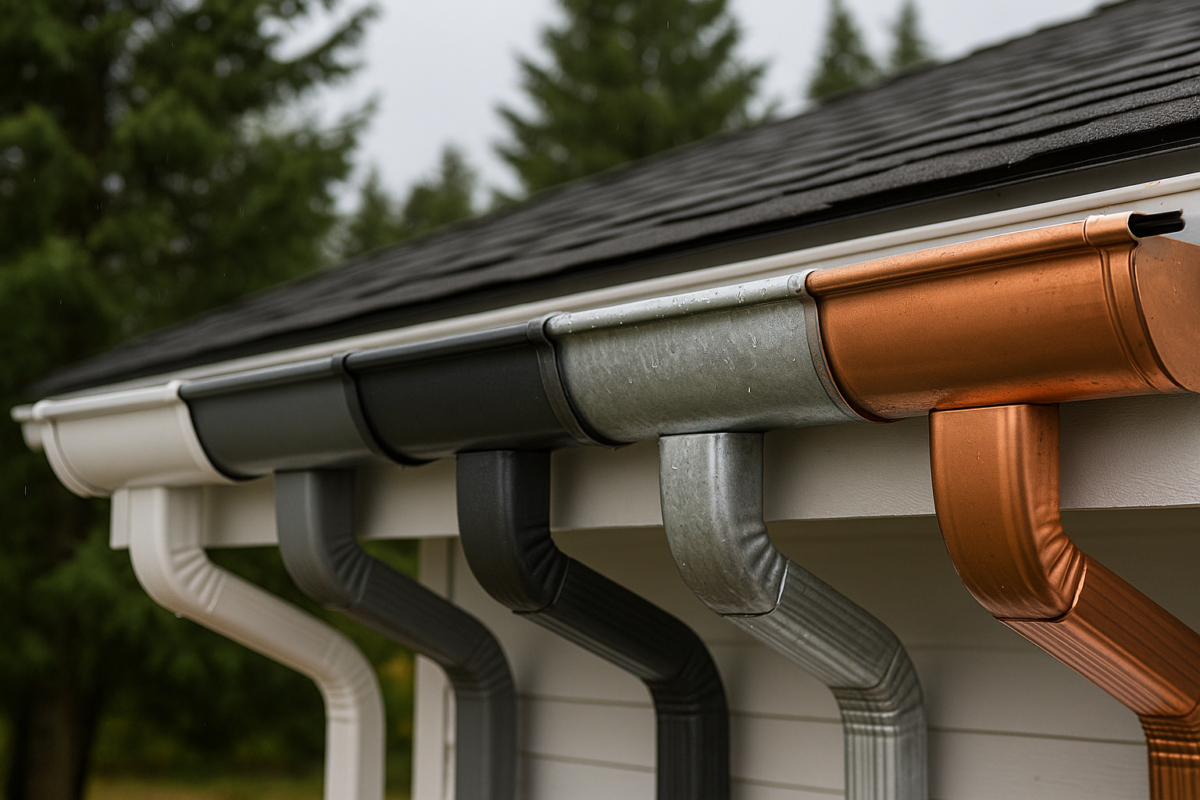
| Material Selection | Material affects durability, corrosion resistance, and long-term performance in a wet climate. | Aluminum for low maintenance, galvanized steel for strength, avoid low-durability vinyl in harsh wet conditions. |
| Seamless vs. Sectional | More seams mean more potential leak points, especially in regions with sustained rain. | Seamless gutters for fewer joints and better long-term performance. |
| Downspout Placement & Capacity | Even a well-sized gutter system can underperform if downspouts are too small, too sparse, or discharge too close to the home. | Spacing every 20–35 feet, adequate outlet size, and discharge at least 5 feet from the foundation. |
Roof Slope and Surface Area
Steeper roofs shed water faster and concentrate flow into gutters more intensely than gentle slopes. According to SMACNA sizing standards, a 6-in-12 pitch increases the drainage load by about 10% over a flat roof; a 12-in-12 pitch increases it by 30%. When you combine a steep pitch with a large roof footprint, the numbers start to matter.
A 5-inch K-style gutter can handle a substantial drainage load when properly sized, but exact capacity depends on rainfall intensity, roof pitch, and downspout configuration. A 6-inch system provides a clear step up in capacity and is often the better fit for larger roof areas, steeper pitches, or heavy-rain regions.
For Oregon homes with sprawling rooflines or steep pitches, standard 5-inch gutters may simply be undersized. The square footage of your roof and its pitch should factor directly into the size of the system installed, not just what looks appropriate from the ground.
Existing Fascia Condition
Gutters are only as secure as the fascia boards they attach to. Rotten or soft wood can’t hold hangers under load, and in a rainy climate, that load includes waterlogged debris and sustained hydrostatic pressure during heavy storms.
Before any rain gutter installation proceeds, probe the fascia for soft spots, check for water staining and peeling paint, and look for signs of previous patch repairs. If the fascia has been compromised, new gutters and fascia need to be replaced at the same time.
Mounting a new system on damaged wood is a short-term fix that creates long-term problems.
Current Drainage Patterns
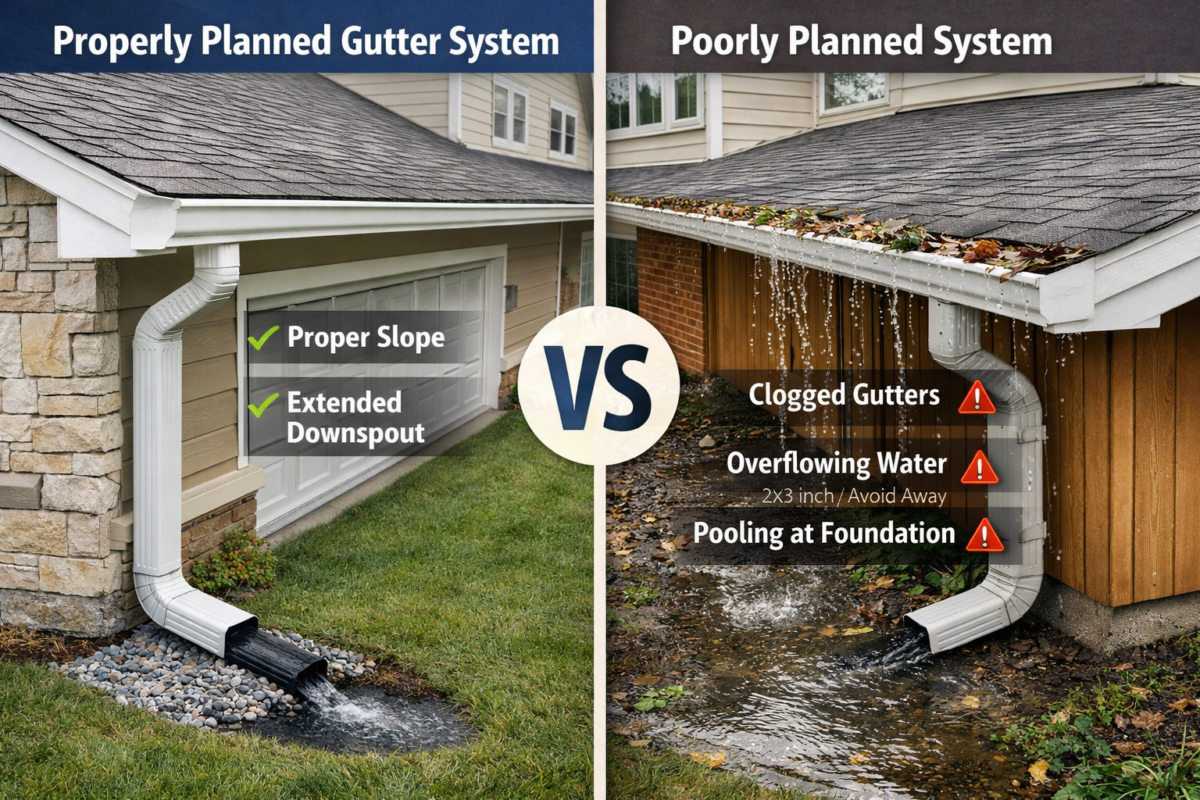
Watching how water moves around your property during an actual rain event reveals more than any dry-weather inspection. Note where water pools, which spots stay saturated longest, and where downspouts currently discharge. If runoff is already landing near the foundation, new gutters on the same footprint may simply repeat the problem with better equipment.
According to the Insurance Information Institute, water damage and freezing accounted for 22.6% of homeowners’ property-damage claims in 2023, and the average claim severity for water damage and freezing was $15,400 over 2019–2023.
Rain gutter installation should be designed to correct existing drainage problems, which sometimes means repositioning downspouts or adding underground extensions as part of the same project.
Local Tree Coverage
Oregon’s Douglas Firs, pines, and big-leaf maples each pose different debris challenges. Pine needles are narrow enough to slip past some guards and pack tightly into gutter channels. Broad-leaf debris settles differently and can decompose into compacted plugs at joints and outlets.
The species surrounding your home significantly change the maintenance equation. Heavy debris areas often justify larger gutters, a steeper gutter pitch, or gutter guards installed from the start. Figuring that out before installation, rather than after several seasons of clogs, is the smarter sequence.
Material Selection
Not all gutter materials perform the same way under constant moisture and temperature swings. Aluminum is the most common residential choice because it resists rust, holds up well in long, wet winters, and requires less maintenance over time. Steel can work in Oregon’s climate, but it needs to be galvanized to prevent corrosion. Vinyl is usually a less durable long-term option in the Pacific Northwest because it is more prone to brittleness and cracking in colder weather and generally does not hold up as well as metal systems.
Getting material selection right before installation avoids early gutter replacement and the additional costs that come with it. Quality materials cost more upfront and almost always come out ahead over a ten-year window.
Seamless vs. Sectional Systems
Every seam in a sectional gutter system is a potential failure point. In a dry climate, that may not matter much. In Oregon, where gutters handle sustained rainfall from October through April, those joints are under consistent stress.
Seamless gutters are custom-formed on-site from a single continuous run of aluminum, meaning there are no joints along the length of the gutter, only at corners and downspouts. That design reduces leak risk, limits debris accumulation at connection points, and holds up better over a full lifespan.
Sectional systems typically last 10 to 15 years; well-installed seamless aluminum can reach 25 years or more. For rainy climates, seamless gutters are the practical choice, not a premium upgrade.
Downspout Placement and Capacity
Even a properly sized gutter system underperforms if water has nowhere to exit efficiently. Downspouts should be placed every 20 to 35 feet along the gutter run, and they should carry water at least 5 feet from the foundation before discharging. Homes with larger roof areas may need 3-by-4-inch downspouts instead of the more common 2-by-3-inch size to handle peak rainfall.
Before installation, it’s worth reviewing where existing discharge points land relative to the foundation grading and whether extensions or underground connections might be warranted. Downspout placement is the last mile of an effective drainage system, and one of the more common places where otherwise well-designed systems fall short.
Plan Your Installation With Confidence
A successful gutter installation in a rainy climate starts long before the first section is hung. Working through your roof’s slope and surface area, fascia condition, existing drainage patterns, tree coverage, material options, and downspout placement gives you a much clearer picture of what the right system looks like for your home. These aren’t details to figure out after installation. Oregon’s wet months don’t leave much margin for an undersized or poorly planned drainage system.
We at Gutter Empire are ready to walk you through every one of these factors before a single bracket goes up. Call us at (971) 777-9899, click here for a free estimate, or use our contact form to schedule your free consultation.
Key Takeaways
- Roof slope and surface area directly impact how much water gutters must handle, with steeper roofs increasing drainage load by up to 30%.
- Larger or steeper roofs in rainy climates often require 6-inch gutters instead of standard 5-inch systems to prevent overflow.
- Fascia boards must be structurally sound before installation, as damaged wood cannot support gutter weight under heavy rain conditions.
- Observing real-time drainage during rainfall helps identify pooling areas and improper water flow before installation begins.
- Water damage is a major risk, accounting for 22.6% of homeowners’ property damage claims, with an average claim of $15,400.¹
- Tree coverage influences debris buildup, which can require larger gutters, steeper pitch, or gutter guards.
- Seamless gutters reduce leak risk and typically last longer, with lifespans of 25+ years compared to 10–15 years for sectional systems.
- Proper downspout spacing (every 20–35 feet) and discharge placement are critical to keeping water away from the foundation.
Citations
- Insurance Information Institute – Homeowners insurance water damage statistics – https://www.iii.org/fact-statistic/facts-statistics-homeowners-and-renters-insurance