Gutter Installation, Repair & Cleaning Services in Oregon | Gutter Empire

Categories
Blog Gutter Guards

Do Gutter Guards Work for Oregon Homes?

Oregon homeowners often move through fall and winter feeling like their gutters are always one storm away from trouble. Pine needles drift down almost constantly, maple leaves arrive in waves, and long stretches of rain keep everything soaked. That combination makes people wonder whether gutter guards can finally slow the cycle of clogging and overflow.

The short answer is that they help, sometimes dramatically, but they work best when the system matches local debris, and the installation is done with care. Once gutters stay wet for days at a time, seam sealants soften, small gaps widen, and even clean gutters can start leaking.

This article examines how gutter screens and other styles perform in Oregon, how they handle heavy water flow, and what homeowners should expect when they choose gutter guard installation as part of their maintenance plan.

What Are Gutter Guards?

A helpful way to think about gutter guards is that they create a filtered entry point. Water still needs to enter the gutter freely, but leaves, needles, and roof grit should stay out.

Gutter screens fall into this category, but they are just one type. Micro-mesh, reverse-curve, and insert-style designs all fall under the broader umbrella. Whatever the design, the goal is simple: reduce the debris load so gutters stay clear long enough to move rainfall away from the house. FEMA’s home protection guidance makes that core idea clear: Roof runoff must drain efficiently to avoid moisture near fascia, siding, and foundations.

According to the Insurance Information Institute, water damage remains one of the most expensive categories of home insurance claims, averaging 1.50 claims per 100 house-years and roughly $15,400 in severity. When gutters clog or overflow along the back edge, that risk increases quickly.

How Effective Are Gutter Guards in Oregon?

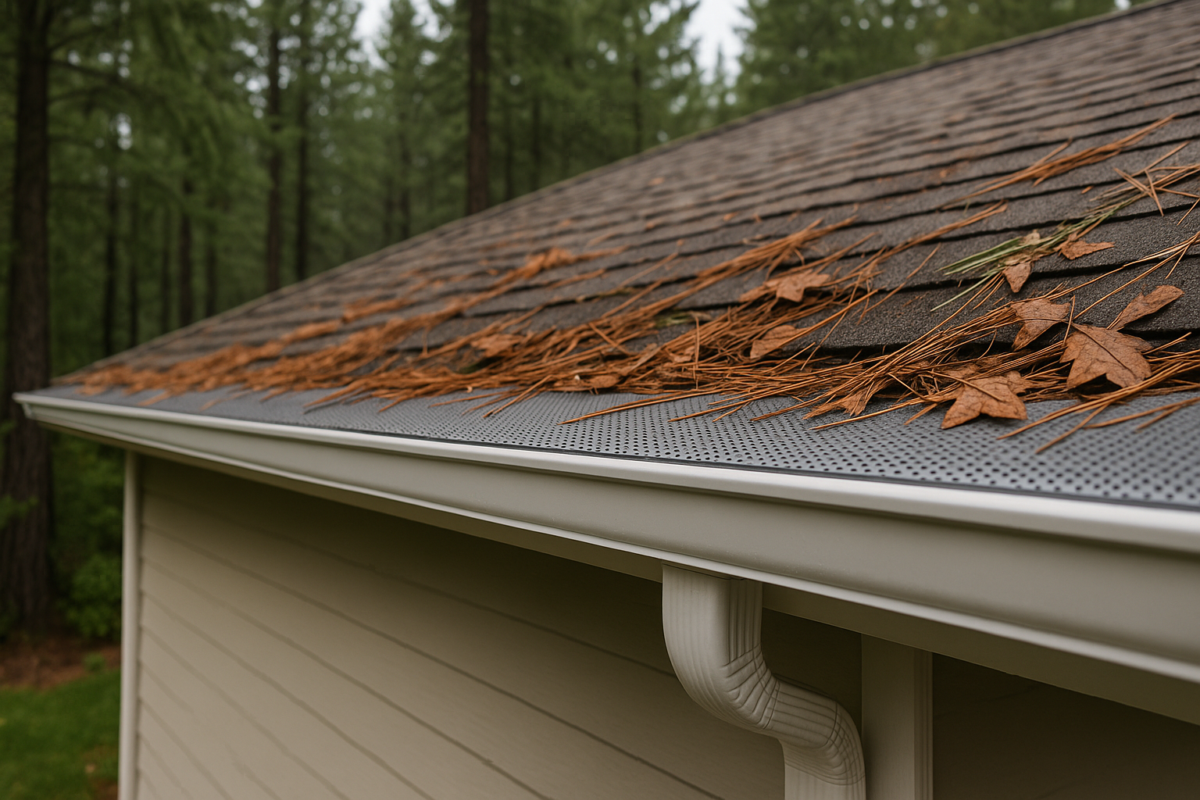
Do gutter guards work? Yes, they do, but their success depends on matching the right type to your specific debris (pine needles vs. maple leaves). The biggest split happens between broadleaf debris and the thin needles dropped by fir and hemlock. Some screens block leaves well but allow needles to stack on top.

A major U.S. university’s 2024 construction spec even states that gutter protection should “preclude pine needles” when trees are nearby, which says a lot about how demanding this debris can be. When guards match the debris, homeowners usually see fewer clogs and noticeably fewer mid-season cleanouts. When they do not match, the buildup shifts from inside the gutter to the guard surface, further slowing drainage.

Handling Heavy Rain

Rainfall volume shapes everything in Oregon. NOAA reports 41 major weather and climate disasters affecting the state from 1980 to 2024, and the last five years average more than double the long-term annual event rate. That pattern shows how easily rain can move from steady to overwhelming.

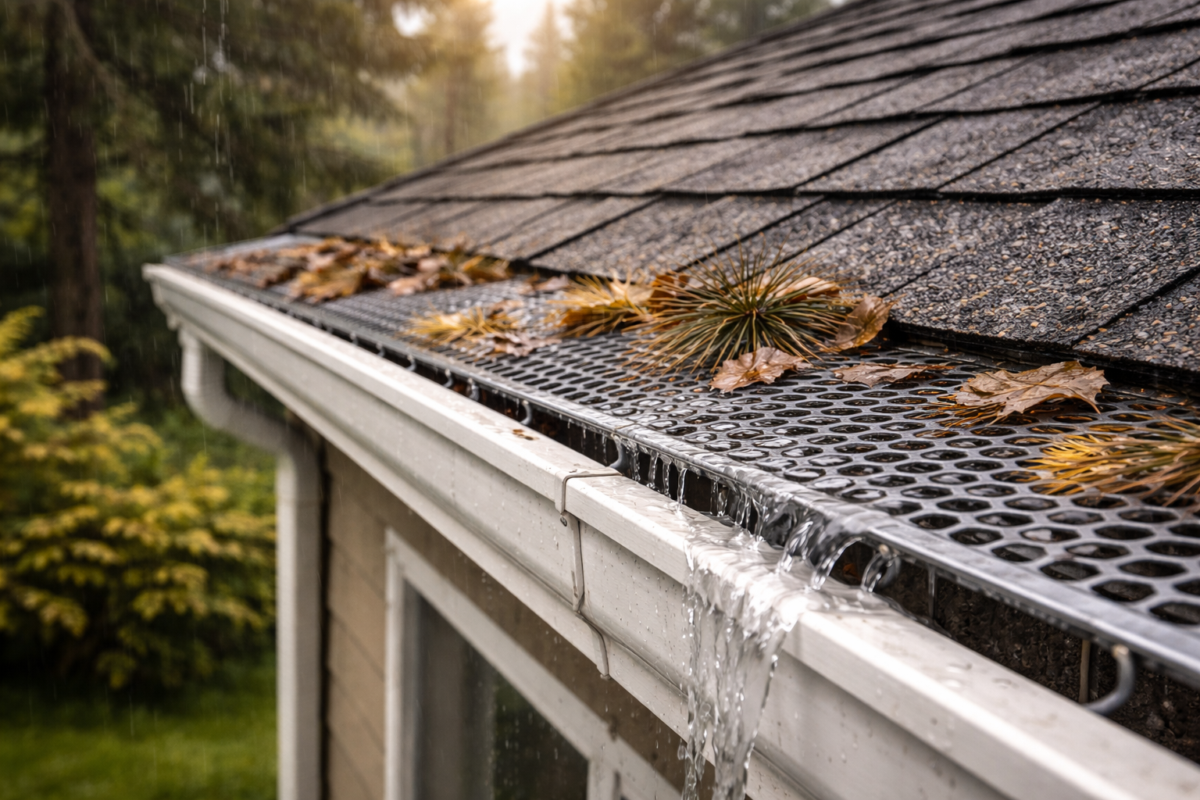
Any gutter guard installation must be pitched and fitted so water hugs the guard surface and drops into the gutter rather than shooting past the edge. When a guard works with the roofline, stormwater overflow drops sharply. When it does not, rain simply bypasses the entire system.

The Moss Factor

Moss fragments behave like wet dust. They drift, settle, and cling to screens. Gutter guards help reduce the risk of large clogs, but fine grit still accumulates slowly.

Even improved systems need periodic checks. Oregon homeowners see this most clearly along shaded roof sections where moss is persistent. Guards reduce the worst clogs, but no design eliminates the need for occasional rinsing.

Types of Guards: Which Is Right for Oregon Debris?

Choosing a system often matters more than choosing a brand. Oregon debris comes in shapes and textures that interact differently with each guard style.

Mesh Screens

Screens handle maple leaves and ash leaves well, but the openings that allow water to pass also let needles stack or weave through. In needle-heavy neighborhoods, screens help but do not solve the full problem.

Micro-Mesh Guards

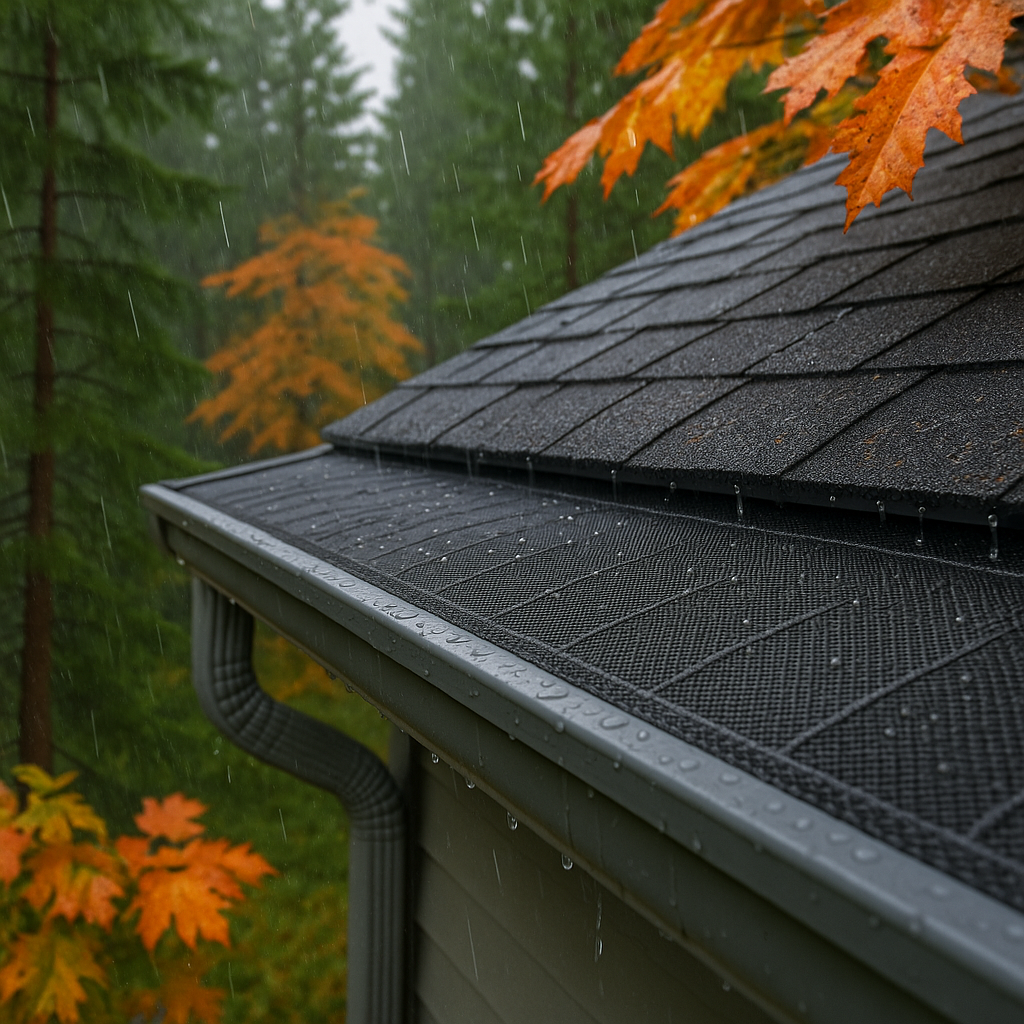
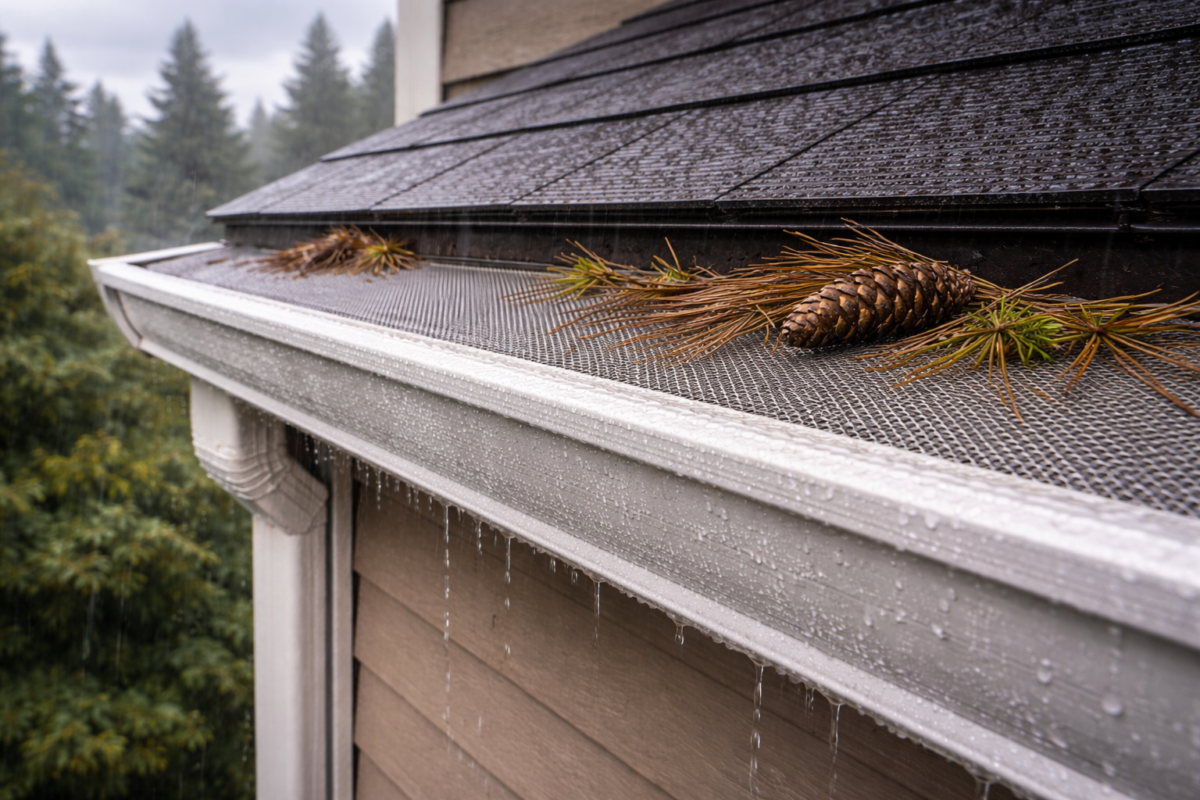
Micro-mesh systems block almost everything except water. That needle-focused design aligns with the construction guidance, which recommends products that “preclude pine needles.” Homeowners near large evergreens usually find this to be the most dependable option.

Reverse Curve/Surface Tension

These systems rely on water adhesion to pull rain into the gutter. They can handle storms well, but clingy, rain-soaked leaves sometimes bridge over the opening. In Oregon, that effect is most evident during back-to-back storms, when debris stays wet for days.

Brush & Foam Inserts

Insert-style guards sit directly inside the gutter channel. In dry regions, that might work, but in Oregon, they tend to hold moisture, trap grit, and accelerate sludge buildup. They also make cleaning more awkward.

The Pros and Cons for Oregon Homeowners

Most Oregon homeowners notice the advantages of gutter screens and other systems almost immediately. Fewer clogs mean fewer times up a ladder and fewer overflow streaks along the fascia. Reduced debris also slows rust and corrosion inside metal gutters. These small gains add up over time, especially across seasons where rain never fully lets up.

There are trade-offs, though. No gutter guard installation eliminates all maintenance, because fine grit and moss still find their way into the system.

Upfront costs also matter. The long-term savings come from reduced cleaning frequency and fewer overflow problems, not instant results. Poor DIY installation can make things worse, as incorrect pitch or loose fasteners can cause water to overflow entirely.

Making the Decision: Is Gutter Guard Installation Right for You?

Homes surrounded by trees see the biggest payoff. Needle-heavy areas especially benefit from gutter screen installation because the debris pressure stays constant. Homeowners who want fewer ladder climbs or who have dealt with repeat clogs often notice immediate improvement.

The key variable is installation. Pitch, placement, material choice, and roof-edge geometry all determine how well gutter guard installation performs during Oregon’s long, soaking storms.

If guards are not the right match, a scheduled cleaning plan still protects gutter seams from staying saturated long enough to fail. Rainfall that lingers on a seam weakens the sealant, and once a gap opens even a little, overflow follows the path of least resistance, usually toward fascia or siding.

Take Control of Your Gutter Maintenance

Oregon’s never-ending rain makes gutter care feel like a moving target, but gutter guards give homeowners a way to get ahead of the cycle. They slow debris buildup, reduce the stress on gutter seams, and keep water moving the way it should during long stretches of storms. They are not perfect, and they still need quick check-ups, but the right match between product and debris can make gutters far more dependable. If you want help choosing a system that fits your home and climate, contact us at (971) 777-9899 for a professional assessment, or click here for a free estimate.


Key Takeaways

  • Gutter guards can significantly reduce clogging in Oregon, but performance depends on matching the guard type to local debris such as pine needles, leaves, and moss. Improper matches can shift buildup to the guard surface rather than eliminating it.¹
  • Micro-mesh gutter guards are often the most effective option for Oregon homes, especially in evergreen-heavy areas, because they are designed to block fine debris like pine needles that commonly defeat standard screens.²
  • Heavy and prolonged rainfall increases the consequences of clogged or overflowing gutters, contributing to water intrusion near fascia, siding, and foundations—areas frequently linked to costly homeowner insurance claims.³
  • No gutter guard system is maintenance-free, particularly in damp, shaded environments where moss and fine grit persist. Periodic inspection and light cleaning are still necessary to maintain proper drainage performance.¹
  • Professional installation is critical in Oregon’s wet climate, as incorrect pitch, loose fasteners, or poor roof-edge alignment can cause rainwater to overshoot guards entirely during major storm events.³

Citations

  1. Insurance Information Institute – Facts & Statistics: Homeowners and Renters Insurance
    https://www.iii.org/fact-statistic/facts-statistics-homeowners-and-renters-insurance
  2. University of Florida IFAS Extension – Residential Construction Specifications (2024)
    https://pdc.ufl.edu/wp-content/uploads/2025/03/dcs-10-075000-rev-031424.pdf
  3. NOAA National Centers for Environmental Information – U.S. Billion-Dollar Weather and Climate Disasters
    https://www.ncei.noaa.gov/access/billions/

Categories
Blog Gutter Guards

How Gutter Guards Help Oregon Homes Avoid Pest Infestations

Oregon homeowners deal with a mix of long wet seasons, mature trees, and steady storm patterns. Those conditions sound normal for the Pacific Northwest, yet they create a surprisingly consistent problem: pests settling into clogged gutters.

When debris piles up and stays damp, gutters turn into small ecosystems where insects, rodents, and even birds find shelter. That buildup also puts the roofline at risk.

Oregon has roughly 30 million forested acres, and Portland’s canopy reaches nearly 56% in some neighborhoods. With that much vegetation, debris never stops falling.

This blog walks through how that environment feeds pest activity and how gutter guard installation helps protect the home before things escalate.

Why Oregon’s Climate Creates a Perfect Storm for Gutter-Related Pest Problems

Oregon’s environment sets the stage before pests ever show up. Heavy rain keeps everything damp, and the dense tree canopy drops needles and leaves year-round.

Heavy Rain + Standing Water

Extreme precipitation events have become more frequent. When gutters clog during long stretches of rainfall, they trap water instead of draining it. That means shallow pools along the roofline, which matter more than most people realize.

Tree Canopy + Organic Debris

Portland’s canopy sits around 29.8% overall, and some westside neighborhoods hit 56%. The mix of Douglas fir, maples, and other species sends constant debris onto roofs. Once that organic material lands in gutters, it holds moisture. Wet leaves slowly break down and make soft spots that bugs love.

How Clogged Gutters Become Breeding Grounds for Mosquitoes, Rodents & Wood-Destroying Insects

After understanding the climate, the next step is seeing how pests use clogged gutters to their advantage. The examples vary, but they share a pattern: moisture, shelter, and easy access.

Mosquitoes

CDC guidance names clogged gutters as a common breeding site. When water stays still, mosquitoes lay eggs, and larvae thrive in the organic mush beneath the surface. Oregon has confirmed West Nile activity, so these aren’t abstract concerns.

Rodents

Roof rats and mice travel along gutters like highways. Debris-filled sections feel safe because the layers hide movement. Rodent urine and droppings carry disease, and that’s a significant risk near attics or crawlspaces.

Termites and Carpenter Ants

Damp fascia boards become soft enough for these insects to exploit. They move in when the wood stays wet for weeks. EPA and NPMA estimates put termite-related damage costs in the billions nationwide, which shows how expensive untreated moisture can become.

This is where installing gutter guards starts to make practical sense. If the debris never settles in the gutter, the pests lose the conditions they rely on. No damp nesting material, standing water, or softened wood along the roofline.

How Pest Activity in Gutters Harms Your Roofline, Structure & Indoor Health

Pests aren’t the only issue. Their presence signals deeper problems.

Once gutters overflow or hold water, they push moisture into the fascia, roof edges, and sometimes under shingles. Rot follows. That rot becomes an open door for carpenter ants or termites.

Termite treatments alone cost U.S. property owners more than $2 billion each year, according to the EPA. That number sticks with you because it shows how quickly small moisture pockets turn into big expenses.

Rodent droppings in attics contribute to respiratory issues. Mosquito activity increases the chance of West Nile exposure, even if most infections are mild.

Rodents are responsible for electrical fires with no clear cause, largely because they chew through insulation on wiring. It’s the kind of problem that begins quietly outside, then works its way into the home as pests settle into damp fascia boards or attic spaces. Once they get inside, the damage becomes harder to spot and far more expensive to fix.

That pattern usually circles back to the same starting point: debris and trapped moisture. When gutters stay clear and dry, pests lose the environment that draws them in. That’s why installing gutter guards often becomes a practical step for homeowners who want to stop these issues before they ever reach the roofline or attic.

Why Gutter Guards Break the Moisture–Debris–Pest Cycle

Pests rely on debris and moisture. Gutter guards remove the debris, which helps eliminate the moisture.

A few ways they do that:

  • They block needles, leaves, twigs, and moss from entering the gutter channel.
  • They improve drainage, so water doesn’t sit long enough for mosquitoes to use it.
  • They reduce the organic material that rodents use as nesting insulation.
  • They help keep fascia drier by preventing spillover, which protects against rot and lowers the odds of termite attraction.

EPA’s Integrated Pest Management guidance emphasizes removing moisture and shelter as the first line of defense. Gutter guards help with exactly that. This doesn’t replace maintenance, but it changes the workload dramatically.

Why Professional Gutter Guard Installation Matters in Oregon’s Rain and Tree Load

DIY gutter guards often fail in Oregon. Heavy rain overwhelms low-quality mesh, and pine needles slip into openings that might work fine in other states. That’s why professional installation matters.

A trained team picks guards that match the roof pitch, debris type, and water volume. They also check that the gutter slope allows proper flow, which many DIY setups accidentally disrupt.

Matching Guard Type to Tree Species

Douglas fir needles behave differently from maple leaves. They slide into tiny gaps unless the guard is chosen correctly.

Ensuring Drainage in Heavy Rainfall Zones

Oregon homes need guards that balance filtration with flow, so water doesn’t sheet over the edge.

Regular exterior checks are still important to catch moisture or insect issues early, and most homes benefit from a yearly inspection even after guards are installed. Those routines work best when the system is designed for local conditions. Oregon’s mix of heavy rain and needle-heavy trees makes professional guidance especially valuable, and a team that understands the region can recommend guards that perform well long-term.

Protect Your Home by Partnering With Local Gutter Experts

Oregon’s mix of rain, needles, and constant debris gives pests plenty of chances to move in, but you can break that cycle with a system that stays clear. When gutters drain the way they should, pests lose the moisture and shelter they depend on. Installing gutter guards helps your home hold that line through every season.

At Gutter Empire Oregon, we choose guard systems made for the Pacific Northwest’s weather and tree cover, and we install them with long-term performance in mind. If you want reliable protection, call (971) 777-9899, or click here to get started.


Key Takeaways

  • Oregon’s dense tree canopy and long rainy seasons create ideal conditions for debris buildup and standing water in gutters, which attracts pests such as mosquitoes, rodents, termites, and carpenter ants.
  • Clogged gutters commonly hold stagnant water, making them a known mosquito breeding site and increasing the risk of mosquito-borne illnesses, including West Nile virus.
  • Persistent moisture along fascia boards and roof edges encourages wood-destroying insects like termites and carpenter ants, leading to costly structural damage over time.
  • Gutter guards help break the moisture–debris–pest cycle by keeping organic material out of gutters, improving drainage, and reducing standing water along the roofline.
  • Professional gutter guard installation is especially important in Oregon, where heavy rainfall and needle-heavy tree debris can overwhelm low-quality or improperly installed guard systems.

Citations

  • USDA Forest Service – Forest structure, debris, and moisture dynamics
  • City of Portland – Tree Canopy Monitoring Report (2000–2020)
  • CDC – West Nile Virus data and mosquito breeding sources
  • EPA – Termites: Identification, moisture risk, and control
Categories
Blog Gutter Guards

Why Gutter Guards Are a Smart Choice for Oregon’s Pine and Maple Trees

Oregon’s forests are stunning. But if you own a home here, you know those beautiful trees are also a pain, especially for your gutters.

Pine needles, maple leaves, and heavy rainfall come together to clog gutters faster here than in most places. Once your gutters back up, it’s not just a messy inconvenience. It’s water damage waiting to happen.

That’s where gutter guard installation becomes a game-changer. Think of them as your gutter’s personal bodyguards, shielding against clogs, cutting down cleaning, and helping your system last longer through Oregon’s toughest weather.

A Closer Look at the Oregon Gutter Challenge

Gutters in Oregon face a triple threat. And it’s not just about falling leaves. It’s about the timing, shape, and volume of debris that hits all at once.

Pine Needles

Don’t let their size fool you. Pine needles are one of the worst offenders when it comes to gutter clogs.

Their slender, flexible shape lets them lie flat and slip past basic screens. When it rains, they mat together like thatch, forming dense blockages. A single pine needle impacts water flow at the downspout. If you multiply that by hundreds, you’ve got a serious clog.

Douglas-firs are common here, and they shed constantly. Wind can carry their needles from across the street into your gutters. Once inside, they hold moisture, promoting moss and rot even before winter hits.

Maple Leaves

Bigleaf maples are native to Oregon and known for their broad, dramatic fall leaves. However, those leaves are not gutter-friendly.

They plaster themselves over gutter openings, especially after the first heavy rain. Wet leaves stick to everything, blocking screens and stopping water from draining properly. The City of Portland even runs a Leaf Day program from November through mid-January just to keep storm drains clear. Your gutters deal with the same flood of foliage.

Heavy Rain

Oregon’s wettest months, November, December, and January, drop more than 5 inches of rain per month. That means all that debris gets pushed down fast. When leaves and needles are already blocking the flow, water has nowhere to go. It spills over the sides, soaks into your siding, or even backs up under shingles.

How Gutter Guards Work as Your First Line of Defense

Gutter guards aren’t complicated. They let water in and keep most debris out.

Gutter guards work, especially in Oregon. But only if you choose the right type for your trees and roof. When matched properly:

  • They block leaves, needles, and even shingle grit.
  • Water flows through the screen, reducing overflow during storms.
  • You get less standing water, which means less rot, less mold, and fewer pests.

A well-fitted guard turns your gutter system from reactive to proactive. Instead of dealing with problems, you’re preventing them.

Why Oregon Homes Win With Guards

Beyond blocking debris, guards give you real, long-term benefits that matter, especially when you live in a place like this.

Fewer Cleanings

No one enjoys scooping mushy leaves out of gutters. Without guards, most Oregon homeowners need cleaning twice each fall. With guards, that drops to once a year, maybe even less. That’s time saved, ladder risk avoided, and fewer calls for gutter cleaning services.

Extended Gutter Lifespan

Clogged gutters get heavy. The weight from soggy leaves and pooled water bends brackets and stresses the system.

Guards keep debris out, so gutters stay lighter and last longer. You also avoid corrosion from trapped water sitting inside for weeks.

Superior Water Management

Gutter guards help your system stay open and moving, even during back-to-back downpours. Instead of overflowing, water follows the right path to your downspouts, keeping your siding, foundation, and landscaping safe. That control matters most if you’ve got a sloped yard or clay-heavy soil, where drainage problems can quickly turn into serious erosion or moisture damage around your home.

Choosing the Right Gutter Guard for Oregon Debris

There’s no one-size-fits-all solution. The type of guard that works best for your home depends on what’s falling from your trees and how your roof handles rain.

Mesh Screens

  • Great for maple-heavy areas where the debris is larger.
  • Easy to install, good balance between price and performance.
  • Best for homes needing basic gutter screen installation.

Micro-Mesh Guards

  • Top pick for pine needles and fine debris.
  • Stainless steel versions resist rust and sagging.
  • Ideal for installing gutter guards on homes surrounded by fir, cedar, or spruce.

Reverse Curve / Surface Tension Guards

  • These are engineered for maximum water intake.
  • Debris rolls off the curved edge while water clings and drops in.
  • Best for roofs with steep pitches or heavy rainfall zones.

No matter the type, professional installation makes a big difference. That includes checking your existing gutters for slope issues, leaks, or incorrect pitch.

The Power of a Complete System: Guards + Seamless Gutters

For real protection, pairing gutter guards with seamless gutters in Oregon makes a noticeable difference. Seamless systems are cut specifically for your home, so there are no joints where water can leak or debris can catch. The interior stays smooth, which helps water move efficiently, even during heavy rain.

When combined with properly installed guards, this setup cuts down on maintenance, reduces blockages, and helps you avoid bigger issues like wood rot or foundation damage over time.

We Can Help You Withstand Oregon’s Leaves and Pine Needles

Oregon’s forests aren’t going anywhere. And that’s a good thing. However, you shouldn’t have to climb a ladder every other weekend to deal with the fallout.

Gutter guards give you breathing room. They stop pine needles from weaving into clogs, keep maple leaves from plastering your gutters shut, and help your home weather the storm.

At Gutter Empire, we install seamless gutters built for Oregon’s heavy rain and tree debris. If your home needs a serious upgrade, we’re here to help. If you are looking for gutter guard installation services near you, our team offers expert help. We can help you protect your gutters and your home season after season.

If you would like a better setup, you can contact us at (971) 777-9899 to set up a consultation or get a free estimate here. We’ll design a system that withstands Oregon’s elements and lasts all year.


Key Takeaways (with footnotes/citations)

  • Oregon’s tree cover creates constant gutter blockages. Pine needles and maple leaves combine with the region’s heavy rainfall to clog systems fast, especially from November through January when rainfall exceeds 5 inches per month on average.【National Weather Service Portland Climate Data†https://www.weather.gov/media/pqr/climate/ClimateBookPortland/pg75.pdf】
  • Blocked gutters cause serious water damage. When rainwater can’t drain, it spills over and seeps into siding, fascia, and foundations, increasing the risk of wood rot and soil erosion.
  • The City of Portland dedicates an entire program—Leaf Day—to managing leaf debris. Home gutters experience similar overload during late fall, making guards a practical preventive measure.【City of Portland Leaf Day Program†https://www.portland.gov/transportation/maintenance/leaf-day】
  • Gutter guards reduce cleanings and extend gutter lifespan. By keeping pine needles and wet leaves out, guards minimize stress on brackets, lower corrosion risk, and cut annual maintenance in half.
  • Seamless gutters + guards offer the best long-term protection. Seamless systems remove weak joints, ensuring consistent water flow even in Oregon’s heaviest storms, while gutter guards prevent clogging at the source.