You planned on your gutters lasting 20 years, and yet here you are, facing a full gutter replacement just a few seasons after the last one. It feels like something went wrong, but the more likely reality is that Oregon made the decision for you.
In Oregon, four things tend to shorten gutter life faster than homeowners expect: relentless weather exposure, debris that never really clears, mistakes made during gutter installation, and the natural limits of even the best systems. Understanding each one makes it a lot easier to recognize when repair stops making sense, and replacement becomes the smarter call.
Quick Answer Summary
Some homes in Oregon need gutter replacement sooner than expected because constant moisture, heavy debris buildup, installation mistakes, and material limitations all accelerate wear. Long wet seasons keep gutters from drying fully, tree debris adds weight and traps moisture, and even newer systems can fail early if pitch, hanger spacing, or fascia conditions were not addressed properly. When problems keep returning, replacement is often the more cost-effective choice than repeated repairs.
Factor 1: Weather Exposure
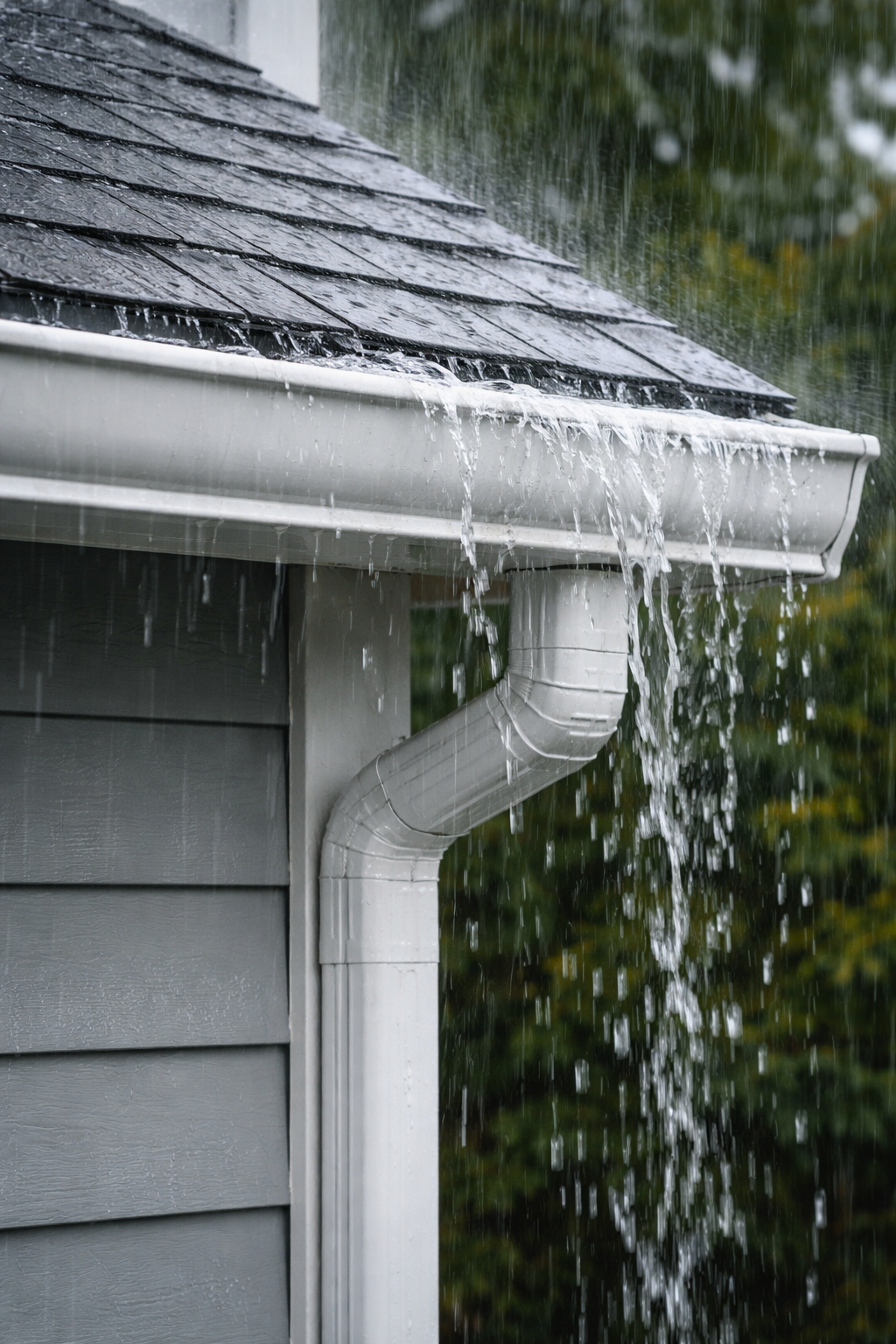
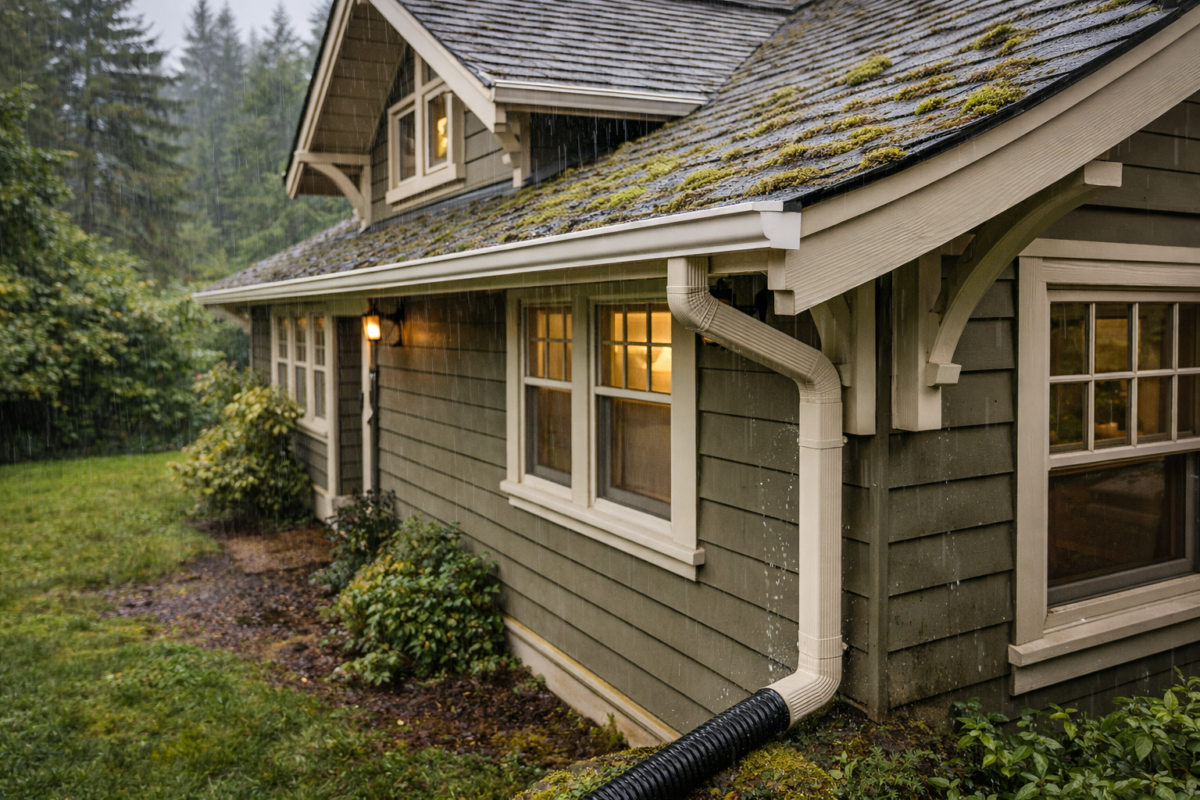
Oregon’s rainfall pattern is less like a season and more like a sustained pressure test. According to the National Weather Service, nearly 90% of Portland’s annual rainfall falls between mid-October and mid-May. That is seven consecutive months where gutters rarely have a chance to fully dry out.
Constant moisture accelerates corrosion, particularly at seams, fasteners, and end caps on steel or improperly coated aluminum systems. And it is not just the volume of rain. Repeated moisture exposure drives material deterioration across exterior assemblies in ways that isolated storms simply do not. On top of that, freeze-thaw cycles through Oregon winters expand trapped water, which gradually pries sections apart and loosens hangers from the fascia.
UV exposure and temperature swings add to it. Even on overcast days, thermal cycling breaks down sealants and weakens material over time. None of these effects is dramatic on its own. Together, they chip away faster than most homeowners assume.
Factor 2: Debris Buildup
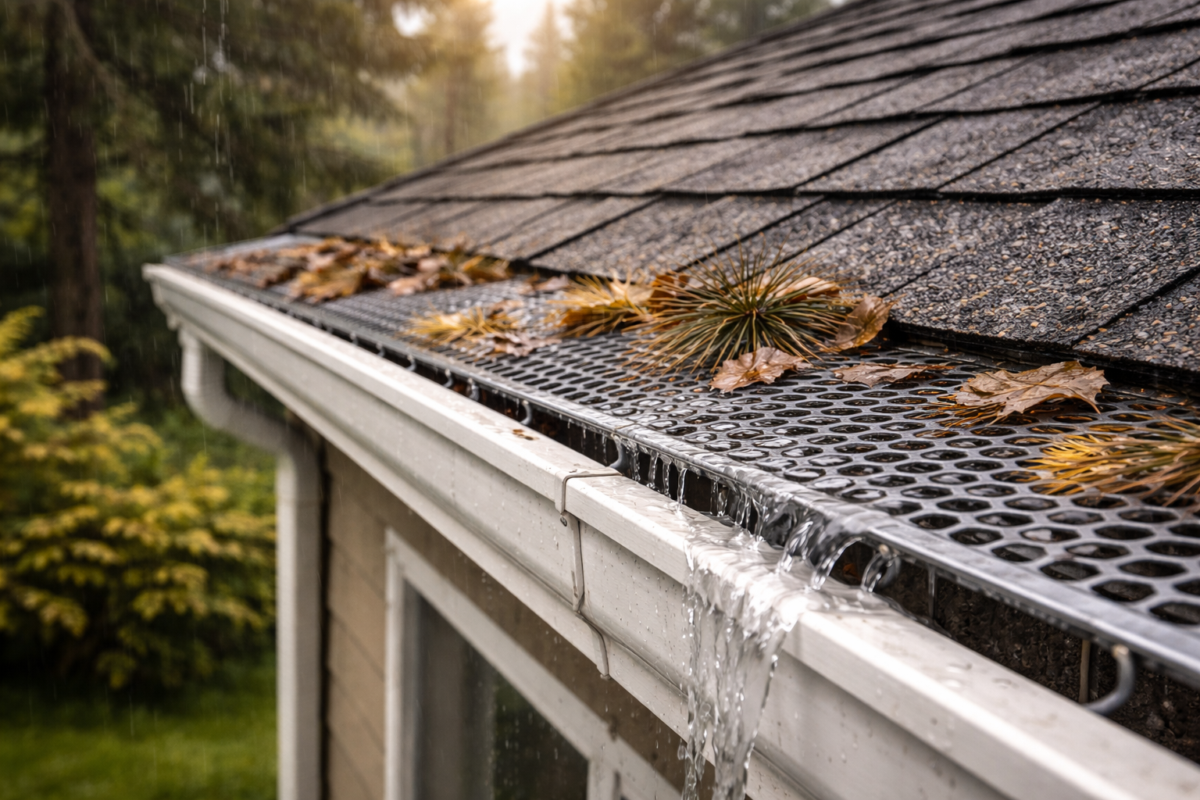
Oregon’s tree cover is part of what makes it beautiful. It is also a reliable source of pine needles, maple leaves, and moss that settle into gutters and stay there. The City of Portland recommends cleaning gutters at least twice a year, and more often when trees overhang the roofline. Homeowners are also advised to clear conifer needles and leaf litter before the wet season starts.
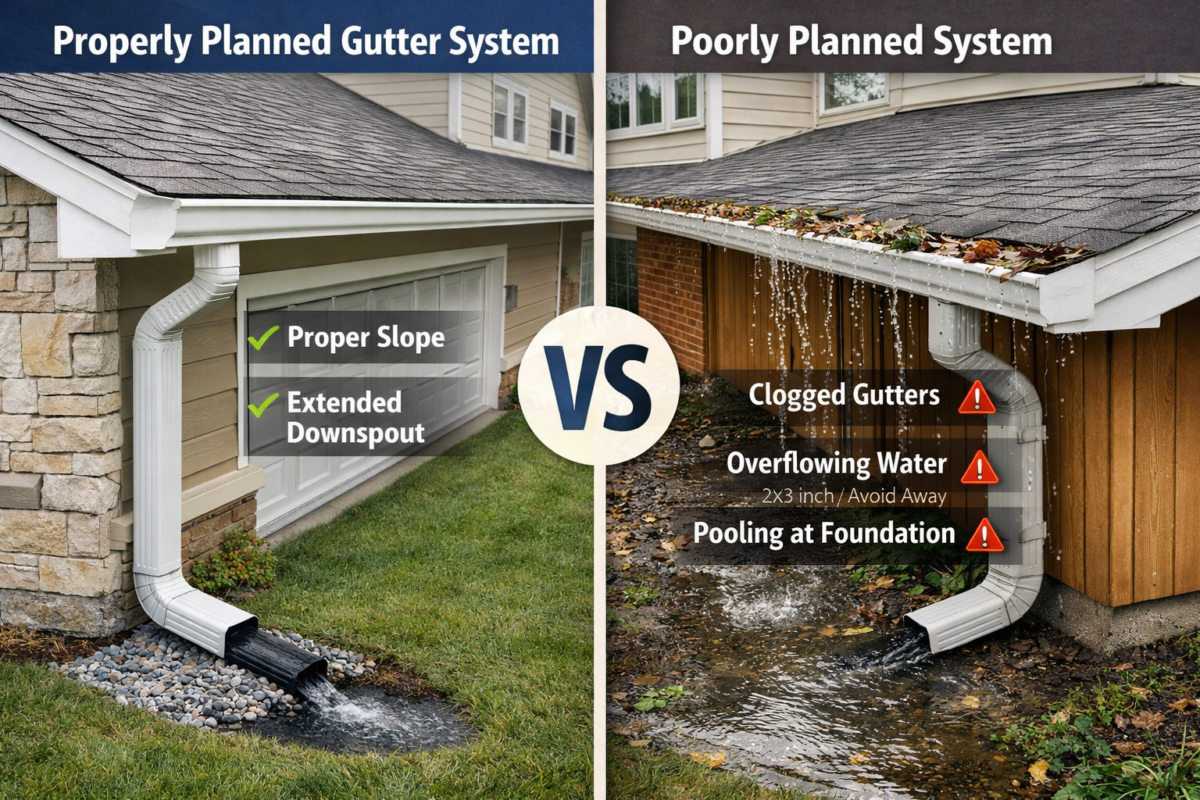
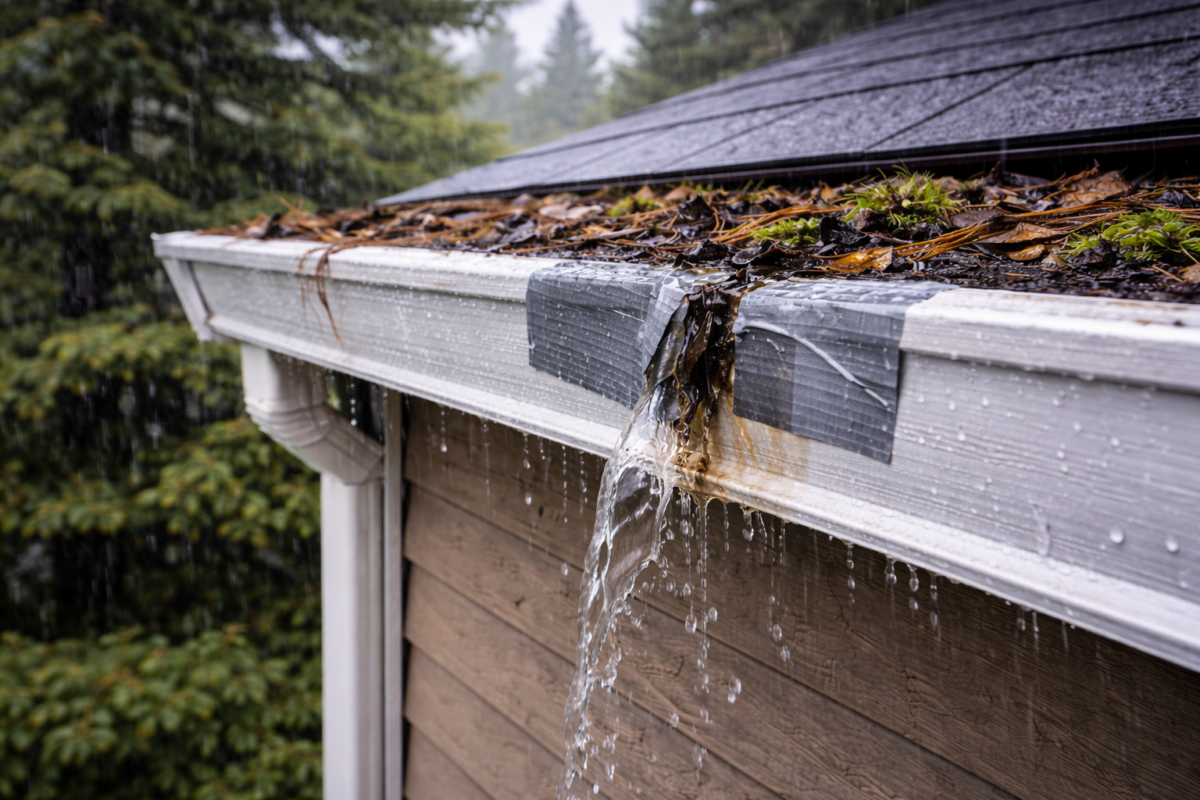
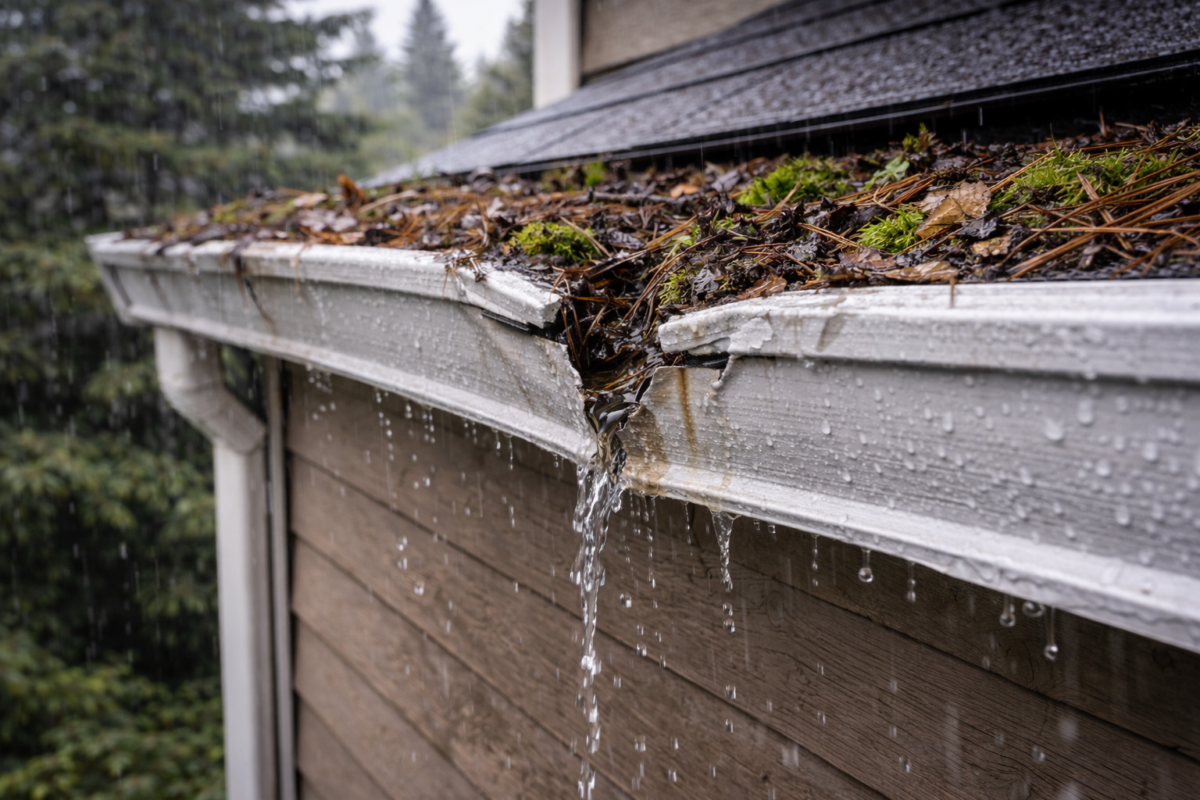
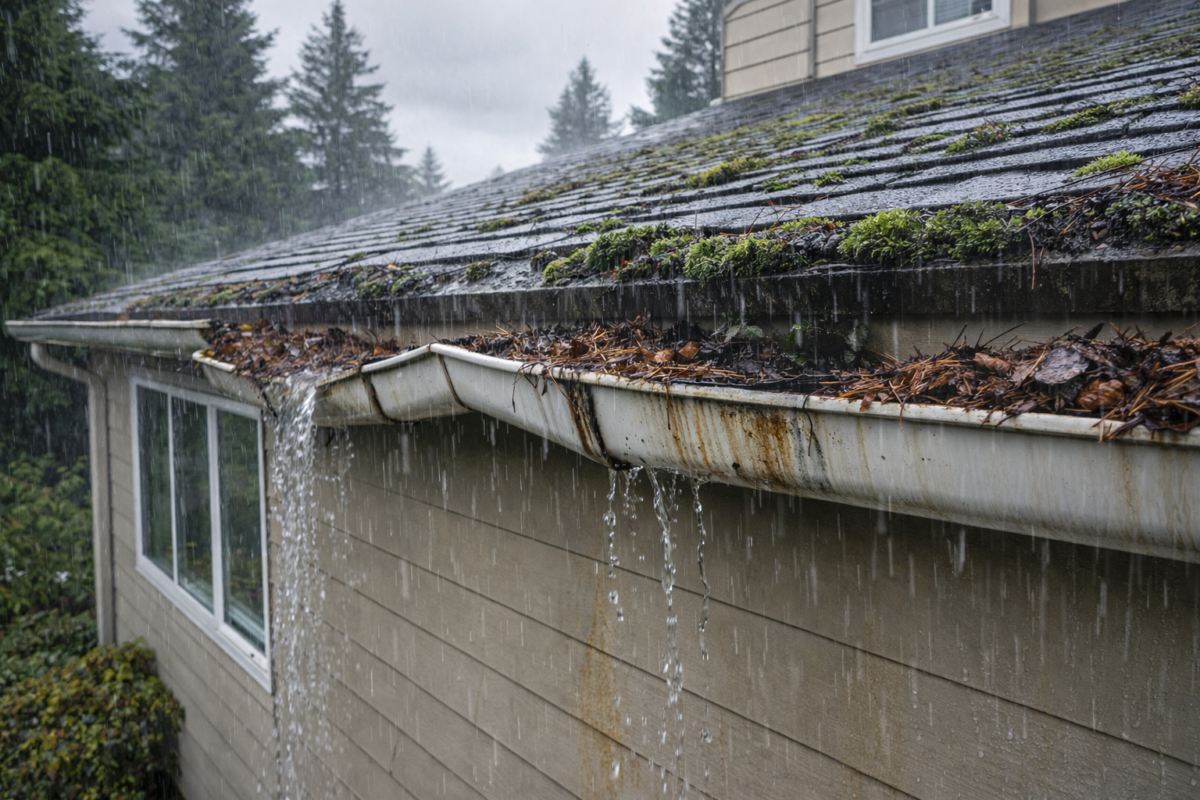
The problem is not just clogging. Wet debris holds moisture against gutter surfaces for extended periods, creating the kind of slow, persistent contact that promotes rot and corrosion. And the weight adds up fast. A section packed with saturated debris can place enough stress on hangers to permanently bend the gutter and pull fasteners away from the fascia.
Moss is a particular issue because it grows into the material rather than just sitting on top of it. By the time sagging or detachment becomes visible, the underlying damage is usually worse than it looks. A system that has been through a few Oregon winters without consistent maintenance may technically be new, but still be ready for gutter replacement.
Factor 3: Improper Installation
Some early failures are not about the weather or the debris. They go back to how the system was installed.
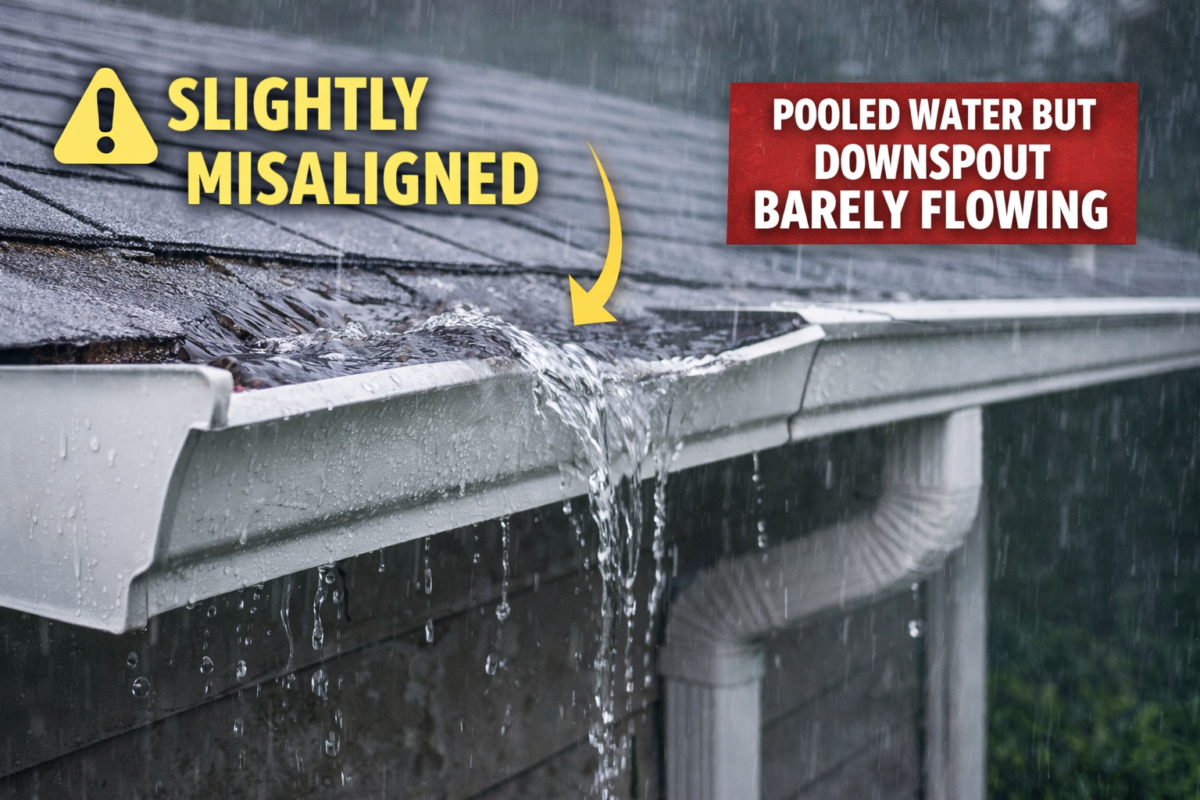
Pitch is one of the most common issues. Building America’s guidance on gutters and downspouts specifies a minimum slope of 1/16 inch per foot so water consistently moves toward the downspout instead of pooling. When that slope is off, even slightly, water sits in the channel, adds constant weight, and accelerates rust or seam stress in ways that show up long before the system should be failing.
Hanger spacing matters just as much. Hangers placed too far apart cannot distribute the weight of water-saturated debris across the system. Over time, the unsupported sections begin to sag, and once fascia attachment points weaken, gutter repair becomes a temporary fix at best.
Fascia condition is something that gets overlooked more than it should. Installing new gutters over rotting fascia is one of the more reliable ways to guarantee early failure. The fascia cannot hold the load, and no amount of quality material or careful gutter installation compensates for that.
Material selection plays a role, too. Vinyl and thin-gauge options may work in drier climates but tend to underperform under Oregon’s sustained wet season and debris load.
Factor 4: The Performance of Seamless Gutters Over Time
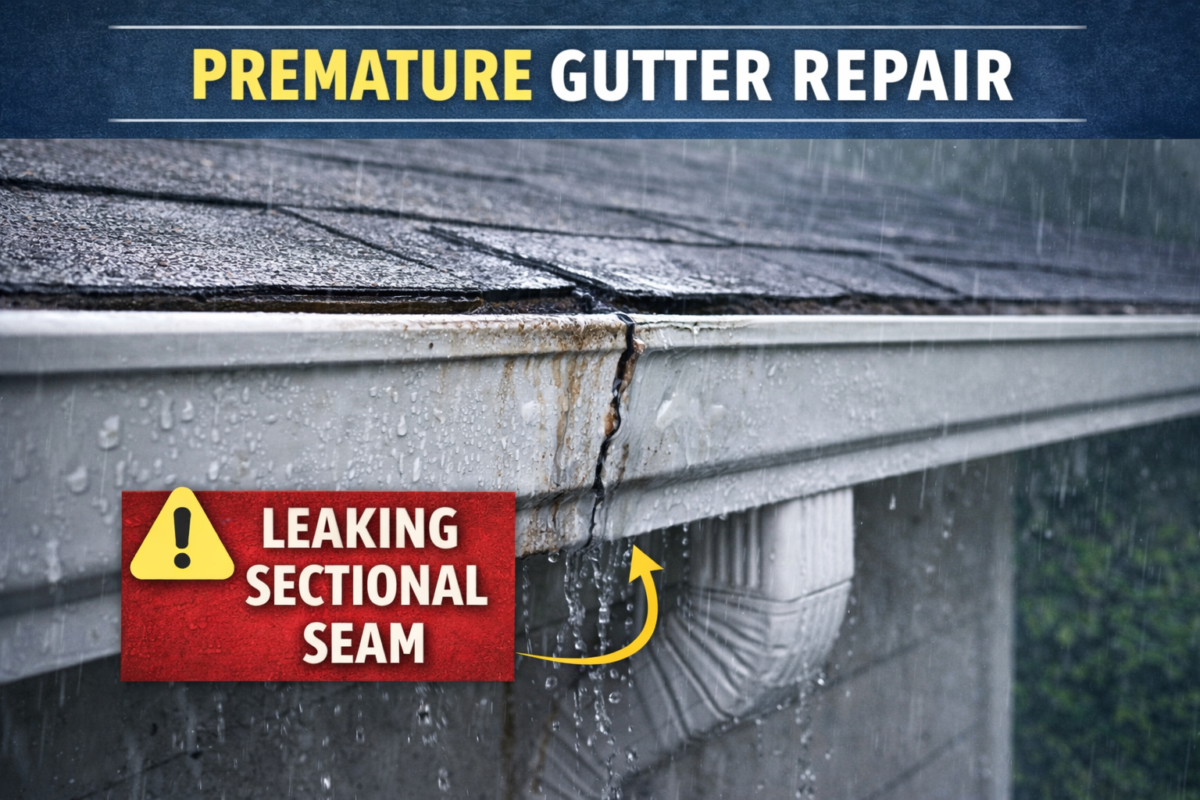
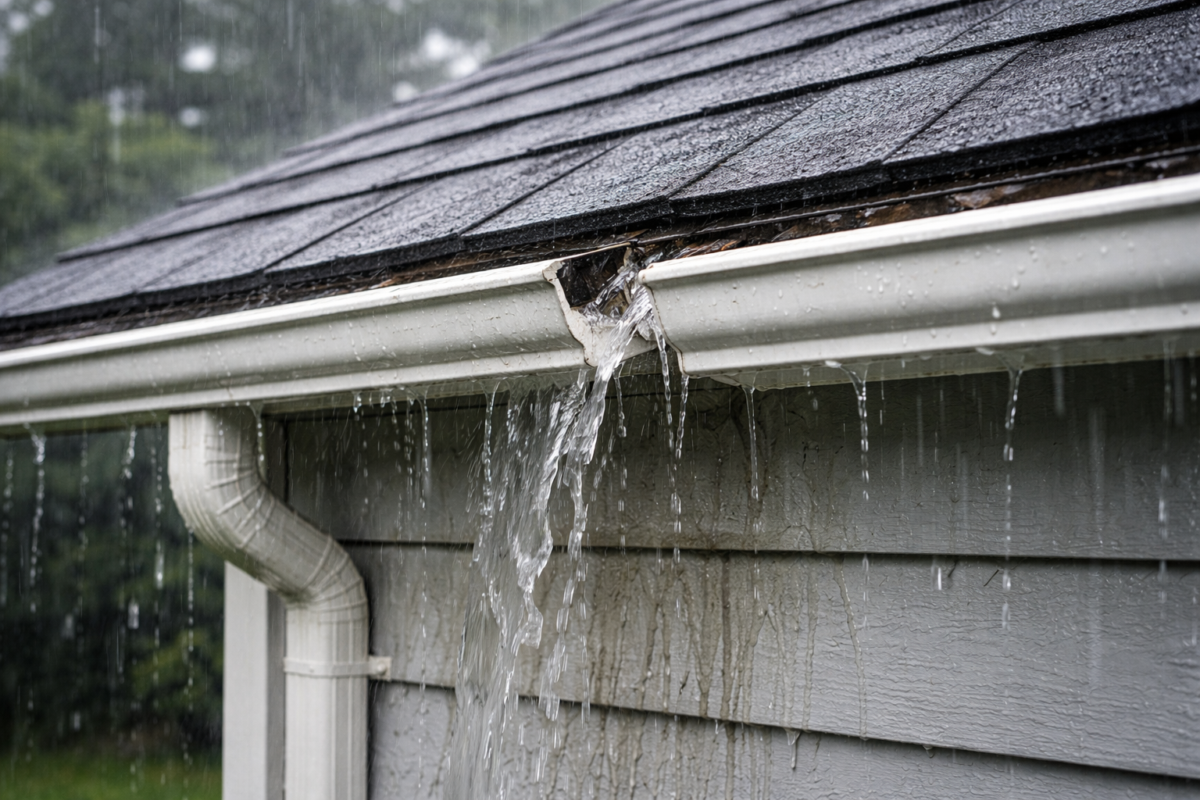
Seamless gutters reduce one of the most common failure points: the seam. Leaking seams and pinholes are recurring maintenance issues in standard sectional systems. Fewer joints mean fewer places where that type of failure can develop, which is why seamless systems tend to last longer overall.
But seamless does not mean invincible. Even a well-fabricated seamless system wears out early if it is attached to compromised fascia, undersized for the roof area it is draining, or installed with the wrong pitch.
Aluminum can become brittle over time, and the expansion and contraction that comes with Oregon’s temperature swings can create subtle deformation that disrupts water flow, even in sections that look fine from the ground.
The advantage of a seamless system is real. It just does not eliminate the other factors.
When Gutter Replacement Beats Repair
Some situations still call for gutter repair: an isolated seam leak, one sagging section, or a single loose hanger, caught early, with sound fascia underneath. Those are reasonable candidates for a targeted fix.
The signal to stop repairing and start replacing is usually repetition:
- Leaks coming back in the same spots
- Multiple sections sagging after hanger fixes
- Rust or holes spreading across more than one run
- Gutters pulling away from the fascia along long stretches
When repairs keep targeting the same weak points, the system is likely too deteriorated or too fundamentally compromised to justify more patchwork. The Insurance Information Institute puts the average water damage claim at $15,400, which gives some context for what deferred replacement can eventually cost downstream.
A useful threshold: When repair estimates approach half the cost of a new gutter installation, the math usually favors starting over.
Protect Your Home With a Fresh Start
Premature gutter failure is rarely just bad luck. In Oregon, it is usually weather exposure, debris load, installation decisions, and material limits intersecting earlier than expected. Once you understand what is driving the problem, it becomes easier to see when a repair will hold and when it will not.
If your gutters have been patched more than once and you are still seeing the same issues, it may be time to reassess. At Gutter Empire, we are happy to take an honest look and walk you through your options. Call us at (971) 777-9899, click here for a free estimate, or reach out through our contact form to schedule your consultation.
Key Takeaways
- Nearly 90% of Portland’s annual rainfall falls between mid-October and mid-May, which places gutters under long-term moisture stress and reduces drying time between storms.¹
- Persistent debris such as pine needles, leaves, and moss traps water against gutter surfaces, increasing the risk of corrosion, sagging, and fascia damage.²
- Portland recommends cleaning gutters at least twice a year, with more frequent maintenance when trees overhang the roofline.²
- Improper installation issues like insufficient slope, wide hanger spacing, or fastening into compromised fascia can cause early gutter failure even on relatively new systems.³
- Building America guidance recommends a minimum gutter slope of 1/16 inch per foot so water drains properly toward downspouts.³
- Seamless gutters reduce seam-related leaks, but they still fail early if they are undersized, poorly pitched, or mounted to damaged fascia.
- Repeated leaks, widespread sagging, and gutters pulling away from fascia are strong signs that replacement is likely smarter than continued repairs.
- The average water damage claim is about $15,400, which helps explain why delaying replacement can become more expensive than addressing the system proactively.⁴
Citations
- National Weather Service – Portland climate data https://www.weather.gov/media/pqr/climate/ClimateBookPortland/pg1.pdf
- City of Portland – Rain garden and runoff guidance, including debris and drainage considerations https://www.portland.gov/sites/default/files/2021/howto-rain-gardens-aug2021.pdf
- Pacific Northwest National Laboratory – Gutters and downspouts guidance: https://basc.pnnl.gov/resource-guides/gutters-and-downspouts
- Insurance Information Institute – Water damage claim statistics https://www.iii.org/fact-statistic/facts-statistics-homeowners-and-renters-insurance